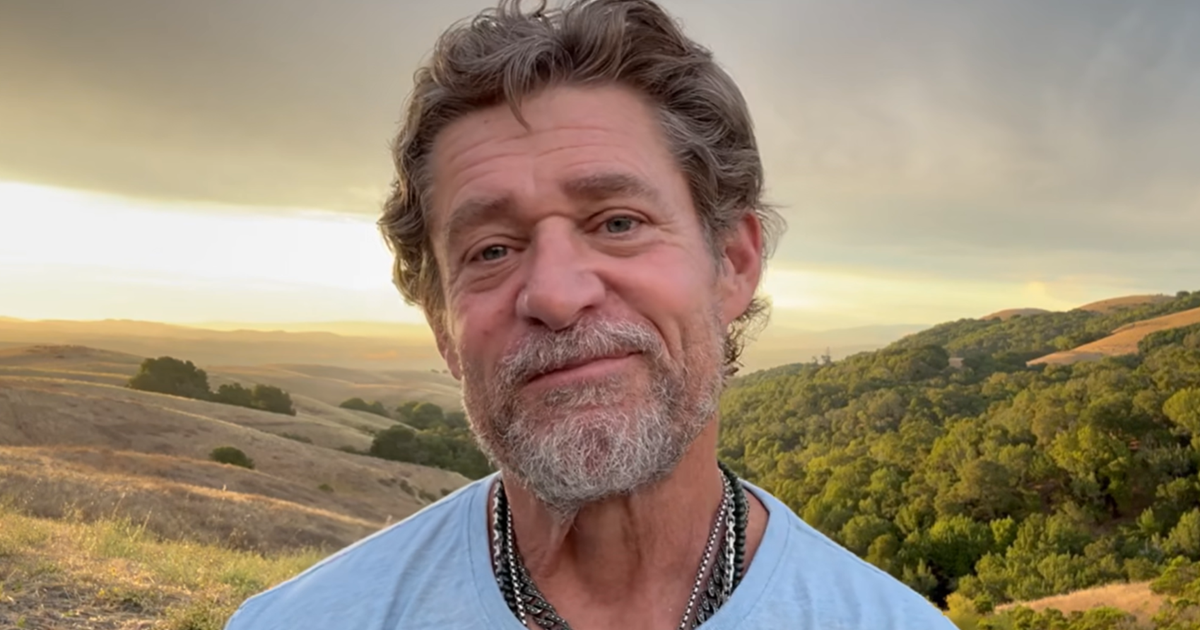
During the summer, veteran developer Glen Schofield announced his retirement from the games industry.
He’d had an enviable career, spanning all the way back to 1992’s Barbie: Game Girl. He would later head the Call of Duty studio Sledgehammer Games, and he has also held prominent positions at the likes of Crystal Dynamics and EA’s Visceral studio. His last position was leading Striking Distance Studios under Korean giant Krafton.
Now, he is spending his days making art. Speaking to GamesIndustry.biz from his garage-slash-studio, Schofield shows off some of his recent work – epoxy skulls, a beautiful stylised painting of a sports car, and a piece of driftwood that’s going to become a whale.
He might have retired from making games, but whatever creative force drove Schofield through his career is still whirring away inside his skull.
“I’m torn between am I just going to paint and sculpt, go off and create this other career which I don’t really need,” he says. “Or do I want to continue in video games?”

Schofield’s last hurrah in gaming was The Callisto Protocol in 2022. It was a sci-fi survival horror title in the same vein as his previous work on Dead Space – although he’s emphatic that the game wasn’t a spiritual successor to that project. The team was about six months into The Callisto Protocol when COVID hit.
This was massively disruptive to development. Or as Schofield puts it, “COVID was a real pain in the ass”.
“We had to learn on the job and just change everything,” he says. “We got it done and everything. We saw the problems that we had. A lot of them were caused by Korean management.”

The shift to remote working was also something that Schofield struggled with. In the past, he says that he liked being in a studio environment, seeing what everyone was up to and talking to them in person. In a remote setting, that’s much harder.
“I’m a creative leader, and I’m a business leader,” he explains. “But that doesn’t mean that I want to do the business, and it doesn’t mean that I want to schedule everything. I hate that shit. Just point me in the direction and let me do the creative leadership that I need to do.”
“When you have a studio of a hundred people, you can touch a hundred people a day. When they’re at home, you have to do individual calls, or I could get everybody together on Zoom. But we did it. We did all these things because we were searching for the best way to do it. There were so many meetings.”
“But when you’re in the studio, I’m seeing them every single day. I miss that. It’s very important to have that; that’s how younger people move up. That’s how you get advice every single day. So I will work on games; I just don’t like [remote working]. I’ll come in and help, but I don’t want to spend eight hours a day on Zoom.”
Early release
Schofield might not have been a fan of remote working, but he and Striking Distance managed to struggle through it in order to get The Callisto Protocol over the line. The straw that broke the camel’s back, however, was Krafton’s decision to launch the project in December 2022, months before the March 2023 release date he said he had been promised. The extra months were meant to make up for some of the disruption caused by COVID.
“I was so stunned by that decision, because we had fucking COVID”
The pandemic not only forced people to adjust to working remotely, it also put entire teams out of commission after they fell sick. This resulted in the original vision of The Callisto Protocol being pared down a little bit; some bosses were cut, levels were removed, and even an enemy or two was pulled.
“I was forced to ship the game. I’m mad at myself, there’s no doubt. I was so stunned by that decision, because we had fucking COVID,” he says. “A million people died in America. I lost one of my best friends. Every single month, four to six people in my company were getting sick. There were times our small team in Spain was shut down; it goes through a small place like that and you lose your rendering team for a while. The main thing you’re concerned about, not that you aren’t normally, is the health of your team. Making a game just became secondary because this is about life. This is about humanity.”
(GamesIndustry.biz has reached out to Krafton for comment, and we will update this article if we receive a response.)
_IHpbQej.jpg?width=2048&height=2048&fit=bounds&quality=85&format=jpg&auto=webp)
Further complicating things was the fact that Krafton did not have a publishing or marketing team to release a single-player physical experience, so Striking Distance built this functionality internally at the studio. Then there was the mandate to release The Callisto Protocol on PlayStation 5 as well as PlayStation 4, something that would cost “another $20 million”. That added the complication of sending out development kits to 200 staff at a point in time where there was a shortage of computer chips.
“They thought Callisto was a complete failure”
The Callisto Protocol launched to mixed reviews and fell short of Krafton’s expectations.
“They thought Callisto was a complete failure,” Schofield says. “What they didn’t know while all they were doing was complaining, we were doing patches. I waited until I finished all the DLC and put out 86 patches.
“That was a tremendous amount of effort. Every day you’re diving in, making changes. Some are small, others are monumental. It was all necessary to bring it back to where it needed to be.”
Currently, I have devised plans on how to introduce to you the latest camera technology that will surpass anything you have experienced before. This camera will not only be capable of various functions, but it will also revolutionize the way we approach gaming. Just like how we develop a racing game by utilizing different modules such as a racing module, a physics module, and a water module, I intend to apply the same strategy to artificial intelligence. By strategically investing in key areas that align with my game and narrative, I aim to achieve excellence. This integration of AI will truly enhance the creative process.
The key is to leverage AI in specific areas where it can maximize its potential. The focus is on implementing AI to address issues like fixing collisions and enhancing camera functionalities.