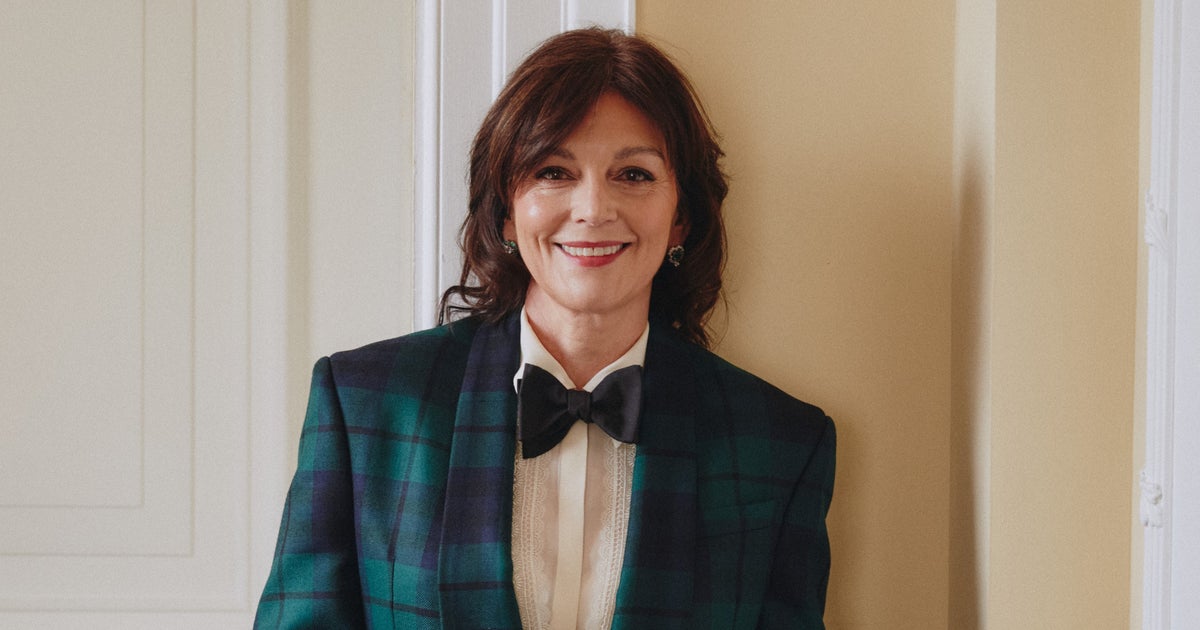
Ahead of today’s BAFTA Games Awards, GamesIndustry.biz sat down with BAFTA CEO Jane Millichip to discuss what’s new this year and what might change in the future.
The first thing that seems different about the 2026 awards is the name: it’s now the BAFTA Games Awards with Google Play. Millichip explains that certain categories have had sponsors before, but this marks the first time the ceremony has had a headline sponsor for the whole event.
What does that mean in practical terms? “Well, the revenue is really important for us, because award ceremonies of this calibre and quality are not cheap,” explains Millichip. “Production costs have just skyrocketed. So in quite simple terms, the revenue helps us to deliver a really beautiful ceremony with performances.” This year, the ceremony will feature a performance of “Suteki Da Ne” from Final Fantasy X by the Sonaris Ensemble, as well as a turn by singer Talia Mar.

But Millichip is at pains to point out that although BAFTA accepts and encourages corporate sponsorship, the BAFTA Games Awards is a very different beast from something like Geoff Keighley’s more commercially focused Game Awards. Not that she has anything against the Game Awards – “Everyone has their place,” she says, adding that BAFTA might even consider running trailers in future, something that Keighley’s show is heavily built around.
“Sneak peeks is something that we absolutely wouldn’t rule out, but we would always ensure that if we include it, it’s because we’ll have taken an editorial view on it. There wouldn’t be a commercial gain to us in showing a trailer, that’s what we would ensure. … Any additional content in our awards isn’t monetised, and actually upcoming news is something we absolutely would look at.”
Millichip emphasises the importance of BAFTA’s exhaustive, independently overseen judging process, which is free from commercial influence. “We are scrutinized by Deloitte across film, games and television. And so we are sticking ruthlessly to that rigor. Our members and jurors take very seriously the work that they do when they are judging and voting.”
“That’s important, because that’s why winning a BAFTA is so prized. Because you know that it’s not overly commercialized – you can’t buy a BAFTA, no matter what you do. It’s peer voted, and our members take that really seriously, and it’s a real honour to be recognised by your peers.”
Beyond TV and film
Even though the BAFTA Games Awards has been running for over two decades now, Millichip is the first to admit that it’s still not as well recognised as BAFTA’s film and TV award ceremonies.
“That is definitely the case,” she says. “That doesn’t mean to say it is not prioritised at BAFTA, it very much is. And it’s still a growth sector for us. Our membership in games is 1,700 and growing.”
The vast majority of BAFTA’s 14,000 or so members are still in the realms of film and TV: Millichip says roughly half are involved in film. But the industry body is keen to boost its games membership.

Millichip points towards the importance of BAFTA’s long-running Young Game Designers competition, as well as the school outreach work BAFTA does. “We work with a charity called Place2Be, which concentrates its work in areas of poor mental health: They’re known as education cold spots. So they give us access to the areas of greatest need.”
“At the starter career level, we run our bursaries, and we’ve doubled those in the last few years, particularly with the current economic landscape. We’re finding that quite often really talented people can’t trigger their career, because they can’t afford that piece of sound kit, they need a driving license to get to set, or they need a bit more training. So those bursaries have been really effective at kickstarting careers.”
She adds that BAFTA also provides mid-career support in terms of programmes like BAFTA Elevate and BAFTA Breakthrough. “Another area that we want to pay more attention to going forward is leadership, because we know that the underrepresented groups that we support in schools, in career starters, and mid-career, we’re seeing that those people … are not getting those senior roles. It’s often due to the inability to get the experience under your belt. So how do we help that?”
“We’re working on a BAFTA-wide mentoring programme, which we’re hoping to launch next year. But I think in a massively changing landscape, it’s how do we encourage and assist people to have resilient, sustainable, agile careers? Because I think that’s the key to maintaining a job in this sector.”
Rising representation
Millichip says that BAFTA is trying to ensure representation from different groups across its membership.
“We’ve put targets in for our membership across all three sectors around ethnicity, disability, and underrepresented groups, and we’re hitting those targets,” she says. “In games, we’ve set ourselves a target for 50% membership for women. [In terms of] new games members, we’re hitting 51%.”
She says that in particular, BAFTA sees a need to support women in the more technical craft categories across film, games and TV. “There are pockets, particularly in the craft categories – camera crew, sound, post, the technical categories – where we traditionally don’t see that many women. In film, we’ve made interventions into our film awards in the last few years to foreground the work of women directors, for instance.”
Those interventions involve ensuring there is parity between male and female directors in the long list that goes out to members. “That is to bring to the attention [of] our voting members the work by women. We’re not saying vote for it, we’re saying just watch it.
Based on our research findings, it appears that work by underrepresented groups is not discriminated against by our members, but sometimes their work is not given the visibility it deserves.
Interventions have been made in our film awards to highlight the work of women directors, but similar interventions have not yet been implemented in the BAFTA Games Awards. However, the games committee evaluates the judging, voting, and entry criteria annually to address any trends that may arise. We aim to maintain consistency while addressing any potential issues within the sector.
While gender parity interventions may be considered for future BAFTA Games Awards categories, the nature of games differs from film and TV in terms of teamwork and design. We remain open to addressing challenges within the gaming industry and strive to support positive role models and spark difficult conversations when necessary.
BAFTA aims to foster transmedia collaborations between film, TV, and games, recognizing the growing interest in adapting gaming IP into legacy media. Encouraging cross-sector participation and exploring how creatives from different fields can influence each other’s storytelling and production techniques is a priority.
Unlike the worlds of film and television, the gaming industry lacks traditional celebrity presence. However, we believe this is not necessarily a drawback, as the gaming community is more focused on game-related personalities rather than traditional celebrities. The informal and democratic culture of the gaming world is seen as a refreshing aspect by BAFTA.
“Incredibly revitalizing.”