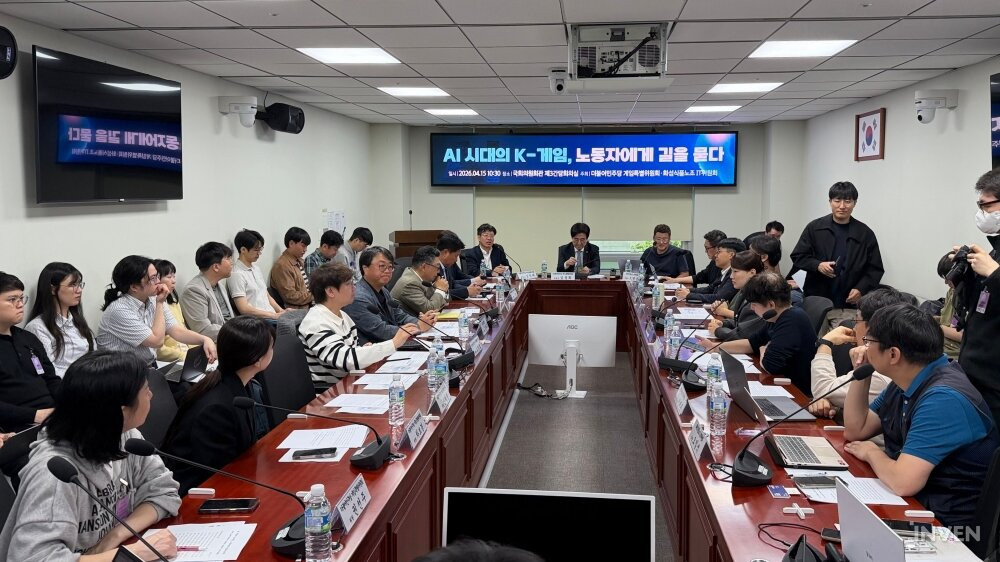
The Democratic Party of Korea’s Special Committee on Games, chaired by Kim Sung-hwan, and the IT Committee of the Korean Chemical, Textile & Food Workers’ Union, chaired by Oh Se-yoon, recently hosted a policy roundtable at the National Assembly titled ‘K-Games in the AI Era: Asking the Workers for the Way Forward.’ The event aimed to assess the impact of key policies in the proposed full amendment to the Game Industry Promotion Act through feedback from 1,078 industry professionals. Additionally, the roundtable sought to recommend the establishment of a labor-management-government cooperation system to address the challenges posed by AI-driven transformation.
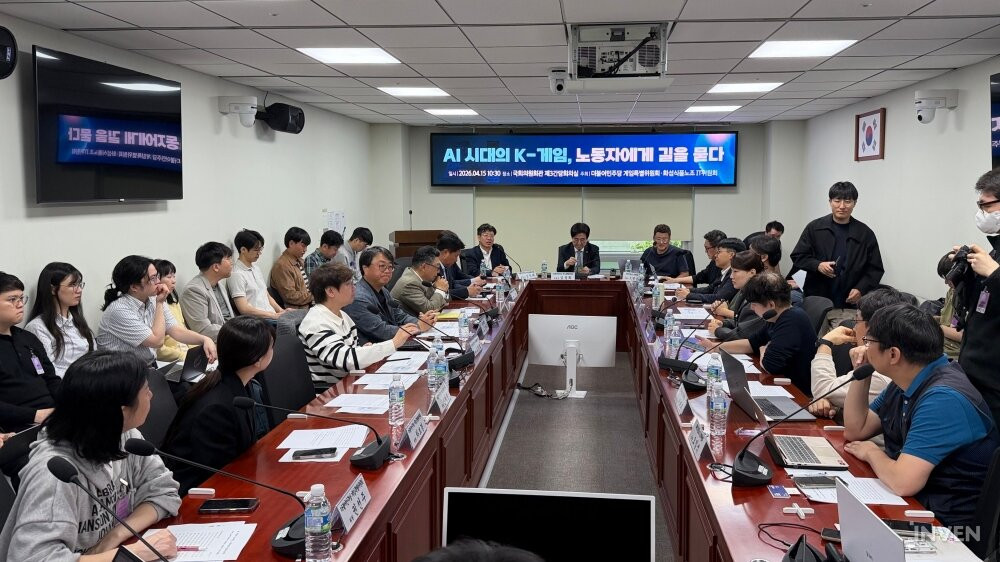
During the roundtable, Kim Sang-ho, head of the Nexon union branch, presented the findings of a survey conducted among 1,078 members from eight game companies under the Chemical and Textile IT Committee. The survey revealed that 65.9% of respondents were development staff, with individuals in their 30s and 40s accounting for 88.7% of the total, providing a comprehensive representation of field perspectives.
The survey results indicated strong support for the main policy directions outlined in the Game Industry Promotion Act amendment. Approval rates for key items were as follows: ▲Tax credits for game production costs (94.5%), ▲Enactment of AI-related laws (93.1%), and ▲Establishment of a Game Promotion Agency (91.3%).
However, the survey also highlighted a low awareness of the specific details of these policies, ranging from 12% to 16%, underscoring the challenges in disseminating information effectively. Notably, only 37.3% of respondents believed that tax credit benefits would translate into tangible improvements in working conditions or job retention, reflecting concerns about the unequal distribution of policy benefits. Kim emphasized the need for institutional feedback mechanisms to ensure that tax support leads to actual wage increases and job stability, rather than solely benefiting corporate finances.
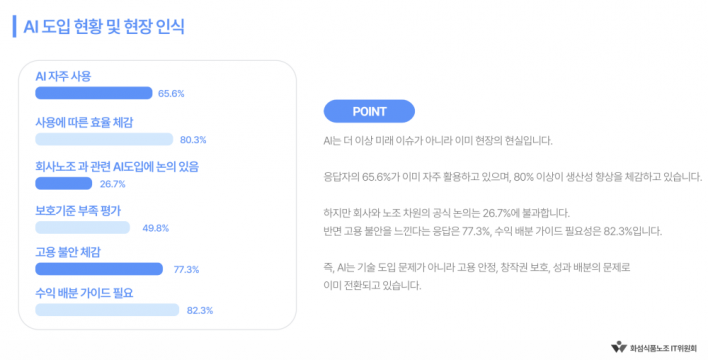
The roundtable also addressed the growing concerns in the industry regarding AI adoption. While 65.6% of respondents reported frequent use of AI in their work and 80.3% noted efficiency improvements, 77.3% expressed job insecurity, and 82.3% called for guidelines on profit distribution. With only 26.7% of workplaces engaging in formal discussions between management and unions, the need for prompt countermeasures was evident.
Noh Young-ho, a member of the Special Committee’s Industry Promotion Subcommittee and head of the Webzen branch, proposed the establishment of a ‘labor-management-government consultative body involving industry workers’ to address the uncertainties arising from AI transformation in the game industry.
Noh outlined three key reasons for creating such a body. First, to lay the groundwork for field-oriented legal reform, emphasizing the importance of worker participation in accurately conveying legislative intent and enhancing acceptance. Second, to develop a forward-looking model where AI technological innovation and job stability can coexist. Noh suggested the creation of a ‘labor-management-government standard guideline’ to leverage AI technology as a creative tool. Third, to prevent industrial conflicts through a regular cooperation system.
The proposed agenda items included: ▲Establishing a human-centric AI environment for game development, incorporating job transition training and performance-based distribution standards, ▲Designing a field-specific promotion system for the Game Promotion Agency, ensuring labor union participation in decision-making bodies, and ▲Implementing tax support policies to enhance human capital competitiveness, monitoring job retention expansion and encouraging reinvestment. Noh stressed the importance of aligning government policy, corporate investment, and worker creativity to capitalize on the current opportunities in the K-Games sector.
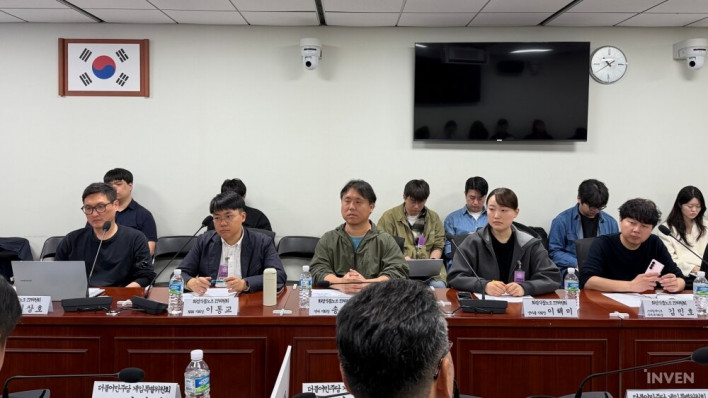
Various industry representatives, such as Lee Dong-gyo from the NHN union branch, Song Ga-ram from the NCSoft union branch, and Lee Hae-mi from the Netmarble union branch, highlighted the challenges and opportunities presented by AI adoption in the game industry. They emphasized the need for closer collaboration between labor, management, and government to address the changing landscape effectively.
In conclusion, industry experts like Kim Min-ho from the Smilegate union branch and Lee Jae-hoon from Kakao Games underscored the urgency of proactive measures to navigate the AI era successfully. They stressed the importance of utilizing AI resources to improve working conditions, promote job stability, and foster innovation across all levels of the industry.
To transform the entire industry’s ecosystem, not just individual companies, we must implement an ‘industry-level bargaining’ system to address job insecurity for employees in small and medium-sized game companies.
Chairman Oh observed, “The game industry is one where only workers in democratic countries, who have plenty of imagination and can talk about anything, can create proper works and stories. Even if artificial intelligence writes the code, our competitiveness ultimately lies in displaying exciting stories.”
Regarding the suggestion to establish a labor-management-government consultative body, he remarked, “I generally support the idea of bringing together labor and management with the government to tackle this issue. After hearing from the workers today, I will arrange to listen to management as well, and I will work towards developing an industry that advances alongside its workforce.”