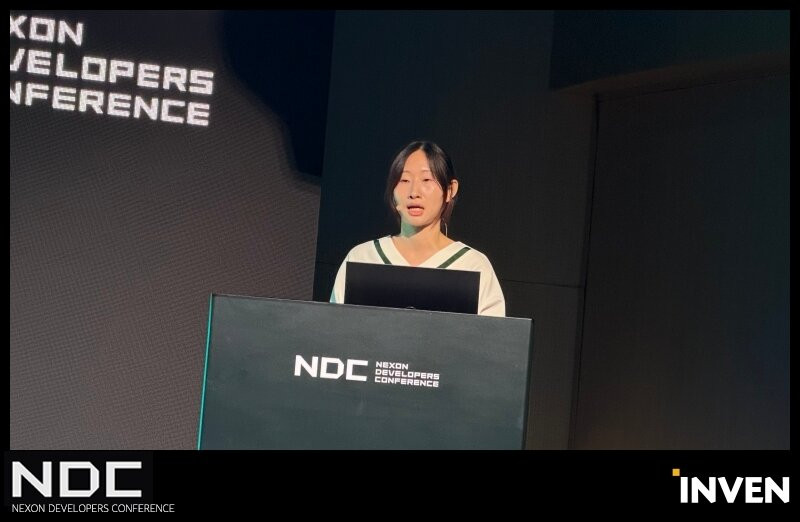
Lee Ji-young, a planner at Nexon Korea, presented on using generative AI in game narrative design at NDC 26. She shared her practical experience and highlighted both the potential and limitations of AI in storytelling. Lee emphasized the importance of human judgment in creative work and game enjoyment, stating that AI is simply a tool for executing human decisions quickly, not a creative entity itself.
She discussed her trial-and-error process of integrating AI into world-building, scenario writing, and quest design, focusing on practical examples rather than technical analysis. Lee shared insights on the application of AI to game narrative design, emphasizing the need for high-quality meeting logs and human-written documents to achieve good results in world-building. She also discussed the challenges of using AI to create new humorous episodes, noting that AI tends to follow the most plausible average from its training data, which can weaken the element of surprise essential for humor. During the Q&A session, attendees raised questions about the practical applicability of using AI in quest design, especially for smaller teams or projects without a large base of existing data. The presenter emphasized that even without a strong foundation or in small teams, AI can still be utilized effectively.
She suggested starting small and focusing on specific tasks where AI can provide the most value, such as data generation or repetitive tasks. By gradually introducing AI into the workflow and adapting it to the team’s needs, even smaller projects can benefit from the efficiency and automation that AI offers.
The key, she stressed, is to carefully define the scope of AI implementation and continuously iterate and improve the process based on feedback and results. By leveraging AI as a tool to enhance creativity and streamline workflow, teams of any size can harness the power of technology to create compelling and engaging game experiences. When a graduate student inquired about the challenges faced by small organizations and non-majors in utilizing reference material for data preparation, she highlighted the struggles of solo developers in searching for classic works mentioned by AI. She emphasized the possibility of gradually building solutions even with limited narrative base. She stressed the importance of human review in the tech field.
Asked about learning methods for aspiring planners, she shared her own difficulties as a liberal arts major and recommended continuous interaction with AI and utilizing resources like YouTube. She expressed a desire for a community where planners can share their experiences in creating narratives with AI.
In terms of judging fun, she mentioned playing various games and considering community reactions and ratings. She also discussed pre-training AI with relevant references for specific genres. She acknowledged that while AI may one day be able to judge fun, human understanding remains crucial.
During a discussion, a programmer praised the structured approach taken in the project and inquired about error verification and managing changes in planning intent. The speaker mentioned a canceled project and explained a method of breaking down meeting logs to handle changes effectively.
In response to a question about using user data for scenarios, she mentioned the importance of user reactions in judging fun and the need for planners to introduce variety to avoid repetitive patterns.