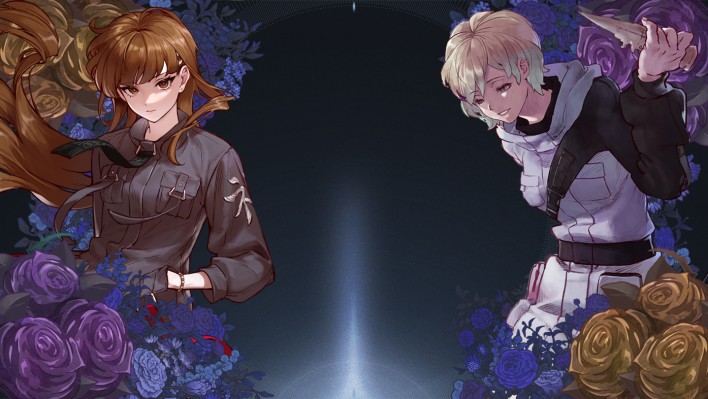
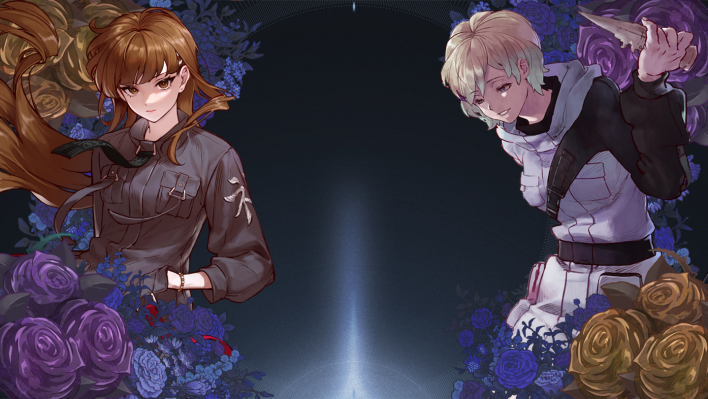
‘Shikhondo: Blue Pieta’, a new fantasy bullet-hell shooter developed by the Korean indie studio DeerFarm, is set for official release on May 18.
‘Shikhondo: Blue Pieta’ is the latest entry in the ‘Shikhondo’ bullet-hell series, which debuted in 2017. It serves as a direct sequel to ‘Shikhondo: White Flower’, which was released on Steam in 2024 and on the Switch in 2025. This is the first title in the series to adopt a side-scrolling format, and it also features support for ultrawide resolutions, allowing players to enjoy the game on a broader screen.
CEO Ko Young-jin, who leads the one-person development team known as ‘DeerFarm’ (literally ‘Deer Farm’), has been creating shooting games as side projects for the past 15 years. In an interview ahead of the new game’s launch, we heard his story of how he evolved from a fan developer of ‘Touhou Project’ games into a creator with his own original IP.
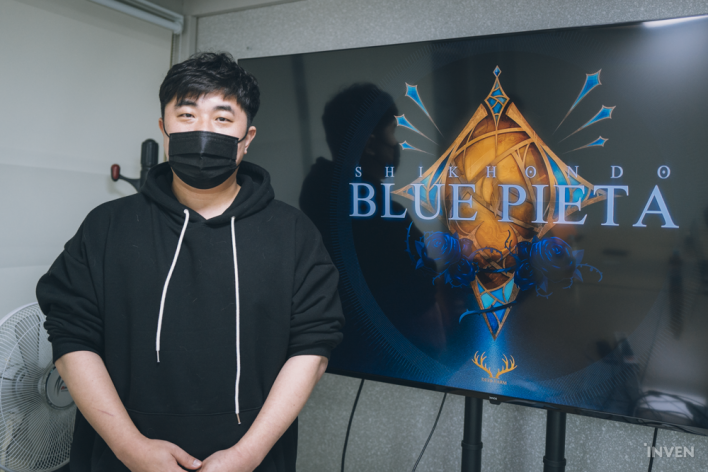
First, I heard that DeerFarm is a one-person team. I’m curious about how it actually operates.
“ To be precise, it’s a one-person team, but not a one-person development project. The team itself is just me, but I have separate people helping with art and sound. They are friends or colleagues, but they aren’t officially part of DeerFarm. My day job is as a client programmer at a game company, and DeerFarm has been a side project I’ve maintained all this time. You could say that making and releasing games is just a part of my life cycle.
I’m curious why the team is named ‘DeerFarm’. Is there a story involving deer?
“ My father used to raise deer as a hobby back in the day… so it’s a name I chose without much deep thought.
At the time, there was a trend among fan game teams to give themselves unique names, like ‘Team Shanghai Alice’, ‘French-Bread’, or ‘Watanabe Seisakusho’. So I just thought, ‘We have deer at home, so I’ll call it DeerFarm.’ That was nearly 15 years ago. Personally, I think it’s better to write one more line of code than to spend time on titles or naming, so I suppose that tendency is reflected in the name (laughs).
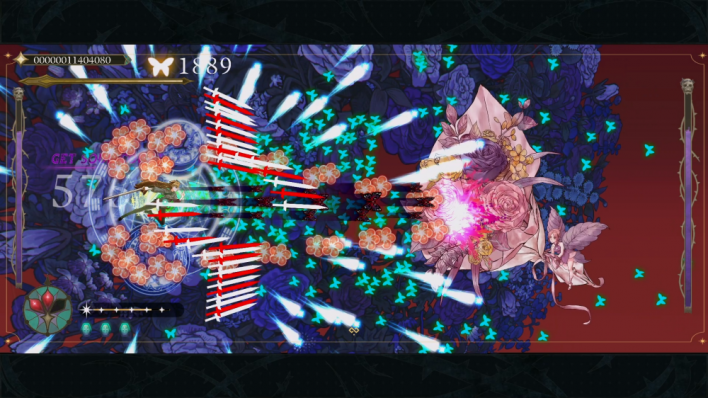
I recall the ‘Shikhondo’ series first appeared in 2017. Bullet-hell shooters are a rare choice in Korea; could you briefly look back on the motivation for starting the series and your nine-year journey?
“ DeerFarm originally started as a team making ‘Touhou Project’ fan games. We released our first title around 2010 or 2011. Back then, the genre range for fan games was very narrow. Most domestic fan games were visual novels.
On the other hand, shooting games were a kind of ‘training project’ among developers at the time because they were more accessible than other genres. Personally, I liked shooters, and since my day job is as a programmer, I could make them without much pressure. I made a shooter as a side project while working at a company, released it as a Touhou Project derivative work, and by using those base resources and code to make sequels, I eventually arrived at ‘Shikhondo’.
After releasing two Touhou fan games under the ‘DeerFarm’ name, I made a ‘Love Live!’ fan game. Around the time I released that game at Comic World, there was the so-called ‘rating incident.’ It was a period when indie and fan games were included in the rating requirements, which caused a huge controversy. I got a rating to avoid trouble, but to get a rating, I needed to be a sole proprietor.
I asked my company for understanding, registered as a sole proprietor, got the rating, and went to Comic World, but—oops. I found out then that, according to the rules, sole proprietors were not allowed to participate. I ended up being banned from participating in future events, and from that point on, I started making original IP works.
After receiving global acclaim, I’m curious about the starting point for conceptualizing ‘Blue Pieta’. Which aspects of the previous work determined the direction of the new one?
“ Honestly, I don’t think too deeply about business results or things like that. It’s more of a stream of consciousness: ‘The game came out well, so I should release a sequel.’ However, ‘Blue Pieta’ had a somewhat unique starting point.
Originally, after the console port of ‘Shikhondo’, I was making an action game using the Shikhondo IP. I thought I’d played enough shooters and wanted to try a different genre. In fact, all the development costs for my side projects come from my salary. But as I was making the action game, I could see that the scale was something my salary could never cover.
I do want to finish that action game someday, but I needed a detour. I reached the conclusion that I should make a shooter that bridges the gap between the first ‘Shikhondo’ and the action game. I thought, ‘If I make a shooter as a prequel for the new character who will appear in the action game, I can introduce the character early and expand the IP.’ That’s how ‘Shikhondo: Blue Pieta’ began.
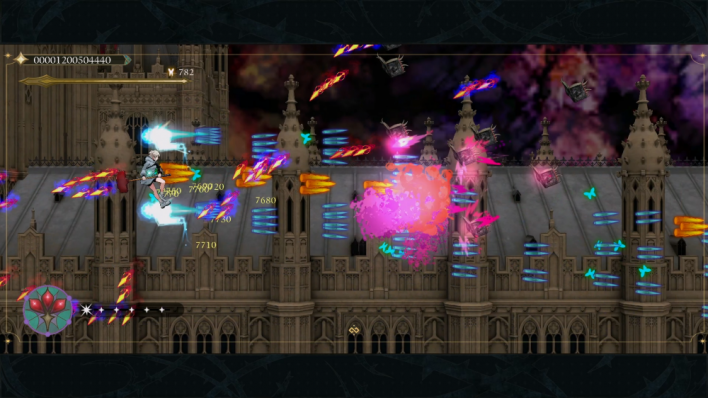
The Western style, especially the gothic horror atmosphere like Dracula, has become stronger than in the previous work.
Does the title ‘Blue Pieta’ have a meaning? According to the creator, the subtitle was chosen simply to contrast with the previous ‘Red Purgatory’ subtitle used in the arcade version of the game. The decision to use blue was based on this desire for contrast, and the choice of ‘Pieta’ was inspired by Michelangelo’s famous statue. The creator, being Catholic, felt a connection to the statue and decided to incorporate it into the game as the final boss. Ultimately, the choice of subtitle was not deeply thought out, but rather a result of simple associations and preferences. The primary advantage of working on a hobby project is the freedom to focus on what you enjoy without being forced to manage complex variables. When implementing a power-up system, the intricacies of balancing stages increase significantly, with new elements like determining when to give power-ups after death and power downs continuously arising. To streamline development, I opted to concentrate on bullet patterns and gameplay and excluded the power-up system altogether in ‘Shikhondo’. In contrast to games like ‘DoDonPachi’, where bombs are provided during gameplay, I made bombs a reward choice at the end of the game. This decision allowed me to reduce the time spent on system balancing and devote my efforts solely to enhancing gameplay and bullet patterns.
The involvement of popular Japanese voice actors, such as Yoshino Aoyama, in the ‘Shikhondo’ series has generated considerable interest. The casting process was influenced by my passion for Japanese voice actors, particularly those from ‘Love Live!’ and other popular series. When selecting voice actors for the game, I prioritized individuals I admired and was delighted with the outcome. The collaboration with CFK, the publisher of the ‘Shikhondo’ series, has been beneficial in various ways. Not only did it enable me to work with esteemed Japanese voice actors, but it also facilitated the console porting process, which can be challenging for independent developers. Additionally, the publisher’s assistance in managing administrative tasks and store operations has alleviated a significant burden, allowing me to focus on game development.
Despite the niche market for bullet-hell shooters in Korea, the ‘Shikhondo’ series has maintained a consistent following over the past nine years. While the genre may not have high commercial potential, I continue to create shooters out of passion and dedication. Looking ahead, I aim to expand the ‘Shikhondo’ universe and IP further, with the success of ‘Blue Pieta’ playing a pivotal role in achieving this goal. The shooting game market is evolving, with a focus on high-end releases and limited-edition packages. My vision for the future of the series involves exploring new possibilities and captivating audiences with innovative gameplay experiences.
With only ten days left until the release, what is your main focus at this stage?
“ The game build is all set. Right now, I’m working simultaneously on console porting and additional content. The PS5 port is nearly complete, and the Nintendo Switch port is next on the agenda for next month. Once the game is out, we plan to introduce a dual mode and two new difficulty levels.
Many fans of ‘Shikhondo’ are eagerly anticipating the new game. As we approach the official release, what would you say are the standout features of this project?
“ I poured a lot of effort into the final stage and its patterns. Even if you use infinite continues, I really want players to enjoy the last pattern of the final stage.
In today’s bullet-hell shooter scene, players focus on scoring as using a continue resets the score to zero. That’s why we didn’t set a limit on continues. I hope players can experience the game till the end with peace of mind.
I’m intrigued about your plans post ‘Blue Pieta’. When can we expect the action game you briefly mentioned earlier?
“ Once we see how ‘Shikhondo: Blue Pieta’ performs on the Nintendo Switch, PlayStation 5, and the upcoming releases, we’ll decide on the next steps. Personally, I have a strong desire to create an action game under the Shikhondo IP. I already have a prototype in mind—a fusion of Metroidvania style with bullet-hell elements. While I faced some challenges initially, I am determined to see it through to completion eventually.
Lastly, is there a message you would like to convey to your Korean fans?
“ As long as I continue my work as a developer, games will keep coming out under the ‘DeerFarm’ banner. I deeply appreciate your ongoing love and support.
Please rewrite the following sentence so it is easier to understand:
“The complexity of the situation made it difficult to come up with a solution.”