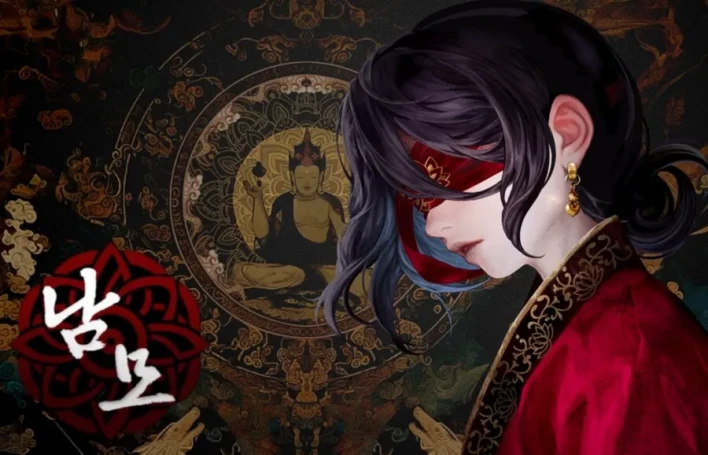
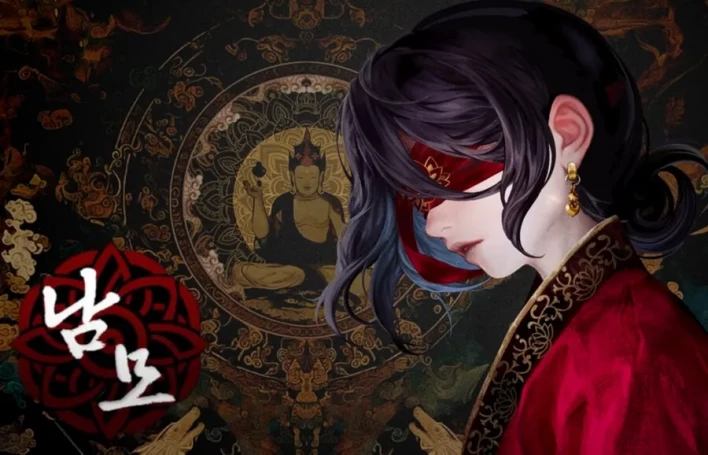
Guild Studio, which made an impressive debut at PlayX4 2025, has returned with a booth at PlayX4 2026 for its new 2D Soulslike title, ‘NAMMO.’ Over the past year, the game has been updated with a new boss, and both its art and controls have been further refined to welcome visitors.
‘Nammo’ is a Korean-style dark fantasy Soulslike game inspired by the Wonhwa (Source Flower) system of the Silla Dynasty during the reign of King Jinheung. According to historical records, in 576, King Jinheung appointed two beautiful women, Nammo and Junjeong, as ‘Wonhwa’ to lead over 300 young Nangdo warriors in order to cultivate talent. However, jealousy and conflict arose between the two, and eventually, Junjeong lured Nammo to her home, got her drunk, and murdered her by throwing her into a river, leading to the abolition of the Wonhwa system. Starting from this tragic legend, Guild Studio has reinterpreted the story, focusing on ‘Nammo,’ who loses her eyes to the person she trusted most, only to gain the ‘Spirit Eye’—an ability to see into the world of souls—and sets out to uncover the truth.
INVEN met with Guild Studio CEO Kim Tae-yoon at PlayX4 2026 to discuss the development progress over the past year and the core design philosophy of the project.
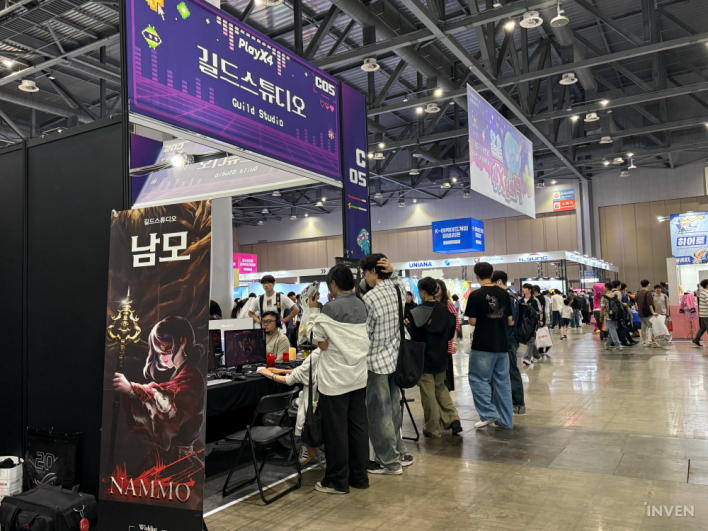
It has been a year since our last interview. I am curious about how the development has progressed since then.
“ We are currently developing the game with a team of nine. We have created significantly more bosses compared to last year. However, we ran into an issue: while each boss is fun on its own, lining them up like a conveyor belt made the experience too exhausting. Many players gave us feedback saying, “The bosses are fun, but the difficulty is too high and overwhelming.” So, we are now adding simple events and story segments in between, which is gradually increasing the game’s volume.
Could you take this opportunity to revisit the starting point and core motivation behind the ‘NAMMO’ project?
“ One of the biggest reasons is that China has martial arts (Wuxia) and Japan has samurai and ninja—mainstream concepts that represent their cultures. Since Korea lacks a distinct equivalent, I thought, ‘Why don’t we push the concept of the Silla Hwarang.’
While researching the Hwarang system, I found the ‘Wonhwa system’ that preceded it to be fascinating. It is a historical record of two women leading the Hwarang’s Nangdo, and we wanted to showcase the relationship between Nammo and Junjeong. At the same time, we wanted to provide players with fun—a kind of dopamine hit—through our art and combat, such as boss fights. We pondered the intersection of these two elements and decided on the direction of a ‘Silla dark fantasy boss rush game.’
Given the Silla Dynasty setting, I imagine the research and visual reference work must have been quite challenging.
“ We visited the Gyeongju National Museum and took hundreds of photos, and we read both the ‘Samguk Sagi’ and ‘Samguk Yusa.’ However, we didn’t just transplant ‘pure Silla’ as it was; we set it in a fictional world with different timelines and architectural styles. You can think of it as a world built as an homage to Silla rather than a direct recreation.
The Steam store page description mentions a dynamic where two people who grew up like sisters end up in a tragedy, which is very intriguing. Could you explain the character names and their relationship in more detail.
“ We used the actual names of the two women from the Wonhwa system, Nammo and Junjeong. In historical records, they were jealous of each other, leading one to kill the other. We wondered how to make this more interesting, so we started the story with a scene where Nammo is suddenly called out by Junjeong—whom she trusted like an older sister—only for Junjeong to slash Nammo’s eyes.
Nammo loses her sight without knowing why, wakes up blind in a cave, and must navigate the game from there. Rather than a simple story of jealousy, we wanted to capture a more tragic tone and the traditional Korean sentiment of ‘Han.’
The fact that the game starts with the protagonist being blind is impressive, but also puzzling. How can you play the game if you cannot see? Since the setting is that she sees spirits instead of the physical world, I am curious how this connects to the overall game system.
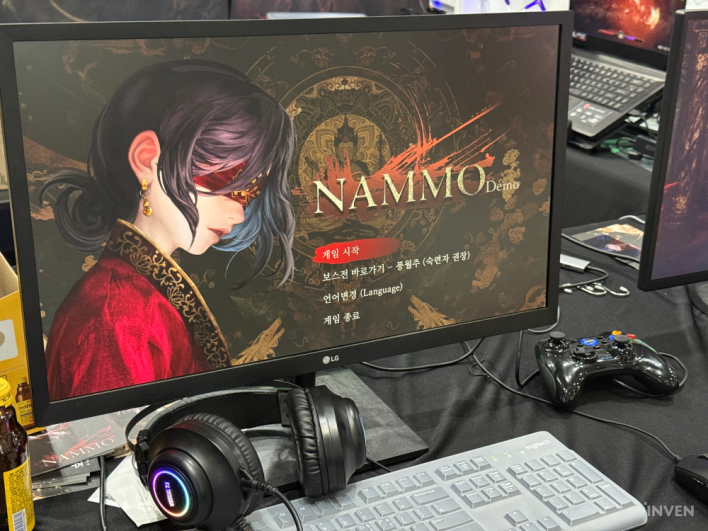
“ After the protagonist becomes blind, she awakens the ‘Spirit Eye,’ which allows her to see the spirit world. When you open the Spirit Eye, you can use in-game controls to reveal hidden platforms, traps, and secret paths. You can also identify the true nature and weaknesses of bosses; destroying those weaknesses can cause permanent damage, massive hits, or stagger opportunities, similar to part-breaking in ‘Monster Hunter.’ The Spirit Eye is also designed to allow access to story branches and hidden elements.
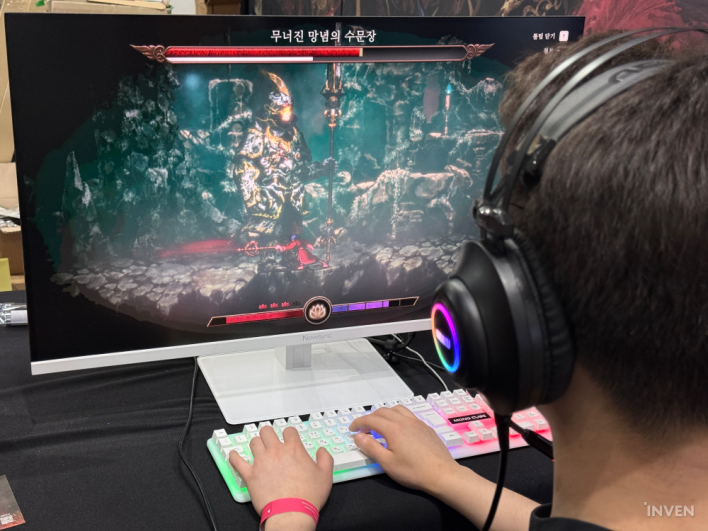
It was particularly interesting that the Spirit Eye system acts as a story-branching device to verify whether an ally is truly an ally.
I would like to know what you primarily focused on when designing this system.”
Our main focus was on the boss rush experience. While we did incorporate story elements and in-game events, we believe our strength lies in boss combat, so we emphasized the thrill of facing off against powerful bosses. Other elements were built upon this foundation to enhance the overall gameplay experience. We aim to excel as game developers, committed to creating a game that evolves in sync with our players.