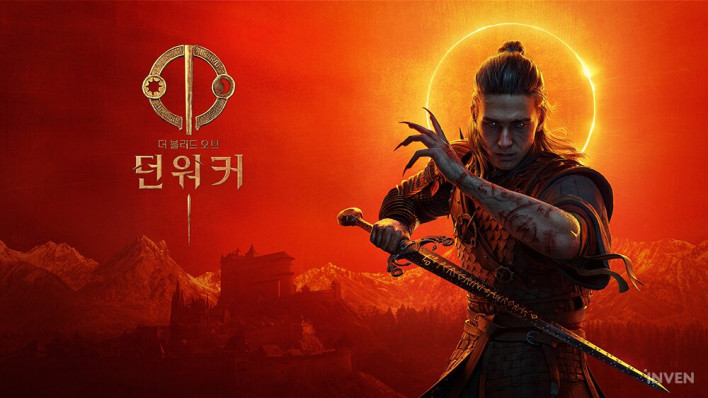
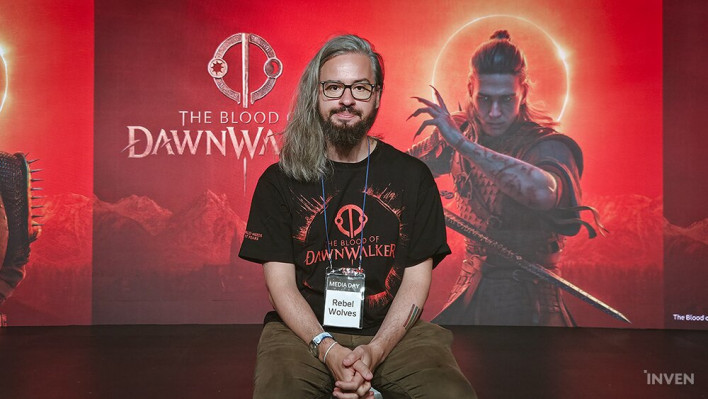
Rebel Wolves’s upcoming open-world action RPG, The Blood of Dawnwalker, recently held a media event in South Korea to showcase a demo and host a developer interview. The session featured Jakub Szamalek, Narrative Director and Lead Writer at Rebel Wolves, and was attended by various media outlets from Korea and across Asia.
The defining feature of The Blood of Dawnwalker is the use of time as a resource. Combined with its nature as a narrative sandbox, this makes player choices incredibly impactful. Furthermore, the developers designed the game around the protagonist, Koen—a hybrid of vampire and human—to ensure that combat and gameplay styles shift significantly between day and night.
Offering a unique gameplay experience and a rich narrative, The Blood of Dawnwalker is scheduled for release on September 3, 2026, for PC, PS5, and XSX|S.
30 Days of Day and Night: Time as a Resource
The structure seems designed with multiple playthroughs in mind. How many quests can players realistically complete within the limited day and night cycles.
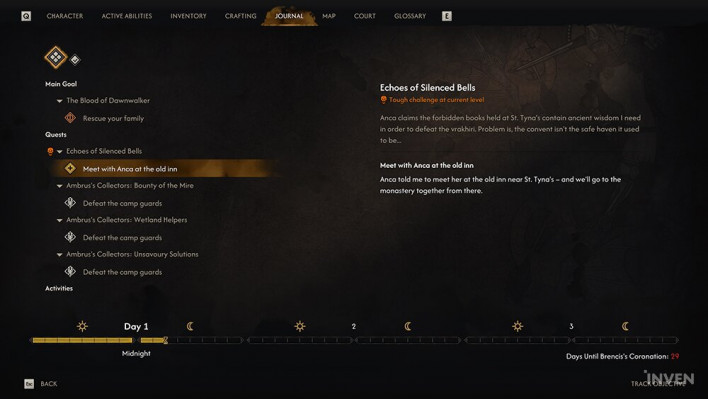
“Once the main part of the game opens, players are given 30 days of day and night to save their family. While you can complete most of the quests you are interested in within that limit, we did not design it so that every single quest can be finished in one go.
We introduced the time limit to create a sense of urgency that is often missing in open-world RPGs. In most games, even when you are tasked with a critical mission, you can wander the world as much as you like. Eventually, you stop believing in the urgency of the quest. We wanted to inject the pressure of time into the game to help players immerse themselves more deeply in the main story.
However, time in this game doesn’t just tick away automatically; it acts more like a resource the player spends. Time passes based on your actions, and you have a degree of control over how the clock moves.
Time passes even during quests, not just after completing them. Why did you choose this design.
“We experimented with several approaches. We felt it was unnatural for time to stand still during a long quest, only for a large chunk of time to pass suddenly at the end.
So, we divided quests into multiple segments and placed time-resource costs at points where it felt natural for an action to consume time. For example, if a character asks for help and you decide to assist them, time passes. This signifies that the player is investing their time into that character’s situation and story.
Where did you draw inspiration for the time management system.
“We didn’t take direct inspiration from one specific game or copy a system wholesale. Instead, we looked at Japanese games with time-management elements and classic Western CRPGs, comparing how they utilize time to find our own path. We didn’t want to stress players out with real-time pressure—like a situation where you get a phone call while playing and someone dies in the game while you’re away.
Instead, we wanted to give players control over time while still maintaining a sense of urgency in the game world. If a character in a game begs for help and you go off to play a minigame or do something else, it creates a disconnect between the world and the player. In our game, if you make someone wait after they’ve asked for help, the situation actually changes. In reality, time is a precious resource, and who you talk to and how you spend your time changes your life. We wanted to capture that feeling in the game.
It seems impossible to complete everything in one go due to the 30-day limit.
“Rather than trying to finish everything at once, I encourage players to consider multiple playthroughs. You might need to step outside the familiar open-world playstyle. But I believe new experiences and growth happen when you step out of your comfort zone. We wanted to create a game that is fresh and takes risks, and I believe those risks give this game its unique flavor.
Did the time limit put a strain on the narrative structure.
“In some ways, it actually made it easier. Having situations constrained by time made it natural to construct character motivations and dialogue.
The difficult part was deciding what happens when time runs out and how to reflect that within the quest structure.
It presented an added challenge due to its non-linear nature, but I believe the effort was worthwhile.
At the same time, the player can also ally with certain factions within the Court system to gain advantages in their quest. These alliances can lead to different outcomes and endings, depending on the player’s choices.
He grows increasingly infuriated and begins implementing special decrees to hinder the player’s advancement.
Some players may opt for a swift assault on Brensis, while others may prefer to gradually undermine his authority over a period of 30 days. Our aim was to create a game that adapts to the player’s individual style of play. This is why we refer to it as a narrative sandbox, where players have the freedom to mix various story elements and experience them in different sequences and manners.
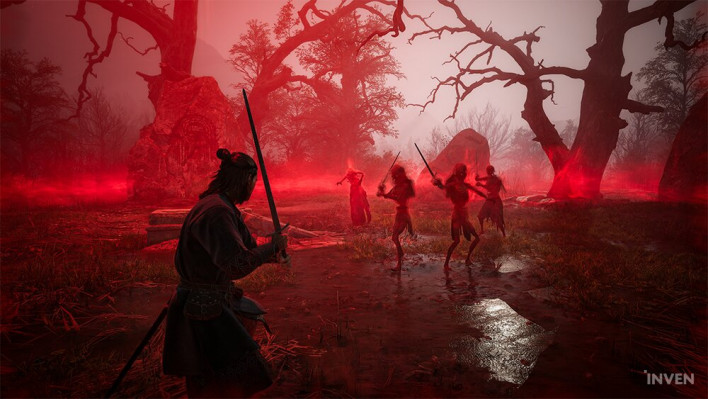
We aimed to embody the essence of a skilled warrior who not only possesses physical strength but also the precision to strike a fatal blow. Directional combat offers players more agency, allowing for a more hands-on approach to battles while necessitating a keen eye on the opponent’s movements. However, recognizing that some players may prefer a less active combat system, we have included options to tailor the gameplay experience to individual preferences.
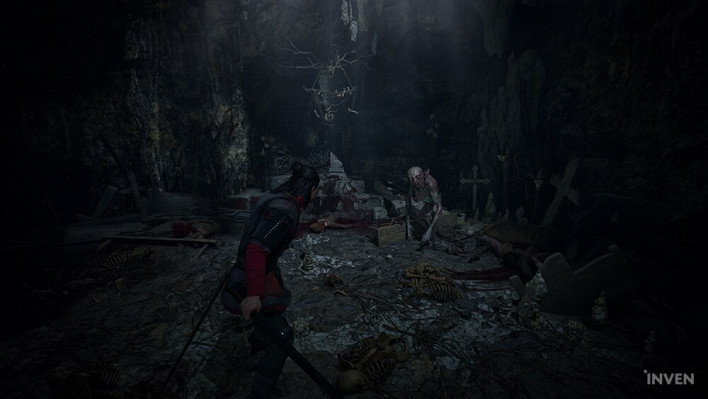
In the early stages, combat during the day and night may have felt similar, but it evolves as the character progresses. New skills and abilities unlock for both day and night combat, with magic playing a significant role during the day and vampire skills becoming more dynamic as the character feeds on blood at night. The game offers a wide range of combat options to explore and master.
Balancing combat between day and night was challenging, as we needed to ensure that both playstyles were equally engaging. Introducing new elements such as spells and swordsmanship during the day helped to make human-state combat just as compelling as vampire combat at night. The game encourages different approaches to solving challenges, whether through combat or dialogue.
The world is populated with a variety of animals and enemies to create a vibrant and immersive setting. Animals can serve as an alternative blood source for players who prefer not to feed on humans, and the game features diverse enemy types inspired by Central and Eastern European myths. Combat encounters are designed to keep players on their toes, with different enemy behaviors and attack patterns to test their skills.
The game offers a wide array of enemies and combat tools to keep gameplay varied and engaging. Mini-bosses, custom enemies, and unique weapons with special abilities provide players with numerous options to customize their combat style. Players who enjoy complex combat mechanics will find plenty of choices to suit their preferences.
Unlike typical open-world games, not everything is marked on the map in our game. We wanted to strike a balance between guiding players to content and encouraging exploration and discovery. Some points of interest are highlighted, while others must be found through exploration. Hidden content rewards players who take the time to thoroughly explore the world, offering a sense of accomplishment for discovering unique secrets.
The Dawnwalker Saga is intended to be a long-term series, with plans to continue Koen’s story across multiple games set in the Dawnwalker universe. Each installment will see Koen age, travel to different regions, and evolve as a character, creating a cohesive and expansive narrative that spans through various eras and locations.
Players will witness these changes firsthand. Our goal is to craft an expansive and adventurous narrative that spans multiple projects.
“The trailer featuring an older Koen conveys the message that this is just the beginning. Our intention was not to present this game in isolation, but as the inception of a vast and enduring journey.
As time progresses, Koen will venture to different realms, evolving as a character. In many series, the main character remains unchanged even after multiple world-saving feats. However, we aim to depict Koen’s transformation. The initial Koen is youthful, inexperienced, and bewildered by his circumstances. Our aspiration is to reveal a new facet of his character in future installments.
We are contemplating expansion into other media, including comic books. While other possibilities exist, our studio’s size is modest, with 160 team members, which is insufficient for a project of this magnitude. Hence, we are focusing on completing the game itself as a remarkable experience before exploring additional ventures.
“Regarding the game’s scale, it may be smaller in terms of level size or playtime compared to larger open-world titles. However, our focus is not on competing based on the number of hours of gameplay. Our game prioritizes depth, offering players a unique experience that reveals unseen elements present in other games.
To our Korean fans, I express my gratitude once more. It brings me immense joy to share this game with you. The past four years have been intense, filled with passion and dedication poured into this project. I hope players can feel the effort we invested and enjoy playing the game.
Please rewrite the following sentence so it is more clear and concise:
“Due to the fact that the weather was bad, the outdoor event was canceled.”