
‘Yomawari’ was a horror game where strange and terrifying things awakened at night. Now, its development team has headed to a sun-drenched rural village. ‘Silent Countryside Garden Story’ is a peaceful life simulation game where you farm, raise livestock, and mingle with villagers. However, hidden beneath that tranquility are the village’s inexplicable rules and something that can only be encountered in the dead of night.
‘Silent Countryside Garden Story,’ which embraces the dual, conflicting faces of healing and horror, will be released on July 30. On the 7th, I met with Yu Mizokami of Nippon Ichi Software in Tokyo. In a calm voice, he shared the behind-the-scenes story of how a team known for horror games managed to depict an idyllic rural life.
From the motivation behind the genre shift to the 8-to-2 ratio of life simulation to horror, the division of roles with co-developer Mio Katsumata, and the ‘Peaceful Life Mode’ that removes the scares—we covered a wide range of topics to give a glimpse into the game before its launch.

Q. This game belongs to a different lineage than ‘Yomawari.’ What was the motivation for switching to a rural life simulation genre? Also, what do you consider to be the unique color of your development staff.
“
The initial motivation for creating this life simulation was the desire to use the know-how gained from ‘Yomawari’ to create a new work in a different genre. Among the options, we chose a life simulation game.Of course, we were aware that this idyllic atmosphere and the horror genre are quite far apart. However, we also judged that we could make it work, thinking there might be a surprisingly familiar feel to it. At the very least, the rural setting was a good fit for both healing and horror, so we took on the challenge.
In terms of know-how, since ‘Yomawari’ was a quarter-view game, we thought this aspect would also pair well with a life simulation, which is why we attempted it.
Q. In a past interview, you mentioned a 8-to-2 ratio between life simulation and horror. Was this ratio decided from the early stages of development? Or did you adjust the direction as development progressed, judging that fans of ‘Yomawari’ would expect horror?
“
The 8-to-2 ratio was decided from the very beginning of development. I set it clearly at the start because I felt that if we broke this balance, we would waver during the process.And while we have been talking about it in various ways during this promotion, that is because the period from the title announcement to the release has been quite long, nearly a year and a half. We decided to change the message we convey in our promotions depending on the timing, so we tried various things.
The reason we have recently been saying ‘we worked hard on the life simulation part’ is that if we only spoke jokingly like we did at the beginning of the promotion, we would end up releasing a mysterious game with an unknown identity. That wouldn’t be good, so to let fans know what kind of game this is, we are saying, ‘We worked properly and hard on the life simulation part,’ and ‘This is what the horror part is like.’
Q. A question about the story. The word ‘village’ brings to mind an isolated, exclusionary rural area. Where did you get the inspiration for the story.
“
Since we had to include horror elements in this work, it was decided in advance that we would set the story in an exclusionary rural village.Also, in Japan, there is what is called occult-style rural horror, and this has been a trend. We thought it would be easy to convey to players what kind of scenario and content this game has, so we decided to go with this village-themed approach.
However, we calculated that if we just did a standard occult rural story, it would end up being cliché, so we wondered what would happen if we mixed in life simulation or mundane elements. The parts where we thought, ‘Wouldn’t this be interesting?’ were added, resulting in the current form.
Q. What was the most difficult part of incorporating two genres into one work.
“
Since we knew from the start that users who like life simulations are often not good with horror, we were careful not to let the vividness or repulsiveness of the horror expressions stand out too much. Unlike ‘scary,’ we aimed to ensure it wouldn’t be perceived as ‘unpleasant.’Also, things like zombies attacking or blood splattering didn’t fit the atmosphere of this work, so we basically excluded them.
Since I’ve been making things like ‘Yomawari,’ I like to surprise or play pranks, so I keep wanting to do that. But Mio Katsumata, who worked with me, stopped me, saying that if we do too much of that, users will get tired of it, so we found a proper middle ground together.
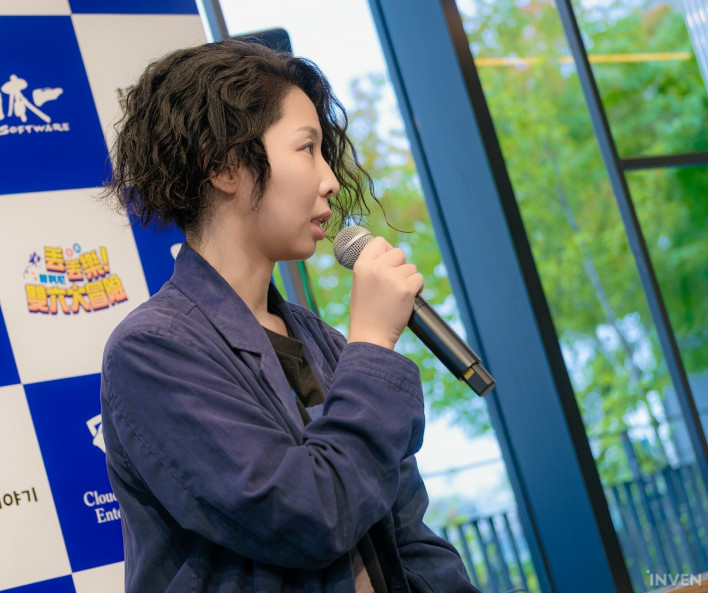
Q. Your previous works, such as ‘Yomawari’ and ‘Mad Rat Dead,’ are famous for their intense and unique themes.
I am curious about the motivation behind planning a peaceful rural genre. The creator mentioned that they wanted to explore a new game that utilized the expertise of ‘Yomawari’ and felt that a life simulation game would be a good match. They were interested in the contrast between the healing and tense elements of horror, which they believed would blend well with the themes of tension and relaxation in horror games. Additionally, they wanted to surprise players by adding darker elements to the game while their minds were relaxed from the life simulation, providing a unique experience not found in other games. They also saw it as an opportunity to challenge themselves creatively and offer something different to players. The aspect of promoting the game by switching from making horror games to an idyllic life simulation also intrigued them. What was the inspiration behind combining life simulation and horror elements in the game? How did you ensure that both aspects were integrated seamlessly and provided a unique gaming experience for players?
“The inspiration behind combining life simulation and horror elements came from wanting to offer a diverse experience to players. We wanted to create a game that could cater to different preferences, whether players enjoy the thrill of horror or the peacefulness of life simulation.
To ensure that both aspects were integrated seamlessly, we paid close attention to the gameplay mechanics and player reactions. We wanted to make sure that players could switch between the two modes effortlessly and that each element complemented the other to provide a unique and engaging experience.
Overall, we aimed to create a game that would appeal to a wide range of players and offer something new and exciting in the gaming world.”
What systematic mechanisms have you implemented to ensure that busy modern individuals can experience rest, recovery, and vitality without feeling fatigued while playing the game?
Ultimately, we have designed the game to prioritize player freedom. Players can choose to focus on progressing the main story, farming, or decorating their rooms according to their preferences. Additionally, we have included a wide variety of hidden quests that provide a sense of achievement when completed, allowing players to continuously progress without interruptions.
In terms of creating a lively atmosphere in Kagatsu Village, we focused on incorporating elements that evoke empathy and realism. By drawing inspiration from real-life experiences and settings, we aimed to make players feel as though the village truly exists. Special attention was given to capturing the rural and Japanese aesthetic, aiming to evoke a sense of nostalgia and familiarity, particularly for those who have grown up in the countryside.
When it comes to the Japanese yokai featured in the game, we aimed to introduce Korean gamers to unique and interesting creatures. We included yokai that are not only scary but also endearing, with a focus on showcasing their complexity and charm. By immersing players in the mysterious world of Kagatsu Village and its inhabitants, we hope to create a sense of intrigue and fondness towards these supernatural beings.
In terms of gameplay progression, we strived to minimize burdensome tasks such as debt repayment commonly found in life simulation games. Instead, we designed the game to naturally guide players through tutorials and story elements, allowing them to learn the game mechanics organically. By providing a sense of purpose without imposing strict objectives, we aimed to create a more relaxed and enjoyable gaming experience for players.
As the game is set to be released soon, we want to express our gratitude to the Korean fans eagerly awaiting its launch. “Silent Countryside Garden Story” offers a diverse range of gameplay elements, including yokai encounters, village history exploration, efficient life simulation, and beautiful garden decoration. With its ensemble cast and intricate storytelling, we believe that each player will find something unique to enjoy in the game. We hope that players will immerse themselves in the rich world of Kagatsu Village and uncover its many secrets and charms.
Whether you are a gamer looking for a thrilling horror experience or a player seeking a deep character-driven story, you’ll find something to enjoy in this game. Feel free to dive in from any point and discover all the fantastic features and aspects that resonate with you. Find your own unique way of playing and immerse yourself in the experience.
We are thrilled to finally release the game to all our players. We can’t wait to see you in the game and hear all about your different impressions and experiences. Let’s embark on this journey together!
The following text must be rewritten in order to improve it:
“The weather was really bad, and it ruined our plans for the weekend.”
Rewritten: “The inclement weather completely disrupted our weekend plans.”