The Trails series has been the core narrative of the Legend of Heroes franchise and a flagship for Nihon Falcom for over 20 years. ‘Trails in the Sky the 1st’ reimagined the beginning of this series for a modern audience. More than just a simple remaster, the remake was well-received and signaled a new beginning for the series.
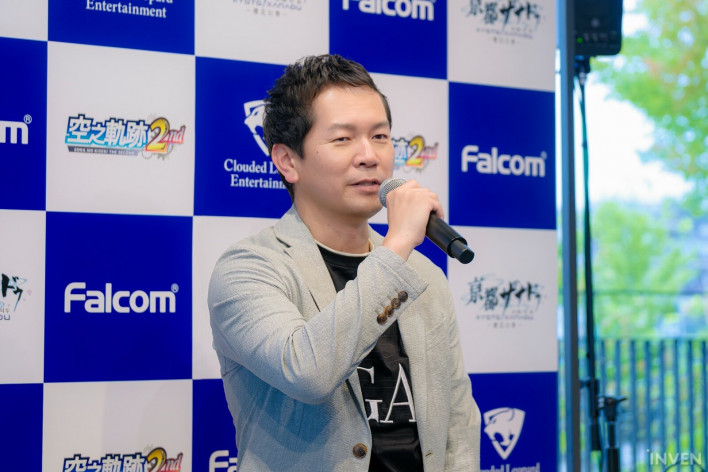
With deeper storytelling and evolved gameplay, ‘Trails in the Sky the 2nd’ is set to take the baton on September 17. On the 7th, we met with Toshihiro Kondo, President and Producer of Nihon Falcom, in Tokyo. While he introduced the new title during his presentation, he was much more relaxed during our interview as he shared behind-the-scenes stories of the development.
We discussed everything from his thoughts on bringing ‘Trails in the Sky SC’ back to life, to the difficulty adjustments made based on feedback from the previous title, the boundary between recreating and improving the original, and Nihon Falcom’s current state as it releases multiple titles in a year for the first time in over a decade, alongside ‘Kyoto Xanadu’.
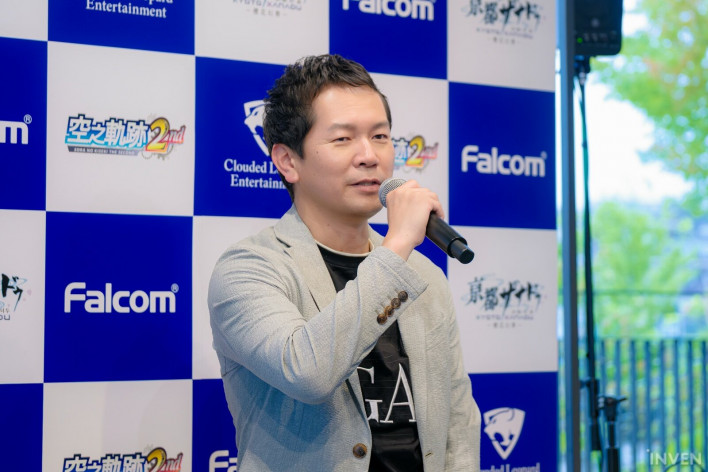
Q. ‘Trails in the Sky the 1st’ was praised for its balanced remake, capturing the original’s unique charm while meeting modern standards. Did you feel any pressure or, conversely, confidence in developing ‘Trails in the Sky the 2nd’ following that success? I am also curious about what you wanted to inherit from the first game and what you challenged yourself to do differently.
“Well, ‘Trails in the Sky’ is a work we created ourselves, isn’t it? So, the pressure of developing a sequel isn’t as great as it is when making a new Ys title. Ys is a legendary series built by our predecessors, so the pressure is immense, but this time, since it’s our own work, we were able to work relatively freely and without much burden.
Regarding what we did well in the previous title, we paid a lot of attention to player accessibility, as it is an old game. We focused on how we could make that even better in the second game. In particular, I hope players will take note of the improvements in the seamless transition between quick battles and command battles, as well as the overall polish once you enter command mode.
‘The Legend of Heroes: Trails in the Sky SC’ put significant effort into its storytelling compared to ‘The Legend of Heroes: Trails in the Sky FC’. For example, the story branches depending on the partner you choose early on. We have faithfully included that in the second game, so please look forward to it.
Q. The second game is being released just one year after the previous one. It seems development happened concurrently; was there limited time to incorporate user feedback? If so, what specifications were adjusted?
“Actually, the development periods for the first and second games overlapped. We started developing the second game toward the latter half of the first. Naturally, the period for receiving feedback was shorter than for typical titles, but we did receive one major piece of feedback: difficulty. Originally, the game was designed to be smooth and accessible even for beginners, and the difficulty was set accordingly. We made it friendly for those playing a RPG for the first time. However, because of this, there was feedback that the battles with the Enforcers were a bit underwhelming. The opinion was that they could be more challenging. So, while we maintained the previous game’s difficulty for the ‘Normal’ setting, we made the higher difficulty levels more challenging.
Also, because it’s an old game, there were many cumbersome aspects like movement, but we inherited the improved accessibility from the first game. However, there are scenes where it shouldn’t be too convenient. There are moments in the second game where feeling the inconvenience is necessary to make the scenario feel real. We made sure to keep those parts intact while having deeper discussions about which aspects of the previous game’s accessibility should be carried over.
Q. I understand that ‘Trails in the Sky’ was originally one work split into two. What was the development atmosphere like for SC after the success of FC?
“It’s an old story, but we had made the game too large, so we ended up splitting it in half and releasing FC first. I was clearly told by my seniors that if FC didn’t sell, we wouldn’t be able to release the sequel. But I think we started making it on our own before we even heard the results (laughs).
Although I said we split it in half, we had actually already completed about two-thirds of it by the time FC was released. If we had released SC as it was, the volume would have been only about one-third of the original. People were happy that we split it into two, but we worried if this volume would be enough, so we ended up remaking the entire second half. The second half wasn’t originally planned. It came from a desire to increase the game’s volume so that players would be even happier.
Falcom didn’t have a system of asking for permission; we would just start moving, and if a problem arose, the higher-ups would put a stop to it. That atmosphere was much stronger back then than it is now, and there was a general sentiment of ‘let’s just make something good.’ There’s a preview at the end of FC, right? We made and added that without company permission at the time. As the current president, I may become upset if someone were to do that today (laughs), but thanks to the free-spirited environment at Falcom back then, we were able to work freely.
Were there any original storylines that were altered during development or episodes removed to adjust the length?
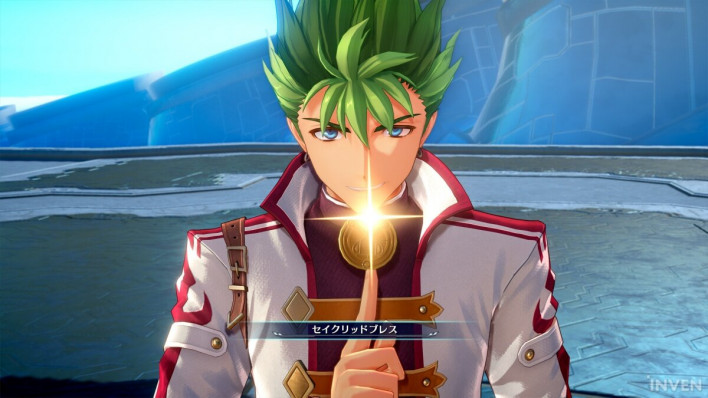
“It was actually the opposite. Nothing was removed; in fact, the content continued to expand. There were several changes made. For example, the character Agate in FC was initially intended to make a brief appearance as a regular NPC. However, he gained popularity among users, so the scenario writer elevated him to a main character and established him as Estelle’s partner early on. In a way, even though it was a packaged game, we often modified the scenario based on user feedback, similar to how an online game operates. This practice continues in the current Trails series. As development progresses, new ideas on how to improve the game emerge. While the overall series framework is on track, the creators’ thoughts and trends evolve over time. I aim to enhance the Trails series by incorporating such influences.”
You mentioned earlier that there was feedback about the travel between regions in the original game being cumbersome. How did you address movement accessibility?
“In the first game, we introduced a feature that allowed players to specify destinations directly on the map. However, there is a certain emotional aspect to walking, such as the scenery observed while traveling from one area to another, and the conversations that take place. In cases where we felt that these experiences would be lost with the map jump feature, we required players to walk; otherwise, we allowed them to fly. The Trails series incorporates elements that evoke the charm and sentiment of a journey on foot, so excessive accessibility changes could alter the game’s essence. We made careful distinctions to preserve that essence.”
New combat systems like Brave Rush have been introduced. How did you intend for users to appreciate the rhythm and strategy of combat?
“For the initial game, we implemented seamless transitions between quick battles and command battles to achieve a smooth combat experience. However, I was concerned that as the game’s pace improved, the combat might become repetitive. In the second game, we focused on reducing that monotony. Players will notice that the quick battles are more refined compared to the first game. We are exploring ways to enhance the player’s options in quick battles, such as enabling characters to use ultimate skills like Crafts on the field, or having enemies self-destruct on the battlefield after sustaining a certain amount of damage. In command battles, we aimed to enhance the strategic aspect, particularly in modes above Normal difficulty. Players can expect more challenging combat, and I encourage those who found the first game’s difficulty lacking to take on this challenge. Additionally, we introduced features like Orbment settings and Brave Boosts to counter debuffs affecting allies, without disrupting the game’s tempo. I hope advanced players will enjoy these additions as well. In modes like Hard, formidable foes known as Enforcers appear. They utilize a technique called ‘Legion Boost,’ which means improper Orbment configurations may result in defeat before the player’s turn. We strive to provide a thrilling experience and are currently fine-tuning the difficulty level.”
In the pre-release videos, the combat difficulty against enemies utilizing ‘Legion Boost’ seemed quite challenging. How did you balance the presentation of a threatening encounter with game equilibrium?
“This aspect sparked discussions among the development team. Initially, the game was extremely difficult even on Normal mode. The difficulty varies based on Orbment configurations, and we are still adjusting it. When an enemy activates Legion Boost, they can counterattack before the player’s Break move, initiating a relentless assault that tests the player’s resilience. While it’s not overly harsh on Normal, we wanted to convey the strength expected of an Enforcer. Some team members suggested an intermediate difficulty level for players who found Normal mode too easy. We are contemplating a difficulty level between Normal and Hard, possibly named ‘Advanced.’ This mode offers a richer gameplay experience while allowing those who prefer a more relaxed combat approach to enjoy the story on Normal difficulty.” We are approaching this with the utmost seriousness, and the work will likely continue until the demo version is complete. The difficulty lies in conveying the sensation through words, akin to checking if something is hot or cold by touch. While this approach worked for previous issues, it may not be applicable to every problem. Some situations require a different handling of factors A and B. By navigating this delicately, our goal is to satisfy existing fans and engage new users in a pleasant experience.
All translations with AI assistance undergo thorough review and refinement by our editorial team.
Can you please rephrase the following?