Table of Contents
The Evolution of PC Game System Requirements: A Deep Dive
When it comes to PC gaming, understanding system requirements used to be straightforward. You’d check the minimum, recommended, and higher-tier specs, compare them to your own setup, and have a clear idea of what to expect. But in recent years, the landscape of PC game system requirements has become convoluted, inconsistent, and sometimes misleading.
The Challenge of Vague Specifications
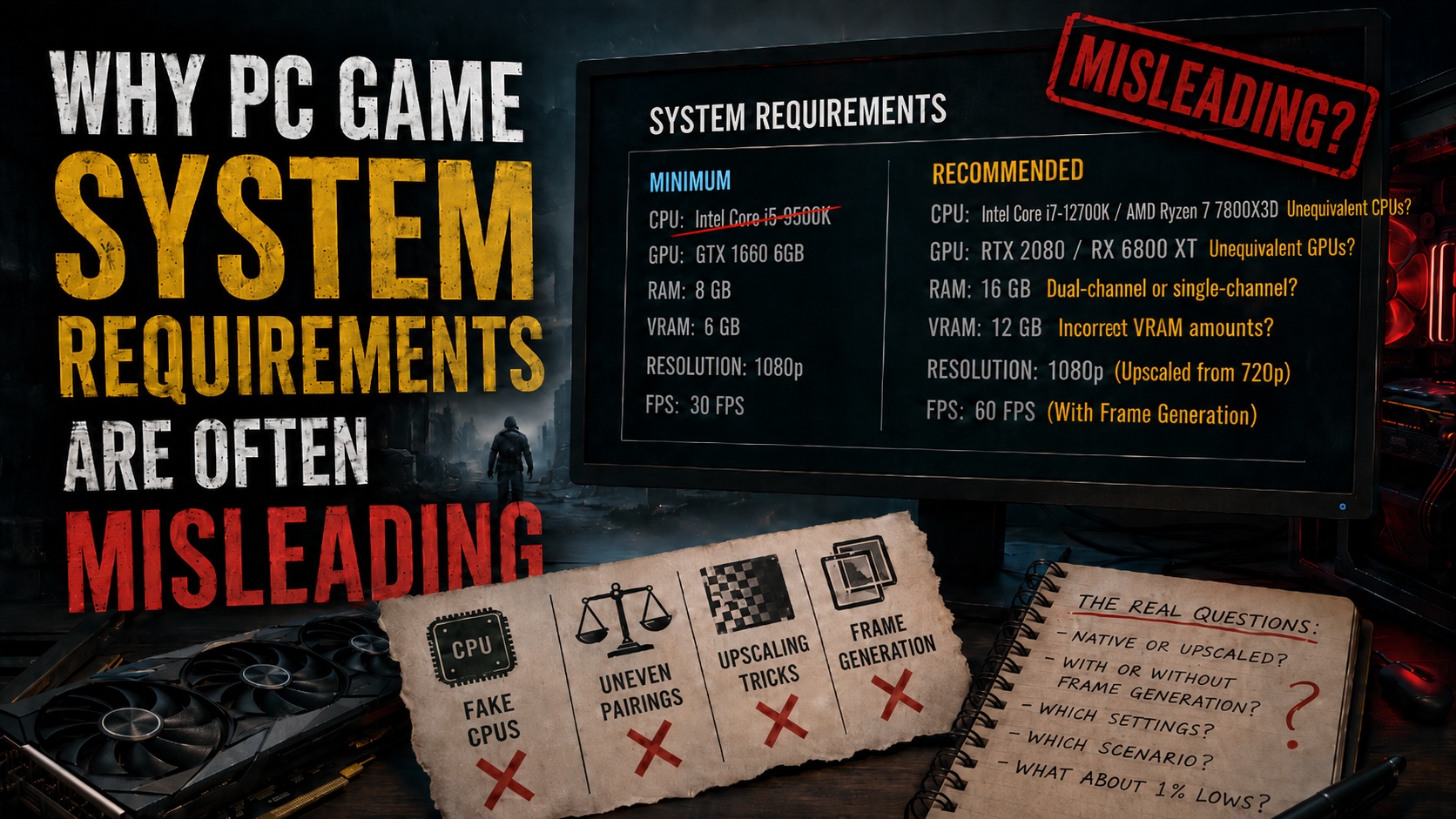
Today, we face a myriad of challenges with PC system requirements. From vague targets to hidden technologies like temporal upscaling and frame generation, it’s no longer enough to rely on traditional benchmarks. The lack of clear communication and accuracy in spec sheets has led to confusion among gamers.
While some games truly require high-end hardware due to their visual complexity, the real issue lies in the lack of transparency and specificity in communicating these requirements. Developers need to be clear about technologies like temporal upscaling and ensure that the hardware listed actually exists.
The Problem with “Minimum” and “Recommended” Specs
One of the oldest problems in PC system requirements is the lack of standardization between “minimum” and “recommended” specs. What one developer considers minimum might be vastly different from another’s definition. This ambiguity makes it challenging for players to understand what kind of experience they can expect based on their hardware.
A good system requirements sheet should answer essential questions like target resolution, graphics preset, average FPS, and performance in demanding scenarios. Unfortunately, many current requirements sheets leave these crucial details up to interpretation.
The Impact of Temporal Upscaling and Frame Generation
Modern AAA games often rely on technologies like temporal upscaling and frame generation to achieve their visual and performance goals. While these technologies can be effective when implemented correctly, the problem arises when they are not clearly disclosed in system requirements.
For instance, using temporal upscaling at lower resolutions can result in visual artifacts and poor image quality. Similarly, frame generation can create a smoother appearance but may sacrifice responsiveness and clarity. It’s essential for developers to be transparent about these technologies and their impact on performance.
Reevaluating CPU and GPU Pairings
Another common issue in PC game requirements is the mismatched pairings of CPUs and GPUs. Some spec sheets list hardware combinations that are not logically aligned in terms of performance. This lack of coherence can lead to confusion among players and raise questions about the optimization of the game for specific hardware.
Developers need to ensure that the CPU and GPU requirements are rational and reflect the actual performance needs of the game. Clarity in hardware recommendations can help players make informed decisions about their system upgrades.
Setting the Standard for Modern PC Game Requirements
As we navigate the complexities of modern PC gaming, it’s crucial for developers to redefine how system requirements are communicated. A comprehensive requirements sheet should include details on resolution targets, framerate goals, graphics presets, utilization of technologies like upscaling and frame generation, hardware bottlenecks, and memory requirements.
By providing clear and specific information, developers can empower players to make informed decisions about their hardware choices. Transparent communication in system requirements is key to ensuring a positive gaming experience for all players.
Conclusion: Paving the Way for Transparent and Accurate System Requirements
In conclusion, the evolution of PC game system requirements has brought about new challenges and complexities for both developers and players. It is time for a paradigm shift in how system requirements are presented, with a focus on transparency, accuracy, and specificity.
By setting a new standard for system requirements that includes detailed information on key performance metrics and technologies, developers can enhance the gaming experience for all players. Clarity and honesty in system requirements will not only build trust with the gaming community but also ensure that players can enjoy games to their fullest potential.