Table of Contents
Seven years after launching Control, Remedy returns to a paranatural Manhattan with Control Resonant.
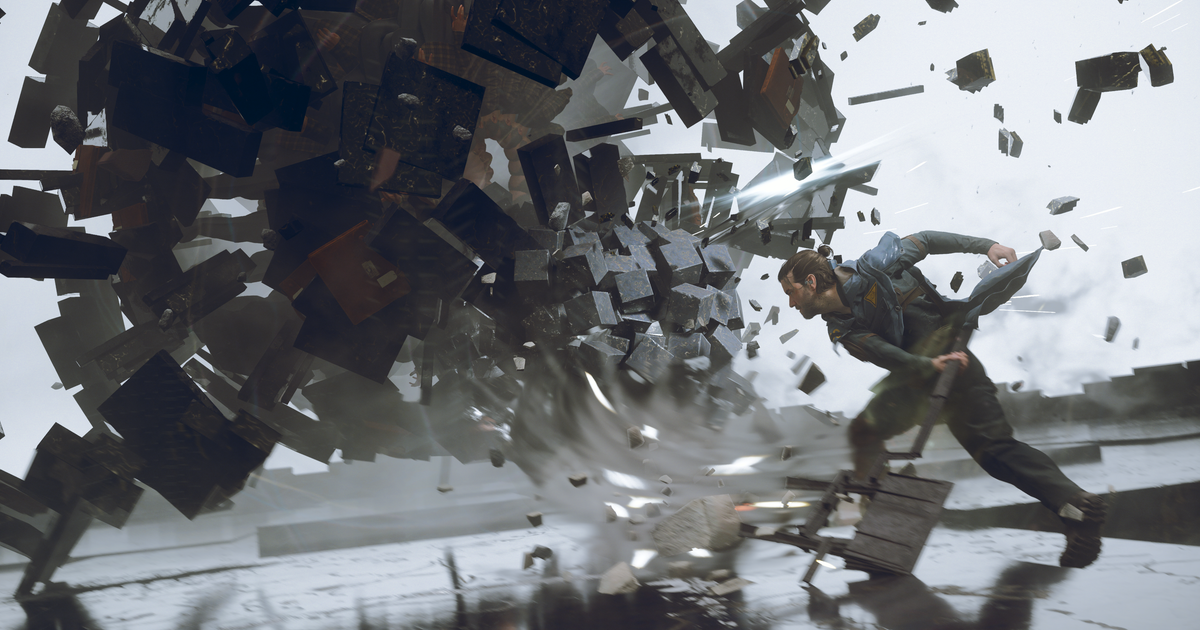
Remedy has called Resonant a “not so safe sequel,” a perception some may attribute to the new protagonist. Players explore a paranatural Manhattan as Dylan Faden, the younger brother of Control’s Jesse Faden, who has since disappeared.
Control’s creative director, Mikael Kasurinen, envisioned early that the first two games would focus on each Faden sibling. Resonant departs from Remedy’s established third-person shooter formula by introducing a melee-focused, open-ended world.
This marks a bold shift for a studio with three decades of experience in a proven genre, but early critical response indicates success with a score of 84 on Metacritic.
“[Resonant is] driven along by strong character-first storytelling and Remedy’s best action in ages”
James Archer, Rock Paper Shotgun
For Rock Paper Shotgun‘s James Archer, the studio’s “gamble pays off spectacularly.”
“Resonant’s reality-bending trip across a kaleidoscopic Manhattan is as rich in stark views, eerie atmosphere, and creative quests as Control’s Oldest House ever was, driven along by strong character-first storytelling and Remedy’s best action in ages.”
Kotaku‘s Cole Kronman held similar sentiments. “This is, without a doubt, the most demanding, most video-game-per-square-inch video game Remedy has ever made. Imperfect, but relentlessly, characteristically interesting,” he wrote.
“I won’t pretend that Remedy is reinventing any wheels. But Control Resonant stands out in a sea of blockbuster releases whose storytelling instincts range from atrophied to nonexistent. Its narrative is built from the ground up for playability by designers concerned with, above all else, why video games should be video games.”
Combat
The action centres on Dylan’s affinity for melee and use of the Aberrant, a weapon that transforms into multiple types. In Michael Higham’s 8 out of 10 review for IGN, he found that the combat was “undercooked in spots, but that doesn’t sour everything around it. Frustrations aside, Remedy’s first crack at this style of action combat is admirable because it’s foundationally sound and does have fantastic moments of satisfaction that the genre greats pull off.”
“If anything, the fights are simply a slick vehicle for building up Dylan as a character and funnelling you through one of the more inventive open worlds I’ve seen”
Eurogamer‘s Alexis Ong, in her 3 out of 5 review, criticized Dylan’s traversal abilities, which are used both in and out of combat, writing that it “plays out like Spider-Man helping literal puppies and saving civilians.”
“[Control] was a game that understood the genres it drew from, and most importantly, knew what it wasn’t (the combat systems weren’t very good then, and they’re still not great now, but let’s be real – no one is playing Remedy games for the combat).”
However, Kotaku’s Kronman found a “gratifying synergy in how the game applies movement to both combat and traversal – mastering one puts you well on your way to mastering the other.”
.png?width=2048&height=2048&fit=bounds&quality=85&format=jpg&auto=webp)
Open-ended Manhattan
The original Control contained its story inside the Oldest House, filled with shifting rooms, walls, and thresholds to alternative dimensions. In Resonant, Dylan enters an open-ended Manhattan, altered by an otherworldly entity that causes the city to fold in on itself.
The world is split into zones rather than a typical open world structure. Rock Paper Shotgun’s Archer appreciated Remedy’s take on earning XP and rewards in these zones, which level up as you fight enemies and complete side quests.
“It’s a peculiar mechanism, but one that works. Tying power progression to time and effort spent in different areas motivates exploration, arguably more so than simply slathering the map in question marks, and in my mind creating a tidy, almost Elden Ring-like loop of ‘Get rewards, challenge boss, get rewards.’ Lending, in turn, a more tangible and digestible structure to the open world.”
The change in setting shone for IGN’s Higham, too. “The way the design language of The Oldest House has spilled into the streets gives it a personality that’s so distinctly Control. The environment seamlessly guides you on what’s what and where to go, so even in the absence of a more detailed map, I was rarely ever lost as long as I paid attention to my surroundings. This strikes a delicate balance, letting the world itself take the lead rather than waypointing every little thing.”
“The way the design language of The Oldest House has spilled into the streets gives it a personality that’s so distinctly Control”
Michael Higham, IGN
“When you start to understand how these various planes converge and break from each other, I can only envy the genius of how it was designed and the headache it must have been to create, especially at this scope and scale. It’s not just for show; even when it gets unwieldy, it adds depth and texture to what would’ve felt like a fairly standard world.”
Kotaku’s Kronman described The Pattern (the force affecting Manhattan’s geometry) as “a visual and technical marvel.”
“Remedy has fully embraced the notion of video games as interactive art exhibits, designing environments under the guiding principle that 3D art and 3D level geometry can be the exact same thing,” Kronman wrote.
“There is nothing else that plays quite like this because there is nothing else that looks quite like this—the case for Remedy, once again, is that they understand on a bone-deep level what makes this medium interesting, and pursue their vision with a fervor begotten of generosity. They made Resonant because they want us to understand, too.”
But for Eurogamer’s Ong, leaving the Oldest House removed the innate weirdness of what it contained.
“The Oldest House was a moody, ancient Brutalist cocoon full of secrets – you couldn’t trust the walls around you, which was a neat setting for getting sucked into the bowels of a government agency,” she wrote.
“When faced with the challenge of revitalizing a landscape dominated by city blocks and repetitive military blockades, there are limits to how much one can do without sacrificing aesthetic impact.”
“At a certain point, Resonant relies heavily on quirky oddities in New York to compensate for a lack of narrative depth and quality. It fails to deliver the same ‘wow’ moments and immersive atmosphere that made Control so special.”
Challenges with Boss Battles
Resonant faced criticism primarily for its boss battles. While critics praised the design and execution, they found fault with the level design and combat mechanics.
“The encounter design is where Control Resonant struggles the most,” noted Higham. “Some bosses feel like tedious endurance tests rather than skill challenges. Once you figure out their patterns, it becomes a repetitive cycle of chipping away at their health bar.”
Archer from Rock Paper Shotgun also pointed out that some bosses highlighted Remedy’s lack of experience in character action games.
“While some boss battles offer engaging paranormal duels, others rely too heavily on massive health pools and high damage attacks, rather than strategic gameplay. Despite this, their visually striking design and the potential for new combat abilities make them worth pursuing,”

Exploring the Narrative
Players familiar with Control will recognize Dylan, who was previously influenced by the malevolent Hiss entity. Resonant provides new players with enough backstory to understand Dylan’s journey and his interactions with the world.
Higham from IGN observed that Resonant serves as both a sequel and a prequel to Control, offering more insights into the lore previously hinted at in the game. However, he mentioned that the main storyline relies on some convenient plot resolutions, which may affect the emotional impact of the overall narrative,
Ong from Eurogamer attributed pacing issues in Resonant to its open-world structure.
“The game oscillates between major world-saving events and minor side stories where the best storytelling is hidden”
Alexis Ong, Eurogamer
“While following the typical AAA formula of balancing grand narratives with smaller subplots, Resonant sometimes struggles with pacing, leading to a sprawling narrative that deviates from the focused journey of Jesse in Control.”
Kronman from Kotaku noted that the dialogue in Resonant could be inconsistent, similar to Control, with occasional reliance on snarky banter over genuine character development. Despite this, he found these flaws forgivable in the context of an overall engaging story.
Critical Consensus
Critics generally praised Remedy’s decision to evolve beyond their typical formula.
“Control Resonant offers a more traditional storyline from Remedy, but still manages to surprise with its bold moments. From the intricate world design to the character developments, the game is enriched by memorable experiences,” said Higham from IGN.
However, Ong from Eurogamer felt that Resonant attempts to mimic the structure of live-service games without fully succeeding, which impacts the unique storytelling style that made the original game stand out.
“The key challenge lies in maintaining the original eerie charm that defined Control while expanding on its core essence. It’s not about presenting something entirely new but rather preserving the magic that made the game special,”
For Kronman from Kotaku, Resonant exceeded expectations by offering an unpredictable journey. “I anticipated Control Resonant to follow a familiar path, but now I’m intrigued by the unknown possibilities that lie ahead.”
Please rewrite the following sentence so it is in your own words:
“The cat chased the mouse around the house.”