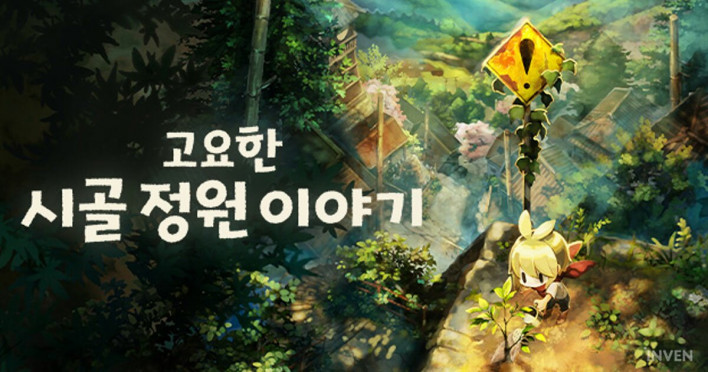
When ‘Silent Countryside Garden Story’ was first unveiled, it was presented solely as a life simulator without any horror elements, making it difficult to pin down the game’s true identity. While its visual style was reminiscent of ‘Yomawari,’ the subsequent reveal of the development team and various gameplay elements heightened expectations for a new horror title from Yu Mizokami.
It is a new horror experience from the ‘Yomawari’ team, but with a life simulation twist. However, the developers were careful not to make either aspect feel like a mere afterthought. In fact, having released a string of horror games, the team focused even more heavily on the life simulation portion. By including a ‘Peaceful Life Mode’ that allows players to enjoy the game without any horror elements, they are confident that this title stands as a complete life simulator in its own right.
The demo held in Tokyo, Japan, was played in Peaceful Life Mode, reflecting that confidence. It was enough to feel that the game has a solid foundation within the life simulation genre.
Although the developers mentioned that the final game will guide players through the mechanics with a thorough Tutorial, this demo threw us straight into the action. Without any introduction, the game began on a random day, starting us off right at the point where we leave the house to begin managing the farm.
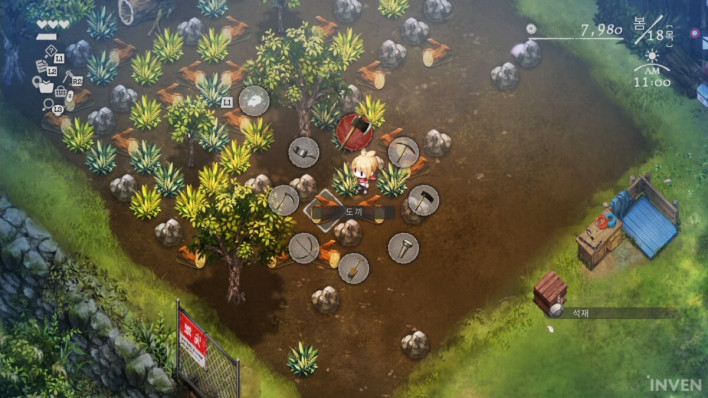
The game follows the familiar structure established by titles from ‘Story of Seasons’ to ‘Stardew Valley.’ The farm started out overgrown with rocks, trees, and weeds, which had to be cleared before any serious farming could begin. After chopping some wood and clearing rocks to level the ground, I was ready to till the soil and plant seeds.
However, since I started with nothing in my inventory, I had to find the general store to buy seeds. This is where the ‘Yomawari’-style presentation really stands out. While it uses a top-down view like other games in the genre, the subtly tilted isometric perspective—a hallmark of ‘Yomawari’—feels both familiar and fresh. It is familiar because it borrows that specific camera angle, yet fresh because it captures a daytime landscape that we have never seen in that style before.
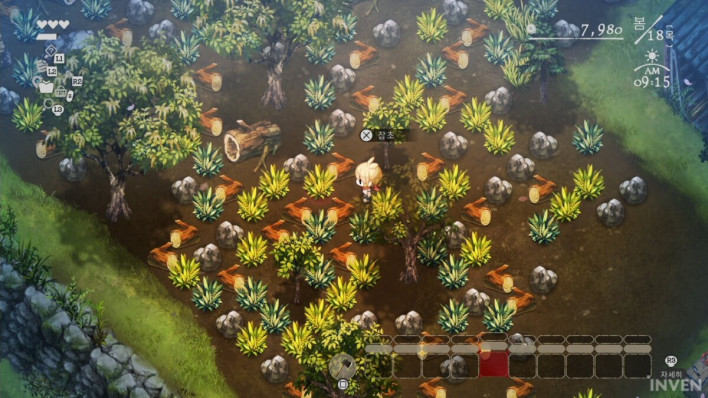
The daytime scenery of ‘Silent Countryside Garden Story’ offers a distinctly different vibe. Even though it is from a horror developer, the game is known for its charming aesthetic, and the interplay of sunlight and shadows creates a much warmer atmosphere. Furthermore, unlike similar games that typically depict Western towns or cities, the Japanese countryside setting provides a unique visual experience.
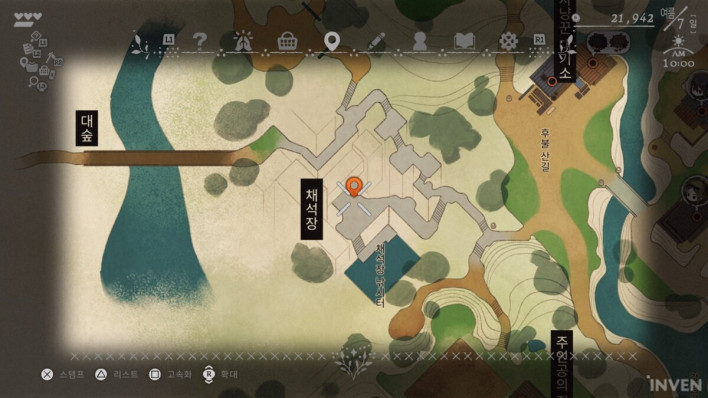
The small rural village is home to only about a dozen NPCs, which is not a large number. However, because the camera is zoomed in quite closely, the village feels larger than it actually is. Each villager has a distinct role and follows their own daily routine, making the small town feel more alive.
Buildings like Kiki Construction, the library, the clinic, and the general store (where you buy items and seeds) are scattered throughout the village and can only be visited during business hours. You cannot enter the homes of ordinary residents due to a lack of familiarity. As the developer mentioned in an interview, since the protagonist is a child, there are no deep romance elements. However, it is clear that the friendship and affinity systems function in ways other than romance.
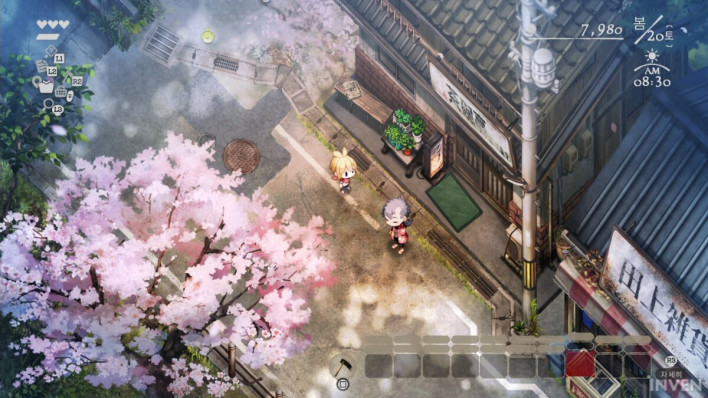
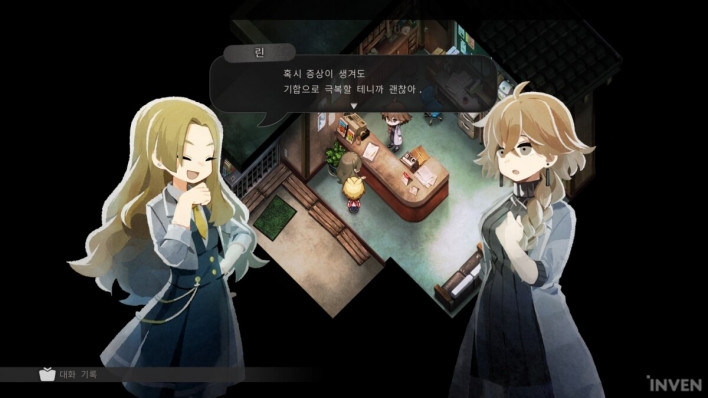
After buying my first seeds in town, I returned to the farm, planted them, and began farming in earnest, drawing water from a well to use with my watering can. Because of the camera angle, moving in the exact direction you want can be tricky, but the game includes basic controls: L1 allows for strafing while locked in a direction, and R1 locks movement while allowing you to adjust your facing. With a little practice, I was able to till the soil in the desired patterns and move with precision.
In contrast to these quality-of-life features, there are obstacles to farming, such as the protagonist’s low stamina. A bit of weeding or rock-clearing quickly drains your energy. This can be upgraded using ‘Magatama’ (curved jewels) found in the game. At the shrine right in front of the house, you can enhance various stats like farming efficiency and foraging probability
While some Magatama can be purchased, I could not confirm other acquisition methods during this demo. However, since Magatama is a type of currency that doesn’t quite fit a standard life simulator, I suspect they might be earned through the horror segments or story progression.
You can also restore stamina by crafting items like rice balls. However, the game doesn’t explicitly teach you how to craft at the start. Although there is a hearth in the house, you actually need to purchase a workbench to do any real crafting. Without a tutorial, I realized this quite late in the demo.
You can utilize this workbench to craft nearly all the necessary production tools for the game, such as pickling jars, furnaces, beehives, and sap collectors.
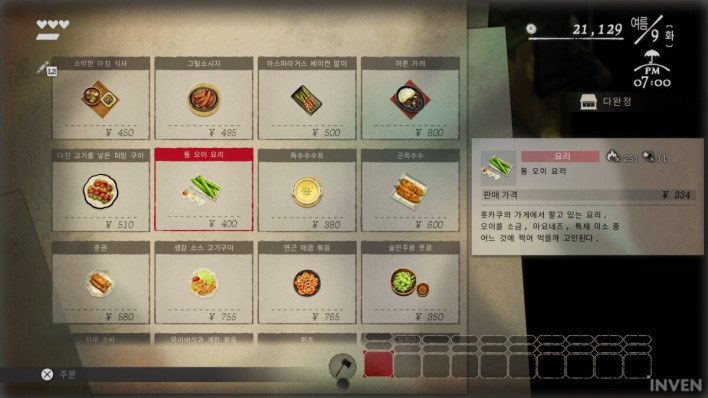
As indicated by the list, both gathering materials and utilizing them involve additional steps. For example, if you mine ore in the caves, you must return it and convert it into usable ingots, while food needs to be fermented in pickling jars. This process allows you to gradually expand your farming activities.
Hunting in the game also follows a similar sequential process. Starting with a bow, I attempted to shoot squirrels outside the village, but couldn’t harvest meat due to a lack of the proper license. However, I faced no obstacles when attacking enemies in the mines. These mines not only house enemies but also offer various ores, items, and materials on each floor. With improved stamina, it seems likely that players will spend their time in these mines after completing their daily farm tasks.
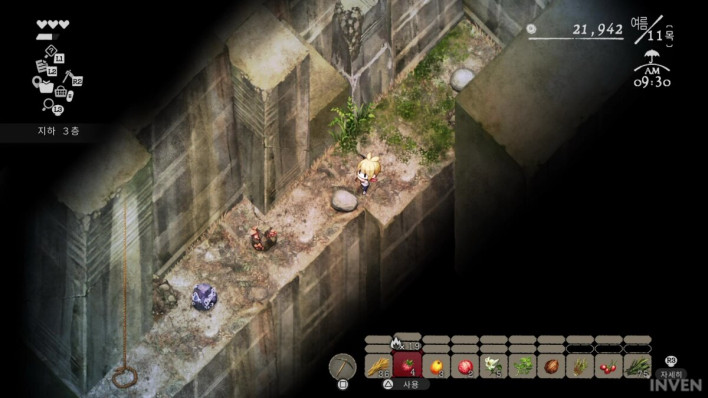
The demo concluded after an hour and a half while I was deeply engrossed in mining. Although I didn’t personally confirm it, the livestock roster includes chickens, ducks, cows, and sheep. Additionally, there is a convenient fast-travel feature where players can summon their dog with a whistle to swiftly return home from any location.
While the demo didn’t feature any horror elements, the game still felt rich in potential. The full enjoyment of the life simulation aspect typically emerges as players enhance their stamina and establish more facilities.
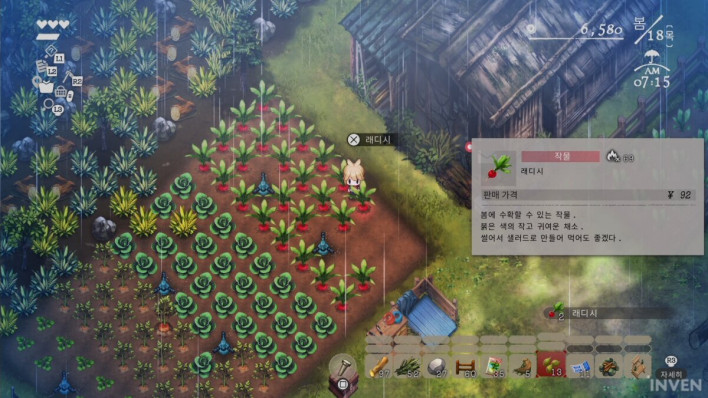
However, the item encyclopedia menu reveals a vast array of unlockable items, indicating substantial content to engage players for an extended period. While ‘Yomawari’ incorporates horror through various directorial techniques, it is relatively mild compared to many recent horror games, suggesting that players can delve into the deeper content without excessive stress.
‘Silent Countryside Garden Story’ is set for release on July 30 for Nintendo Switch, Nintendo Switch 2, PS5, and PC.
Please rewrite the following sentence to improve clarity:
Original: “The data was analyzed by the research team and conclusions were drawn.”
Rewritten: “The research team analyzed the data and drew conclusions.”