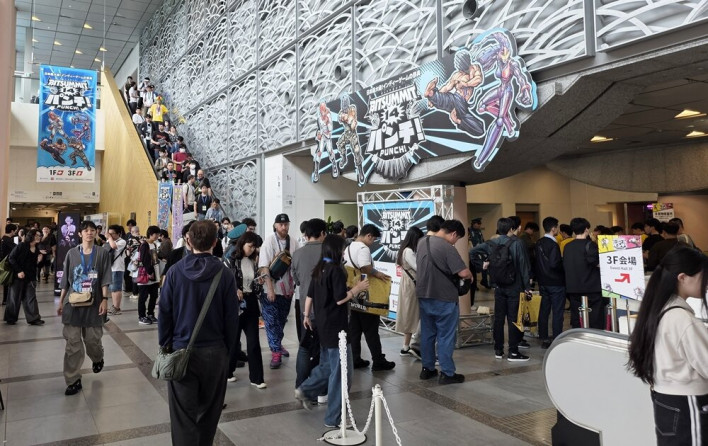
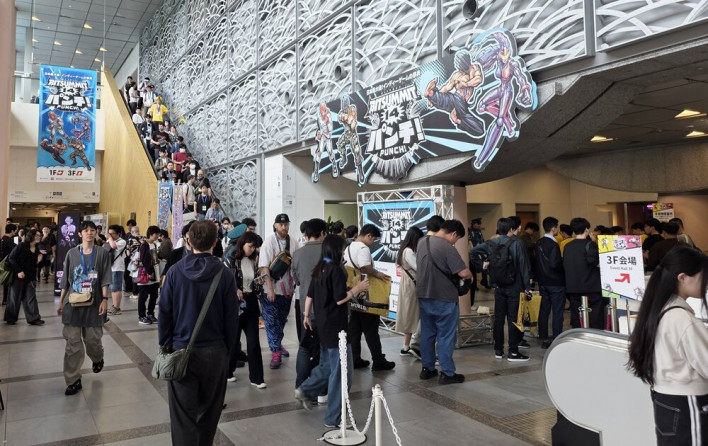
BitSummit, Japan’s largest indie game exhibition, successfully held its 14th annual event at Miyako Messe in Kyoto. More than just an exhibition, BitSummit is a global indie game festival where developers, media, sponsors, publishers, and fans from around the world gather to connect in person. This year, INVEN participated as an official media partner, visiting Kyoto to capture the front lines of indie gaming, which are brimming with fresh ideas and passion.
The foundation for this massive festival to firmly establish itself as a global event lies in a key figure who deeply understands the perspectives of both participants and organizers: Masahiko Murakami, a director at the Japan Independent Games Aggregate (JIGA) and CEO of Skeleton Crew Studio. He has a unique background, having first participated in BitSummit as an indie developer in 2014, where he won the grand prize for ‘Modern Zombie Taxi Driver,’ before joining the event’s management team in 2015. Because he understands the creator’s perspective better than anyone, he has played a pivotal role in developing BitSummit into a true hub for developer exchange.
Over its 13-year journey, BitSummit has grown from a small meetup of 200 people into a massive event attracting nearly 60k. What does the unique indie game ecosystem of ‘Kyoto’ look like, and how does it differ from the Tokyo Game Show? We met with Director Murakami at the bustling BitSummit venue to discuss the event’s philosophy, vision, and the potential for positive collaboration with the Korean indie game industry.
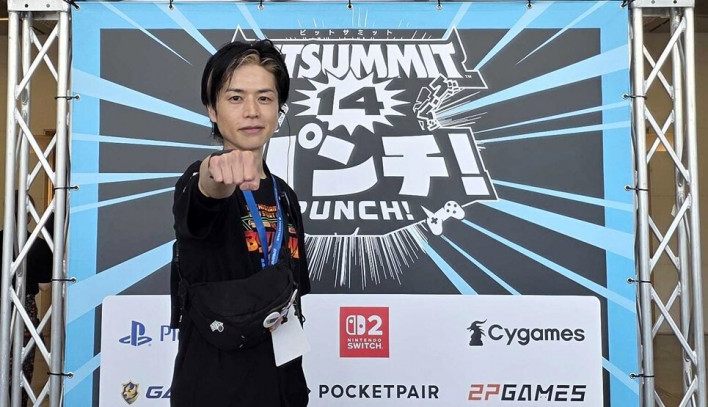
Q. For those in the Korean game industry or gamers who may not be familiar with BitSummit, could you briefly introduce the event.
“ BitSummit is the largest indie game exhibition in Japan. It is held annually at Miyako Messe in Kyoto and is now in its 14th year. It is a global event that brings together developers, media, sponsors, publishers, and game fans not only from Japan but from all over the world. Last year, at our 13th event, we welcomed nearly 60k visitors over three days.
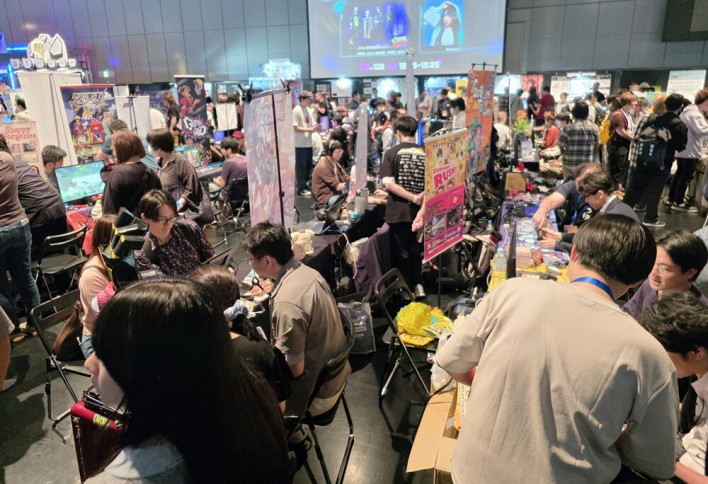
The most important thing is that this is not just an event for exhibiting games; it is an ‘event for developers’ where they can introduce and promote their work directly to attendees. The venue is divided into sponsor booths, publisher booths, and developer booths. The developer booths, in particular, are set up as individual tables so that creators can communicate directly with a wide variety of people.
Q. I heard that you were originally an exhibitor and joined the management team in 2015 after winning the grand prize at the 2014 BitSummit for ‘Modern Zombie Taxi Driver.’ As someone who has experienced both sides, how do you view BitSummit.
“ From an exhibitor’s (developer’s) perspective, it is realistically quite difficult to get your game introduced in the media, talk directly to publishers, or get sponsors to notice your work. Sending emails rarely yields results. However, at an offline event like this, the ability to meet stakeholders in person and have them play your game is incredibly meaningful.
Furthermore, receiving praise or winning an award on a stage known to fans worldwide creates value that goes beyond just ‘making a game,’ allowing you to connect with people on a higher level. Since games often improve through feedback, I hope every developer will consider exhibiting or attending to experience the power of this community.
From an organizer’s perspective, we started with the desire to ‘show the world interesting Japanese games that haven’t been discovered yet.’ I believe the fact that so many publishers and media representatives from around the world come all the way to Kyoto is of immense value to developers. As we look toward our 15th and 16th years, we are constantly thinking hard about how we can provide more ‘chances’ to creators.
Q. BitSummit started with about 200 people in 2013 and has grown to attract over 60k in 2025. What do you consider the biggest turning point in this 13-year journey, and what do you think allowed it to become Japan’s largest indie game event?
“ I believe there have been several turning points, but the first was undoubtedly the formation of the ‘organization.’ Originally, it felt more like a meetup hosted by a single company, but the establishment of JIGA (Japan Independent Games Aggregate) was a major step forward, as it solidified our resolve to organize and run the event with a proper structure.
Another factor was the continuous participation of major sponsors like Nintendo and Sony, who supported developers releasing games on their platforms. I believe Nintendo joined around 2015, and that was the moment it was clearly recognized as an ‘event worth exhibiting at.’
Also, a very difficult but ultimately positive experience was the COVID-19 pandemic, when we couldn’t hold offline events at all. By moving the event online, we broke free from the constraint that you had to be in Kyoto at a specific time to enjoy BitSummit, allowing us to reach many more people. We poured a lot of effort into our online presence from then on. While visiting the venue is best, the system we built to ensure information is well-delivered even remotely is a direct result of our online experiments during the 2020 pandemic.
I believe that period brought about significant changes in various ways.
Regarding growth, it was a gradual process. As previously mentioned, due to the high regard we hold for game developers, those who participated or attended once would return home and spread the word that it was ‘truly exceptional.’ I believe our growth is the outcome of the accumulated positive feedback.
Since then, we have maintained a close line of communication, fostering a strong, enduring partnership by establishing cross-booths at each other’s events and sending developers from both Korea and Japan. As Asian countries with similar cultural backgrounds, Korea and Japan are cultivating a positive relationship of collaboration and mutual support.
Moreover, in addition to these collaborations led by institutions, there have been recent efforts to promote exchange within the private sector and offline venues. For example, a Japanese game pop-up store was hosted at Mario Outlet in Seoul, Korea, where I personally assisted with networking and local coordination to ensure the event’s success. It is truly significant that opportunities for users in both countries to immerse themselves in each other’s game culture are on the rise.
When it comes to the Korean game industry and indie developers, it is crucial to pay attention to BitSummit. The Korean indie market, although growing rapidly, may benefit from exploring overseas expansion. Instead of diving into highly competitive markets like North America or Europe right away, I suggest starting with the Japanese market. With its geographical proximity, lack of time difference, and high level of cultural understanding, Japan provides an advantageous entry point for Korean developers to test their games, garner media exposure, and build a dedicated fan base.
In closing, I would like to express our desire to showcase more of Korea’s exceptional indie games, especially those crafted by passionate Korean developers, to a wider audience in Japan. I also hope to see more positive initiatives like ‘Korea-Japan joint projects,’ where creators from both countries collaborate on new games or investment opportunities, flourishing actively in both nations. Could you please rewrite the following sentence?