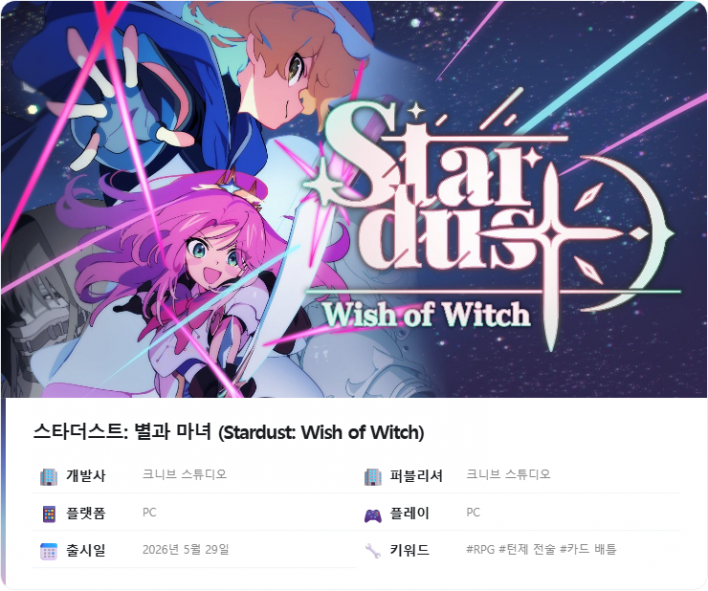
Among the many game genres that have stood the test of time, few evoke a sense of nostalgia quite like the SRPG. Many of the classic RPGs etched into players’ memories were turn-based or SRPGs, and the genre has been carried forward by developers who grew up playing those very titles. While this implies a rich tradition, it can also make the genre feel somewhat alien to those without such memories, or perhaps even ‘old-fashioned’ given its roots in a bygone era of gaming sensibilities.
‘Stardust = Star and Witch,’ released by Knive Studio on the 29th, is a title that embraces those risks while infusing the experience with the freshness of youthful memories. It isn’t perfect, but that very imperfection gives it a charm that makes you grow fond of it. By the time the adventure ends, you are left with a lingering sense of longing, wishing you could see more of the story.
Rediscovering the Fresh Sensibility of Adventure and Love We Had Forgotten
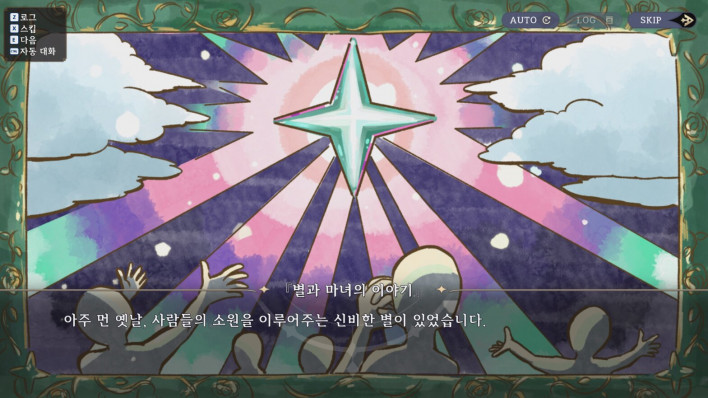
‘Stardust = Star and Witch’ begins with a very familiar tale. As the title suggests, the core themes are ‘stars’ and ‘witches.’ A witch wishes upon a star—which grants all wishes—for true love. However, the star, not knowing how to grant such a wish, falls into confusion and begins fulfilling people’s wishes in strange ways. People blame the witch for all the chaos, and the witch, blaming herself for the mistake, sends the star far away before the world falls into further disarray. Once the star disappears, the people, in their anger, sentence the witch to death, and the star occasionally drops pieces of itself onto the land in search of her.
The adventure begins with the reading of this fairy tale, setting up a very familiar dynamic. You can immediately grasp the archetypes: Star, the cheerful, simple-minded, and justice-driven tomboy protagonist, and Yu, her calm and mature childhood friend. The voice acting is superb, instantly conveying the characters’ personalities without the need for lengthy exposition.
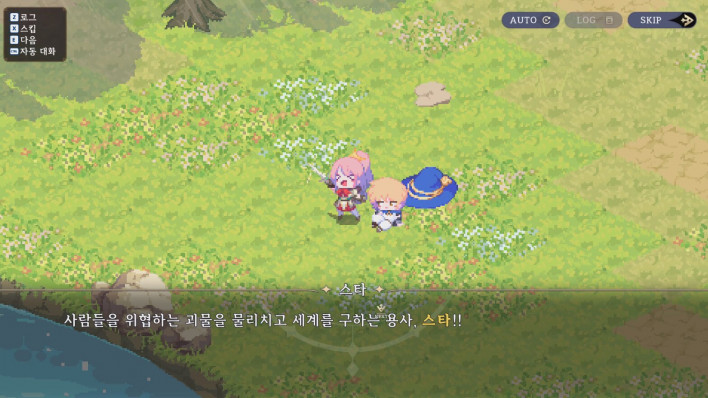
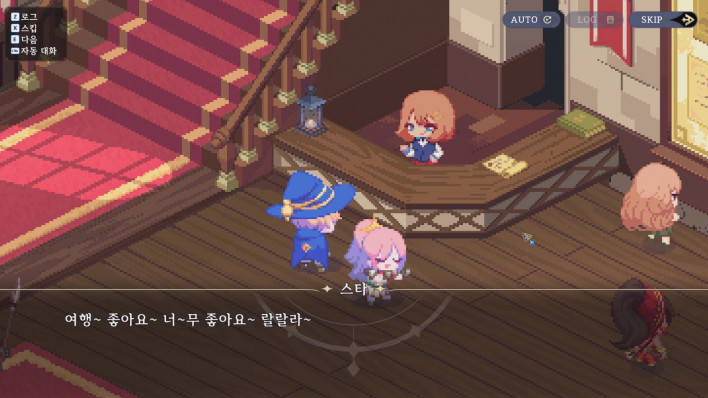
While one might call it stereotypical, Stardust’s strength lies in leaning into the advantages of that very archetype, requiring no further explanation. Without complex setup, the story focuses on the chaotic adventures, growth, and love of a tomboy who admires heroes. Since the narrative path is clearly laid out, there was no need to add unnecessary fluff to make it seem more sophisticated.
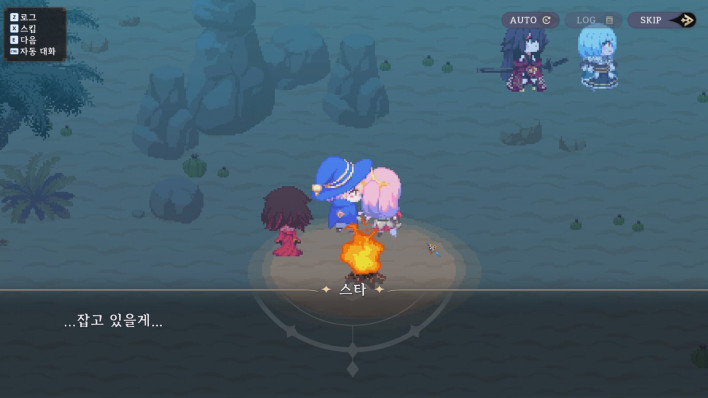
In terms of game design, there are some excessive elements. While starting at an inn evokes a classic JRPG feel, the lack of hidden elements or secrets scattered across the map is a drawback. The surprise factor of finding hidden items to speed up a clear or uncovering secret lore is minimal, which makes the overall polish feel somewhat lacking. The loop of staying at an inn, accepting a request, heading out, returning, and repeating the process the next day remains consistent throughout. While some main story segments involve camping, the fundamental structure remains largely unchanged.
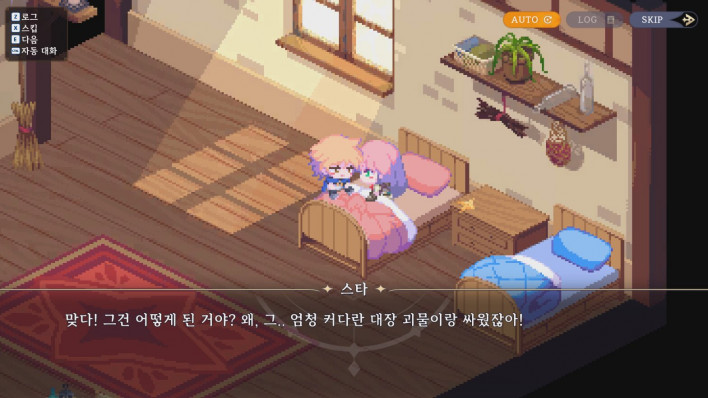
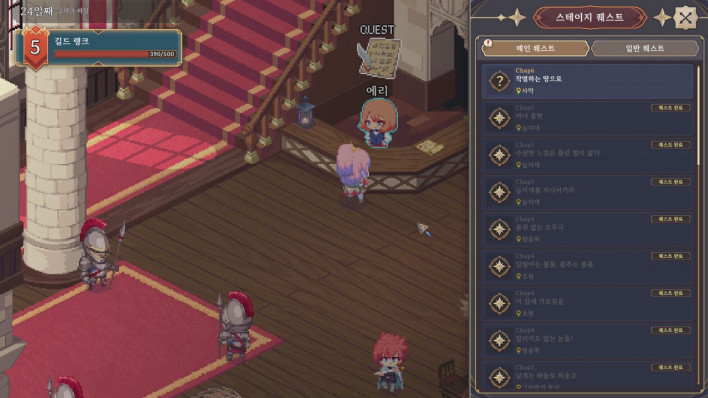
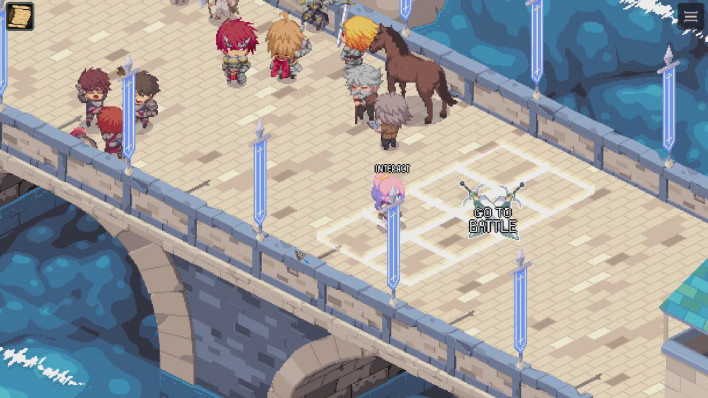
However, the game avoids dragging out familiar tropes, keeping things clean and focusing on the ‘tiki-taka’ banter between Star’s liveliness and Yu’s dry retorts. This focus highlights the game’s fresh charm. Had the design been more complex, the focus might have shifted, but by minimizing those elements, the game keeps the player fully engaged with the dialogue and story. The pacing is brisk, and the main story is fully voiced, making it a smooth experience.
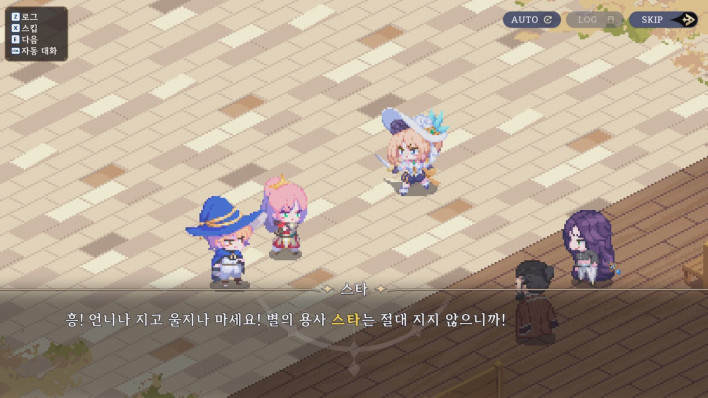
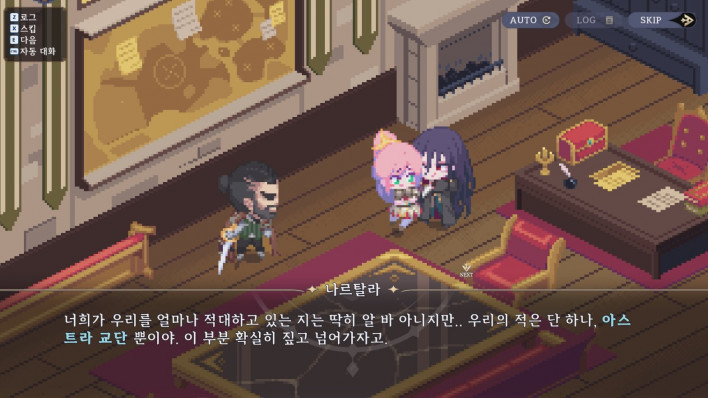
The visual direction supporting this sensibility is not particularly flashy. With very few exceptions, the game relies on static scenes of characters talking on the field. To prevent this from feeling monotonous, the game keeps the narrative moving quickly, a choice that proves quite effective. Looking back at the gameplay, these strategies become apparent, but they weren’t distracting while I was playing.
Furthermore, Star is a very expressive character, and the full voice acting combined with a variety of facial expressions adds significant weight to her performance. Since other parts of the game are static, Star naturally stands out, drawing the player into her youthful journey. It’s a familiar structure, but one you can’t look away from—a classic flavor that remains satisfying. From the protagonist’s secrets to the conflicts between various factions and the hardships she overcomes, the game expertly delivers the tropes we know and love.
Additionally, skill enhancement cards can be acquired through a gacha-like system using ‘meteorites’ earned from quests. However, the game fails to explain when this feature unlocks, leading to potential oversight.
Our newsroom carefully reviews and refines all translations assisted by AI technology.