Topic: Making the Games I Wanted to Play: A Live Service Operation Log from Korean Auteur PDs
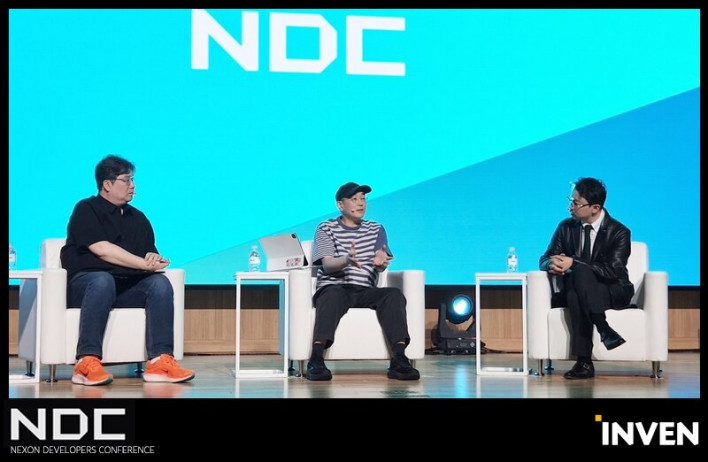
Speakers: Kim Yong-ha, Kim Ji-hoon, Jung Woo-chul – Nexon Games / Project Moon / ThisIsGame
Category: Game Design / IP
Recommended for: Developers defining the vision and direction of their games
Tags: #NDC25 #Subculture #Auteurism #LiveService
[🚨 Lecture Topic] Through the contrasting styles of ‘Blue Archive’ and ‘Limbus Company,’ we examine how a creator’s taste and persistence are maintained and evolved in a live service environment. We discuss the direction of Korean auteur PDs amidst user feedback, global fandoms, and the creative landscape of the AI era.
Two creators who enjoy unparalleled popularity in Korea have met. Nexon Games Director Kim Yong-ha, who started with ‘Magical Library Qurare,’ led the massive success of ‘Blue Archive,’ and is currently preparing ‘Project RX.’ And Project Moon CEO Kim Ji-hoon, who has been unfolding his own unique stories based on distinct worldviews from ‘Lobotomy Corporation’ to ‘Limbus Company.’
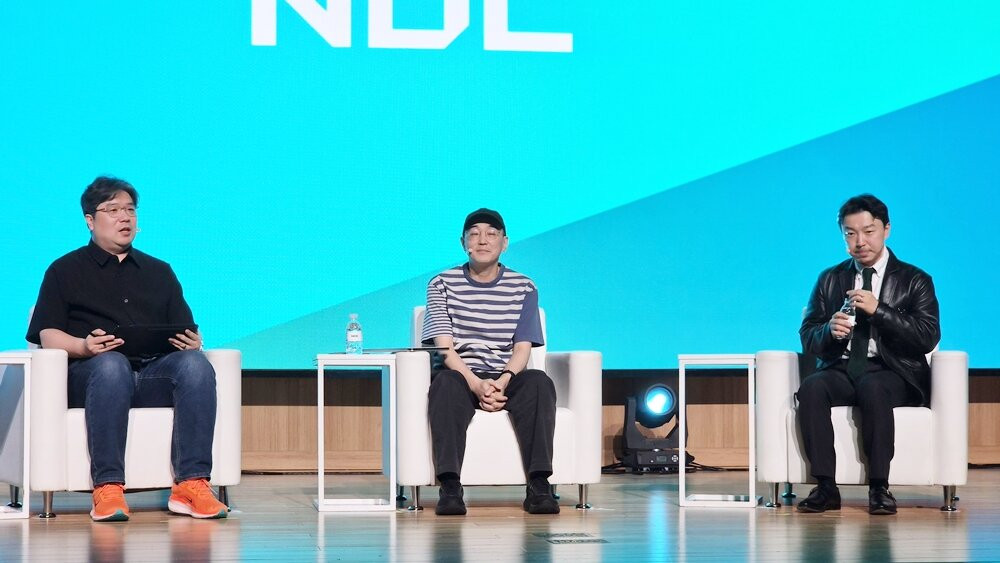
The two, whose popularity is so immense that long lines for autographs formed even before the lecture began, took the stage together. A common trait they share, beyond their massive popularity, is that they each created the ‘games they wanted.’ Director Kim Yong-ha revealed his deep and wide ‘geekiness’ to the world through his games, while CEO Kim Ji-hoon built a massive global fandom based on a worldview composed of literary concepts and three-dimensional characters.
The moderator was Jung Woo-chul, Editor-in-Chief of the gaming media outlet ThisIsGame. While the topic of the day’s talk was ‘Auteur PDs’ Live Service Operation Log,’ the actual conversation flowed somewhat differently. Having rejected the label of ‘auteur’ from the start, the two developers began a more fundamental discussion—simply telling their own stories.
※ This article has been minimally edited to improve readability while maintaining the flow of the conversation.
I ended up here because I made the games I wanted to make
Jung Woo-chul = First, let’s talk about today’s topic, ‘auteurism.’ Making the games you want to make yourself. What do you both think about auteurism?
Kim Yong-ha = I feel burdened by the term ‘auteurism.’ In fact, I’ve never developed a game with auteurism in mind. When I first started, I thought I could make any game. I liked many genres and played a lot. But when I actually tried, I realized I wasn’t good at creating a formula that everyone would like. If I kept trying to predict why someone would like it, I would gradually lose my way. Asking others if something was ‘good’ during development didn’t lead to good results either.
After experiencing some failure, I realized that if I kept developing this way, I would end up making a game that satisfied no one. So, I thought, why not try making what I really wanted, even if I failed? The game I made that way was ‘Qurare.’ Since then, I’ve learned that there are people who appreciate it when I show them what I like, and thankfully, I’ve been able to continue until now.
Kim Ji-hoon: I’m similar. I didn’t make games with some grand idea of auteurism. It just became what it is now because I made the games I wanted to make and thought would be fun. People started to like them, and I saw the direction they wanted as well. I’ve changed little by little through that process. So, rather than being conscious of the auteurist movement, I just did it, and what I wanted to make was created. It might look like that in retrospect, but it wasn’t intentional.
Kim Yong-ha = I’m suddenly curious. Did you have an ideal vision of the game you wanted to make from the start?
Kim Ji-hoon: I definitely did when making ‘Lobotomy Corporation.’ But strangely, the gameplay itself rarely turns out the way I want. When making ‘Library of Ruina,’ I actually thought of a form where you watch auto-battles unfold, but it ended up being a deck-building game.
Kim Yong-ha = You had played ‘Slay the Spire’ before that, right?
Kim Ji-hoon: That’s right. That was just when ‘Slay the Spire’-likes were emerging. It was so much fun. I tried various things, and that’s how it turned out. Still, the stories, themes, and specific scenes I wanted to convey were clear. I focused more on containing those than on the gameplay itself. I thought the gameplay was enough if it provided an experience that could convey the story I wanted to show. Fortunately, in ‘Limbus Company,’ it got closer to the combat I wanted, and I was able to compensate for many of the regrets I felt during ‘Ruina.’
Kim Yong-ha = I’m similar. I didn’t think from the start that I had to make a game centered on ‘experience.’ During ‘Qurare,’ I had a stronger desire to expand the grammar of existing pretty girl collection games to create a different kind of fun. Then I made the VR game ‘Focus on You,’ and while making that, I thought more deeply about the ‘experience’ aspect. In VR, it was important to make the player feel like they really existed in that world. I contemplated how to express the presence of the character or the reality of the world. I can still do ‘dogeza’ for this right now. To clarify, I wasn’t initially fond of appearing on broadcasts myself. I am quite introverted. I believed that the Senseis would prefer a different approach rather than the developer appearing directly. I happened to enjoy VTuber content, and I spent a long time preparing it with the idea of trying something new related to Blue Archive. Kim Ji-hoon: I know you put a lot of effort into it. Kim Yong-ha: But in the end, our judgment was wrong. I monitored the situation in real-time, and on the day I posted the apology, I was actually on vacation. However, I felt compelled to act. I made the decision to shut it down immediately. Thanks to that, I believe I have the motivation to carry on with game development.
Kim Yong-ha = I wasn’t initially interested in doing broadcasts.
Kim Ji-hoon: But you do enjoy VTubers.
Jung Woo-chul = Weren’t you on KBS once before?
Kim Yong-ha = I like VTubers, but I prefer not to be in the spotlight myself. The KBS incident was by chance and I consider it a major embarrassment in my life. (Laughs) Once something is on the internet, it’s there forever.

Kim Ji-hoon: It’s almost like lost media…
Kim Yong-ha = Initially, I tried to have it deleted. However, my attempts were unsuccessful. So now, I am cautious to avoid creating new negative history. I tend to avoid such situations because I tend to agree to requests without thinking twice. But every time I do speak out, I find renewed strength.
Kim Ji-hoon: Because of the positive feedback.
Kim Yong-ha = Exactly. When I see fans of Blue Archive engaging directly and showing affection, it motivates me. This sentiment is shared by the entire development team. That’s why we prioritize offline events, not just broadcasts.
Kim Ji-hoon: Interactions in person are different.
Kim Yong-ha = Indeed. When I attend offline events, most fans come with smiles. So far, no one has shown up with ill intentions.
Kim Ji-hoon: So far.
Kim Yong-ha = This is why I feel compelled to work even harder.
How did international fans react
Jung Woo-chul = Both of you have garnered a global following. While the game wasn’t initially targeted at the global market, it achieved significant success overseas. What aspects do you believe overseas users found appealing?
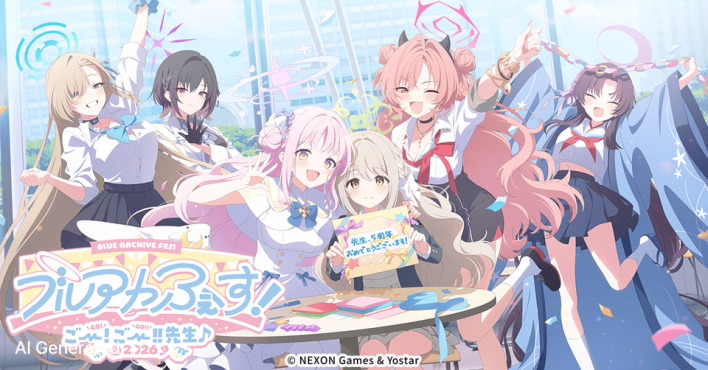
Kim Yong-ha = I think luck played a significant role. Our previous game, ‘Qurare,’ also had an international release but didn’t perform well. In hindsight, there were areas we should have focused on more and aspects where we fell short. Learning from that experience, ‘Blue Archive’ was designed with the Japanese market in mind from the outset.
Kim Ji-hoon: Was there a specific reason for choosing Japan as the primary market?
Kim Yong-ha = It was mentioned that success in Japan is crucial for this genre to have a chance in other regions. Therefore, when developing the game’s world and mechanics, I aimed to align with market trends while staying true to our vision. This led us to settle on the school theme.
Kim Ji-hoon: The school theme is popular in Japan.
Kim Yong-ha = Indeed. However, we strived to infuse our unique essence into it. While I don’t attribute our success solely to our efforts, our Japanese publisher also played a significant role, and the circumstances aligned favorably.
Jung Woo-chul = Project Moon places a strong emphasis on storytelling and text. Did you encounter challenges during the international release?
Kim Ji-hoon: Before addressing that, I’d like to mention that I believe one of the reasons for Blue Archive’s success in Japan is its distinctively refreshing vibe. While there are many school-themed works, the atmosphere Blue Archive exudes is truly unique. I feel this uniqueness sets it apart from other similar works.
Kim Yong-ha = Thank you. Our goal was to craft an idealistic world. However, we strived to avoid making it seem overly perfect, as that could come off as artificial. We aimed to incorporate realistic elements judiciously to create a sense of authenticity for players.
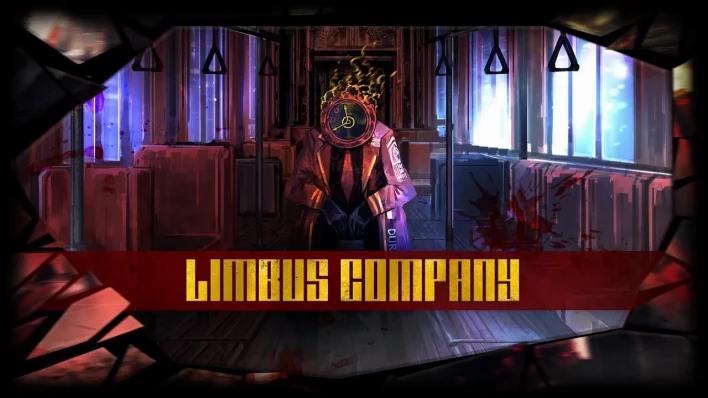
Kim Ji-hoon: I believe luck played a significant role for Project Moon as well. Yet, there were conscious efforts on our part. Despite being a relatively small company, we maintained an in-house translation team. In the past, external translation services were common, but given our global release, we needed an internal team for simultaneous translations.
Kim Yong-ha = Isn’t translation dependent on the scenario being finalized?
Kim Ji-hoon: That’s correct. Consequently, the translation team faces considerable challenges. (Laughs) Nonetheless, they are deeply invested in the game’s world and strive to convey it effectively.
Kim Yong-ha = When did you establish the internal translation team?
Kim Ji-hoon: We began handling Japanese and English translations internally with our previous work. For other languages, we often relied on fan translations. I prioritized Japanese and English due to my proficiency in these languages. I believed that languages where I couldn’t assess the quality of translation posed a management challenge.
Kim Yong-ha = Don’t Project Moon’s works contain numerous specific terms?
Kim Ji-hoon: Indeed. Preserving the essence of the game’s world is crucial during the translation process. While some words can be translated loosely, I aim to retain the original text’s essence as much as possible. Ultimately, I believe the experiences I’ve had in Korea can offer a fresh perspective to international audiences. They often say that the most Korean thing is the most global, and I agree. I believe it’s important to create something unique rather than simply following trends. Kim Yong-ha mentioned that Project Moon works have a consistent worldview that translators feel connected to, which helps them grow with the development team.
Kim Ji-hoon added that fans also play a crucial role in building the game’s worldview by following and understanding the context. Meeting overseas fans in person or receiving their letters can be a defining moment of success for game developers. Kim Ji-hoon shared how fan letters have had a significant impact on him, especially those from people who found solace or inspiration in the game during difficult times.
Kim Yong-ha and Kim Ji-hoon both emphasized the importance of creating games with a positive influence on players’ lives. They expressed gratitude for the support from fans and the community, noting how fan creations and interactions contribute to the game’s success and meaning.
When asked about the growth of Blue Archive and its presence at Comiket, Kim Yong-ha admitted that while setting goals is essential, achieving results requires luck and the support of many individuals. He highlighted the continuous need to evolve and innovate in the gaming industry while maintaining the core essence of the game.
Regarding the use of AI in game development, Kim Yong-ha acknowledged its benefits in technical aspects but emphasized the irreplaceable role of human creativity in the artistic process. He emphasized the importance of preserving the unique individuality and taste of creators to maintain the value and authenticity of the game. I believe that while AI can be valuable for solving problems with clear answers, we should approach areas requiring creativity with caution. It is important to preserve the unique flavor and personal touch of the creator in works of art, such as games and movies.
In the creative process, it is essential to convey the creator’s emotions and sincerity to the audience. While AI can expedite certain tasks, it may lack the depth and authenticity that comes from human experience and contemplation. The essence of a creator’s work lies in the time and effort they invest in crafting it.
AI can be a useful tool for streamlining certain aspects of production, allowing creators to focus on more critical tasks. However, it is crucial to remember that human flaws, biases, and individual tastes are what give a work its distinct character and vitality. Incorporating these elements thoughtfully is essential for creating compelling and engaging content.
In the era of AI, where technology continues to advance, it is crucial to use AI as a tool to realize the creator’s vision effectively. While AI can enhance efficiency and productivity, it should not overshadow the personal touch and creative input that make a work unique and meaningful.
Ultimately, success in the creative industry will depend on one’s ability to cultivate and express their individual style and flavor. Embracing new technologies like AI can open up new possibilities for creators, but it is essential to preserve the essence of one’s creative vision and artistic identity.
Taste – Taste is a crucial element not only in the gaming industry but in various other fields as well.
Kim Yong-ha – Taste can be a personal preference or a discerning eye for quality. As game enthusiasts, we all ponder about game development out of our love for games. Therefore, it’s essential to continuously ask ourselves: What type of games do we enjoy? What genres appeal to us? Which gaming systems do we prefer? What kinds of narratives and settings do we gravitate towards?
Kim Yong-ha – I believe that the process of refining our preferences through such introspection is crucial. Ultimately, identifying the unique flavor that only we can bring to the table and nurturing it will be increasingly important in the future.

Kim Ji-hoon: I concur. However, I’d like to offer a perspective from an entrepreneurial lens. Luck has been mentioned several times today, and upon reflection, I believe luck plays a pivotal role in success.
Kim Ji-hoon: Our company is celebrating its 10th anniversary this year, and I’ve encountered individuals who put in more effort than me and possessed greater capabilities. Yet, I’ve witnessed instances where their ventures failed or teams disbanded. Undoubtedly, luck is a determining factor in one’s success.
Kim Ji-hoon: However, luck is beyond our control. Therefore, what truly matters is our endurance until fortune smiles upon us. Mental resilience, physical stamina, and the tenacity to persevere are crucial.
Kim Ji-hoon: I often liken it to floating on water. To stay afloat, one must keep paddling. The moment we cease our efforts, we start to sink. Ultimately, the key lies in how long we can continue paddling. Yet, it’s far more challenging than anticipated. Even now, I am in the midst of seeking that answer.
Kim Yong-ha – In the end, life is akin to a gacha.
Kim Ji-hoon: Absolutely. (Laughs)
Kim Yong-ha – Nevertheless, by persistently trying our luck through numerous attempts, we may eventually achieve the desired outcome. The crux lies in persevering while incrementally enhancing our chances.
Could you please rewrite the following sentence? Could you please rewrite the following sentence?