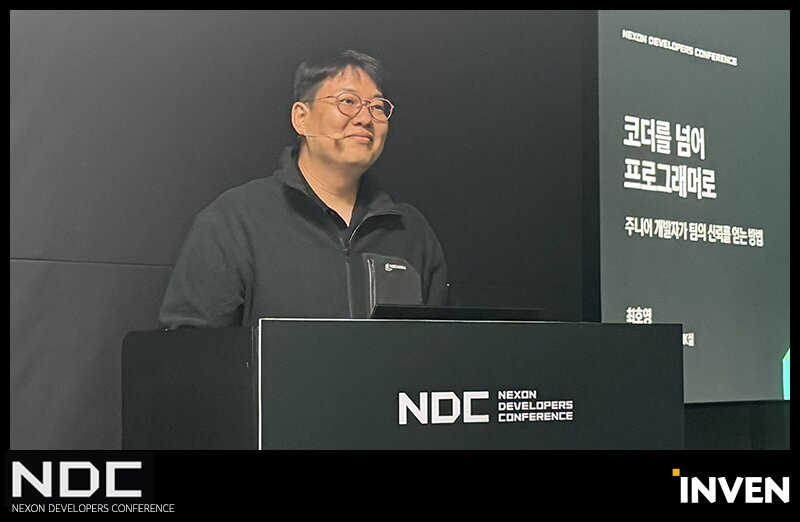
Topic: Beyond Coding: How Junior Developers Can Earn Team Trust Speaker: Choi Ho-young – Part Leader, Nexon Korea Category: Programming, Career Recommended for: Job seekers, junior programmers Tags: #Programming #Role
[🚨 Session Topic] This session highlights that a programmer’s responsibilities extend far beyond writing code and explains how to navigate these broader requirements. Nexon Korea Part Leader Choi Ho-young shares tips for junior developers to earn team trust, emphasizing the importance of feedback, sharing and documenting ideas, and schedule management.
To those outside the gaming industry, a ‘game developer’ is often seen as someone who simply codes upon receiving instructions and then checks if the work functions correctly. Acknowledging this common perception, Choi noted, “People likely imagine someone typing away at endless, cryptic code in front of a dark monitor.” He argued that in practice, a programmer’s role is not so limited, and he offered guidance to aspiring junior developers on the mindset they should adopt.
Part 1 – Remember the Art of ‘Counter-Proposing.’
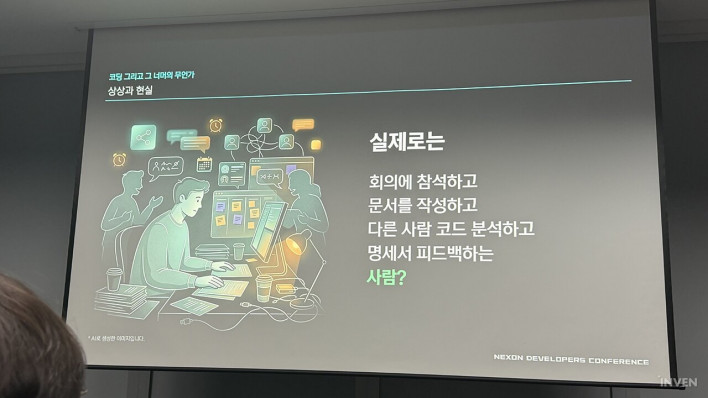
Choi pointed out that work specifications received from other departments are rarely perfect. As programmers are responsible for writing safe, robust code, he urged them to proactively identify and address logical flaws in these specifications.
Prior to beginning work each morning, it is recommended to take five minutes to check in with oneself. This involves assessing whether the work is progressing as planned, identifying any potential delays, and determining if there are any issues that need to be brought to the attention of the leader. This practice serves as a proactive measure to prevent minor issues from escalating unexpectedly.
In addition, Choi emphasized the importance of presenting alternatives when sharing information. Merely stating that the schedule is behind is considered irresponsible. Instead, it is advisable to propose different options, such as extending the timeline to enhance quality or reducing the scope to meet the deadline, while outlining the advantages and disadvantages of each. In cases where no alternatives are available, developers are encouraged to clearly request assistance.
Furthermore, maintaining open communication with individuals who have the authority to adjust priorities, such as leaders or project managers, is crucial. Merely documenting a situation does not guarantee security; it is recommended to directly engage with these stakeholders to ensure they are informed of the circumstances and to explore any possible assistance they can provide.
Conclusion: Why Basic Practical Skills Matter in the AI Era
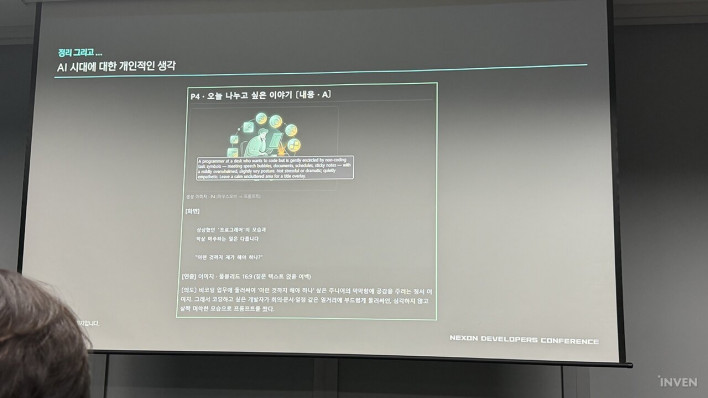
In conclusion, Choi highlighted that a significant portion of his presentation materials had been developed in collaboration with AI. He reiterated the significance of basic practical skills in the era of AI.
As AI has the potential to automate a considerable portion of coding tasks, Choi stressed the importance of enhancing one’s value by cultivating skills that are centered around human interaction. These skills include identifying gaps in planning to adjust course, sharing relevant context with colleagues, and adeptly managing challenging situations. Through his presentation, he expressed optimism that new junior developers entering the industry will transcend the role of mere coders and embrace the responsibilities of true programmers.