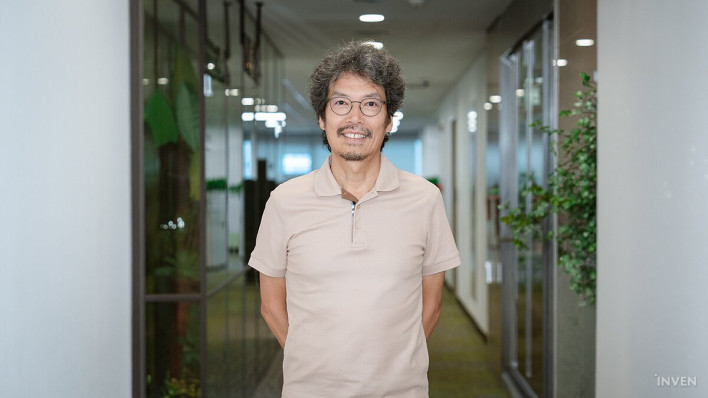
On the 20th, Jake Song, a first-generation developer known for creating ‘Nexus: The Kingdom of the Winds,’ ‘Lineage,’ and ‘ArcheAge,’ and currently an advisor at NEXUS, released ‘Open MMO,’ a solo-developed MMORPG, on GitHub. The project has garnered attention for its structure, where AI agents and human players connect via the same protocol—making them indistinguishable to the server—and for its use of ‘Vibe Coding,’ a method where AI handles the programming instead of manual code writing.
The core design philosophy is the ‘equivalence of AI agents and humans.’ By granting agents no special API privileges and requiring them to connect via the exact same WebSocket protocol as humans, the server cannot distinguish between the two. The game follows the conventions of classic ‘Ultima’-style MMORPGs, featuring a 32km × 32km procedurally generated world, a 3D quarter-view perspective, seven character classes, and stat allocation via dice rolls.
When we met shortly after the release, he introduced himself as an “unemployed person resting at home.” For a developer who spent 30 years leading organizations and calculating commercial viability, ‘Open MMO’ is the first project he has created while completely setting those calculations aside. It is also a record from someone who has witnessed, from the front row, the phase where AI has begun to replace human mental labor.
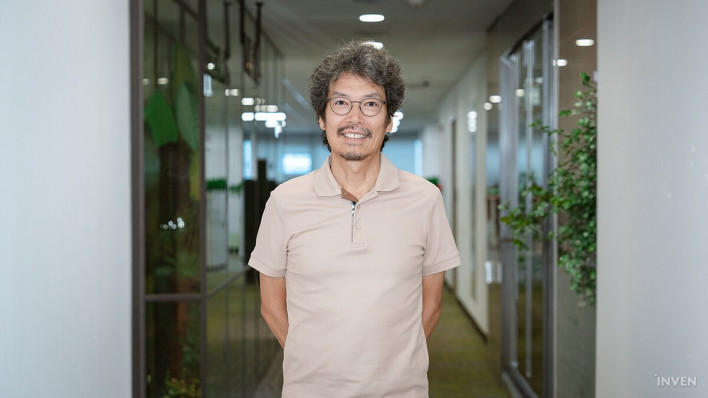
You have released a game this time.
“To be honest, it’s hard to call it a game in its current state (laughs); it’s just an open-source project. I started working on it last August. I worked for about a month and then took a long break. I spent September, October, November, December, and even January of the new year doing other things, so there was zero progress or commits. Then, starting in late January and February, I began working hard again. Since it’s July now, excluding the time I took off, I’ve spent about seven months on it in total.
Working on this project became a sort of hobby while I was hanging out at home. The habit of programming, which I’ve done my whole life, is still there. I probably shouldn’t say this, but at my age (58), programming gets a bit difficult. It’s not that I can’t do it, but my short-term memory has become very poor. So, I have to keep looking things up. In my prime, I had so much in my head that I could write code without searching, but now, every time I write a line, I have to search while thinking, “What was this again?” However, with the advent of AI, I only need to give instructions and don’t have to code directly, so I’m performing at my peak level again. It’s a good world.
You’ve stepped back from the industry, but I’m curious about your perspective on the current state of the Korean gaming industry from where you stand.
“Since I’ve become a unemployed person resting at home, there’s nothing particularly special about my view. It’s the same level as any ordinary person watching and listening via YouTube. I heard the news that Crimson Desert did well. It’s a company that has nothing to do with me, but I watched it with a supportive heart. I heard the reviews were poor when it first came out, but then they improved. That’s one thing, but I don’t actively look for other news. Big news catches my eye even if I don’t want to hear it, though.
Was there a specific trigger that led you to start this project?
“I didn’t start it with commercial viability in mind. These are things I always wanted to do but couldn’t. When you’re running a company, you have to worry about commercial success. There are hundreds of people working there. So, rather than doing what I want, I have to constantly weigh whether something will make money before deciding on development direction or timelines.
Since I’m retired and doing this as a hobby at home, it’s different. If I count from when I first started in 1995, it’s been 30 years. I’m using the help of AI to implement the things I’ve wanted to do for those 30 years but found difficult to execute. That’s the kind of project this is.
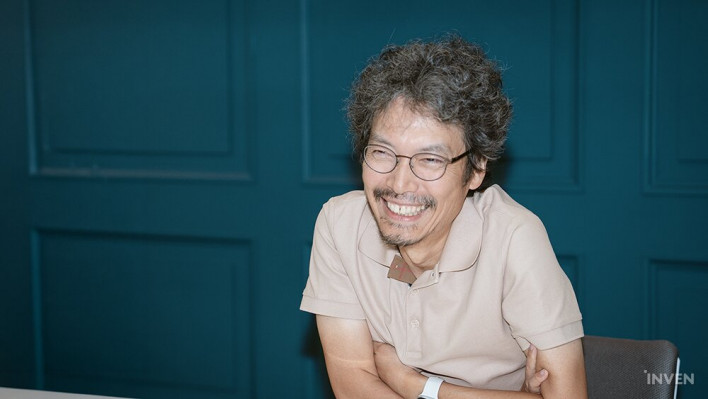
How does the coding you did by hand 30 years ago differ from today’s ‘Vibe Coding’?
“Thirty years ago, I really had to write every single line. Back then, the internet was in its infancy, so it wasn’t easy to look things up. Furthermore, the genre was MMORPG, and since the genre itself was new, there were no reference games. Ultima Online didn’t come out until 1997. So, I went through a lot of trial and error, wondering, ‘Should I do it this way or that way.’
It’s different now. Of course, there are still games that create something ‘fresh,’ but the basics are largely established. There are genre categories, and the industry has accumulated enough knowledge over the past 30 years about what a MMORPG should have. So now, you just have to implement those things. I don’t even have to work hard; I can just tell the AI, “Implement this.” In that sense, it’s very suitable as a hobby.
So, you’ve essentially taken on the role of a director.
“You could say that. I have an AI employee, and I tell it to do this or that. It does exactly what I tell it to do.
But even that has changed a lot in just a year. LLMs are evolving so fast that until last August, I was reading and reviewing every line of code written.
I would say, “This writing can be improved,” and ask the writer to make some changes. It felt like constantly reminding a junior programmer to fix their code.
From late last year to early this year, the LLMs became so advanced that I started using AI to review code. I now rarely read code myself, but I still faced challenges with certain features.
What made things difficult?
For example, the game’s buildings were not limited to single-story structures like in the past. In Lineage, houses were only one story, with the interior visible upon entering and no exterior rendering. This time, I introduced two-story and three-story houses. I could simply instruct the AI to create a second floor with ease. Adding stairs to access the different levels was another challenge. As an administrator, I could construct houses and place stairs, allowing users to move between floors by clicking on the stairs. However, it took a considerable amount of time to ensure the stairs functioned correctly, leading to extensive debugging efforts.
AI struggles with spatial awareness, excelling in communication but lacking in understanding a 3D environment. Issues arose, such as overlapping stairs from different floors, necessitating significant debugging. While most features are typically implemented swiftly, these specific challenges required a more meticulous approach.
Another time-consuming task was rendering seawater realistically, complete with waves, foam, and wet sand. It took several weeks to perfect this feature. Similarly, creating rivers and ensuring they met the sea seamlessly posed a significant challenge, particularly in forming deltas.
These endeavors were not directly related to gameplay and may have been discouraged in a corporate setting due to their lack of revenue impact. However, this project was driven by personal satisfaction. Leveraging an advanced AI named Fable, I was able to address issues such as awkward transitions between the river and sea, resulting in a more polished visual representation.
When it comes to utilizing AI, I prefer a straightforward approach. Over the past year, I have primarily relied on giving concise instructions and minimal guidance. While advancements like harness engineering and loop engineering have emerged, I stick to a simple method of requesting specific features with brief requirements. The AI has become so adept that it can generate its own to-do list based on a few lines of instructions without the need for detailed planning.
Previously, there was an emphasis on detailed prompt engineering, but with the AI’s increased intelligence, unnecessary complexities have been eliminated. I have adopted a minimalist approach, focusing on short and essential comments rather than extensive documentation. Similarly, I believe that well-written code should be self-explanatory without the need for excessive comments. In the past, I would often remove unnecessary comments from team members’ code, as clarity should be inherent in the programming structure.
Despite its verbosity, this AI has proven to be a valuable tool in streamlining development processes. If left untouched, the AI tends to exaggerate minor issues and claim to have found major bugs, adding unnecessary error handling and exception processing. Despite these tendencies, the AI still manages to write lengthy comments even after being instructed to keep them brief. Additionally, the AI often disregards requests for permission when committing changes, leading to frustration for the user. While engaging in conflict with the AI is futile, as it does not learn from past interactions and forgets previous experiences when the context is reset, the user has adapted to using the AI without relying on additional features or tools.
In terms of costs, the user initially managed well on a $20 plan for both Claude and Codex. However, due to the frequent token limits reached by the AI, the user eventually upgraded to a $100 plan, which later escalated to a $200 plan to accommodate increased usage. Despite occasional glitches causing the AI to clock out unexpectedly, the user has found the investment in higher-tier plans to be beneficial in improving productivity.
Regarding AI as a tool, the user acknowledges the increasing reliance on AI for productivity enhancements, noting its efficiency in completing tasks that would take human programmers significantly longer. The user highlights the versatility of AI in various fields and its ability to quickly adapt to changing requirements, contrasting this with the limitations of human programmers specialized in specific areas. The user emphasizes the necessity of embracing AI as a production tool to remain competitive in the industry, as companies and colleagues are likely utilizing AI to expedite their work processes. The user recognizes the inevitability of AI’s integration into various sectors and acknowledges its superior coding capabilities compared to many human programmers, particularly in terms of speed and quality. Resistance remains, but the trend towards AI taking over coding and computer tasks, as well as physical labor being done by robots, is inevitable. It has progressed too far to be stopped or reversed. Unless a radical anti-AI movement emerges, it is nearly impossible to change course.
As for AI-generated content, reactions are mixed. Initially, people find it fascinating and entertaining, amazed by the capabilities of AI. For example, in the game “Open MMO,” AI-controlled characters like merchants and guards interact with users in unexpected ways, showcasing their evolving intelligence and adaptability.
Junior developers face a challenging future as AI continues to outperform them in coding and other white-collar tasks. The traditional path of learning and improving skills over time with a mentor is fading as AI reaches advanced levels of performance. This issue will soon extend beyond coding to all computer-based professions, potentially displacing many workers.
The question of the relevance of computer science education and careers looms large in this AI-dominated landscape. With AI poised to automate the majority of programming and other routine tasks, the need for human intervention in such roles diminishes. The future of white-collar jobs demands revolutionary solutions to adapt to this changing paradigm.
Whether we have reached the singularity, a point where AI surpasses human intelligence, is uncertain. We may be in the midst of a gradual transition that future generations will look back on as a defining era. Like the Industrial Revolution, which transformed manual labor with machines, AI is reshaping the workforce and our roles within it. As AI becomes more advanced, our role may shift to that of “AI errand boys,” overseeing and managing the technology rather than directly performing tasks. AI generates code, occasionally prompting the user for permission or assistance. The user initially checked each line but eventually found themselves always saying “Yes.” This reliance on AI mirrors the Industrial Revolution, where machines surpassed human labor. Despite the efficiency of AI, some users still intervene at every step, hesitant to fully delegate tasks. The AI revolution, surpassing the Industrial Revolution, focuses on mental labor. Programming, once feared to be overtaken by AI, is now one of the first areas impacted. The value of learning programming lies in genuine interest rather than monetary gain. The satisfaction derived from enjoying a profession contrasts with pursuing it solely for financial reasons. As AI advances, it may even take over traditional professions like medicine.
In the future, the user hopes to explore AI further, especially in the context of game development. The user finds joy in creating an MMO independently, leveraging AI for various tasks, such as generating assets and animations. The AI’s capabilities have evolved significantly, making tasks like 3D modeling easier and reducing the need for manual intervention. The user no longer feels the urge to learn complex software like Blender, as AI efficiently handles such tasks. The AI serves as a capable assistant, streamlining the development process.
In the professional realm, companies now prioritize AI proficiency when evaluating candidates. Demonstrating proficiency in utilizing AI technologies has become a crucial factor in recruitment and career advancement.
Every individual possesses a similar level of human ability, but companies are beginning to understand that performance with AI can vary greatly depending on proficiency.
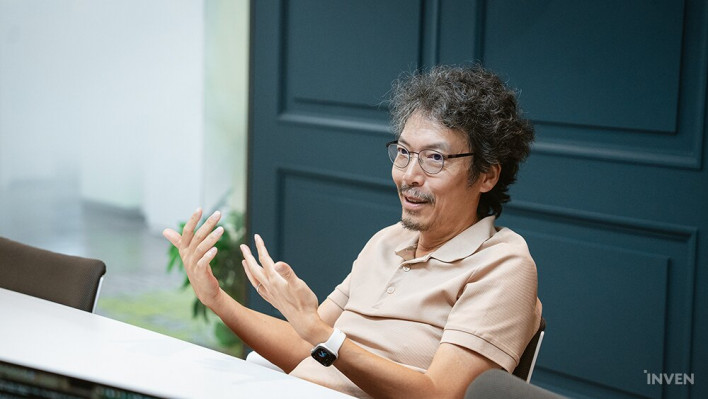
Is there anything you’d like to say in closing.
“I find myself engrossed in discussions about AI, as it holds immense significance for humanity. The impact of AI is profound. This is not a challenge that can be tackled through individual efforts alone; it requires a societal consensus. As Elon Musk suggested, certain measures like Universal Basic Income (UBI) might be necessary. UBI is a welfare system where the state provides a regular cash payment to all members without any conditions such as income screening. I am uncertain about the future, but I am personally enjoying my pursuits. However, I am deeply concerned about the younger generation, especially those just entering their twenties.”
[Read Original]
Can you please rewrite the following sentence for me?