At Gamescom this year, a hands-on demo was available for Persona 4 Revival, the game Atlus fans have been waiting for most. Just as Persona 3 Reload did before it, the game was rebuilt entirely from scratch through a full remake.
Persona 4 on PS2 and Persona 4 Golden on PS Vita were massive commercial successes that drove hardware sales and laid the groundwork for the long-term popularity of the Persona series. Naturally, that immense interest and affection carry straight over to Revival.
While remakes are often seen as safe commercial bets, taking on a game so deeply loved in the past only increases the pressure. The developers must satisfy sky-high expectations while ensuring the standard for fun meets modern standards for new releases.
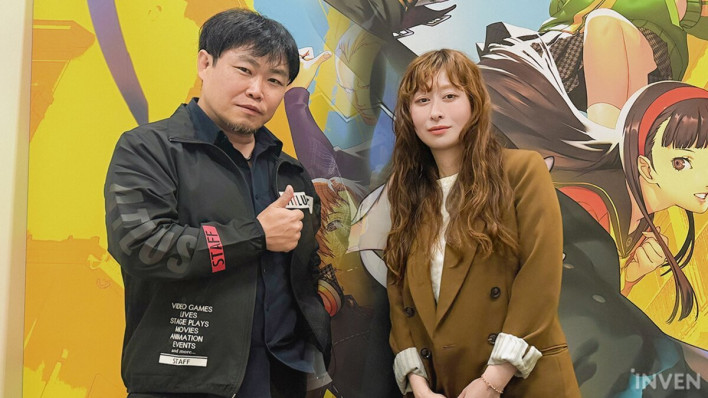
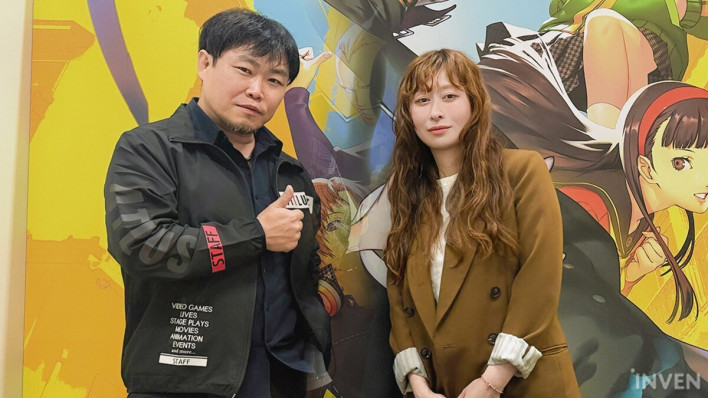
As a result, the development team working on this new title is going through a busy and arduous production process. We met Producer Kazuhisa Wada, who leads the project, and Art Director Akane Kabayashi, who handles the visuals, in Germany. We spoke with them to learn about the current development process and where the development of Persona 4 Revival is heading.
Q. This was Revival’s first hands-on demo, and playing it was impressive. What aspects did you focus on most for this demo?
Producer Wada: I’d say immersion and empathy? Compared to the original game, I think those aspects have definitely been enhanced significantly. I hope players can feel that when they play.
Director Kabayashi: Overall, the story itself hasn’t changed dramatically, but the biggest changes are on the visual front. That includes the UI, and we also put a lot of effort into the event scenes. In particular, I think what people love most about this game is the feeling of the characters all getting along so well. So we added much more variety to their facial expressions and paid close attention to camera work. We put a lot of care into making every single event scene captivating, so I really hope players take note of that.
Producer Wada: In particular, scenes where they confront Shadows now feature quite a lot of highlights for each character.
Director Kabayashi: That’s right. The characters’ faces were slightly modified, and since we remade all the models and NPC characters from scratch, I think there’s definitely been a major power-up.

Q. During development, was there anything the team decided, “We must absolutely never change this”?
Producer Wada: We felt that the core storyline must never be changed. The original story was praised so highly that changing it would mean it’s no longer Persona 4. We made it a rule never to alter the central pillar of the story.
Director Kabayashi: Or the core pillar of design, perhaps? It was the impression players get when actually playing the game. Within the development team, we used “warmth” and “nostalgia” as our key phrases, and we constantly discussed staying faithful to those concepts.
Q. Persona 3 Reload is a remake title developed on Unreal Engine. Did that development experience help in making this game?
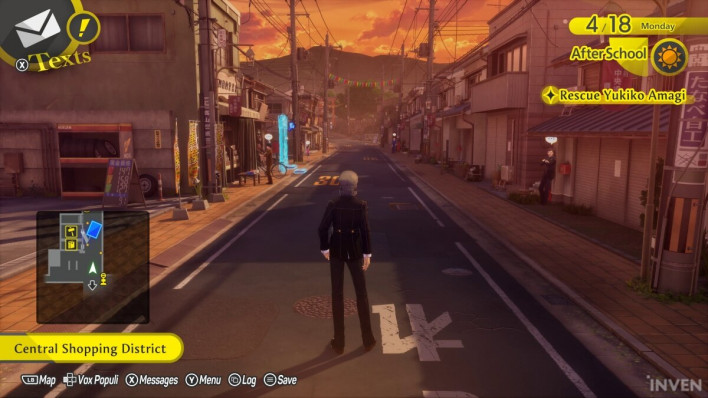
Producer Wada: When making Persona 3 Reload, it was our first time using Unreal Engine, so we were surrounded by unknowns. We had to build our development pipeline while learning Unreal Engine from scratch. In contrast, for Persona 4 Revival, we were able to approach it with a proven track record of completing a project in Unreal Engine, which allowed us to leverage the engine’s characteristics much better.
In particular, aspects like the nostalgic atmosphere of the backgrounds or the impressions that change with the weather heavily reflect the experience we have accumulated over time.
Q. The UI, various option menus, and beautifully crafted screens were once again very impressive. Were there any areas during development that were particularly difficult or where you invested a lot of effort?
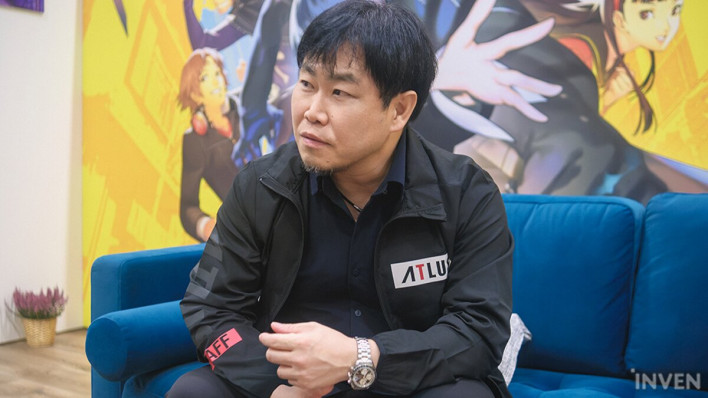
Director Kabayashi: Creating the “Camp Screen” (the in-game main menu) was quite difficult.
Literally, it was really tough. After all, it serves as the face of the game. When we applied models in the standard way, it felt like “this isn’t going to work,” so we went through a cycle of rebuilding and reviewing it over and over. By monitoring those results, we brought it up to its current quality, receiving help and advice from many people along the way. It was hard work, but I think it has finally settled into place.

Q. In this title, event staging is much better than in previous entries, and I heard the voice lines were re-recorded as well. What would you say is the aspect the team put the most effort into?
Producer Wada: Naturally, it’s the scenes where they confront Shadows—the cutscene portions. The team poured a tremendous amount of passion into working on those.
Director Kabayashi: To the point where some internal feedback was that “it might be a bit too much.” The staff in charge paid extreme attention to those fine adjustments.
Producer Wada: That’s right.
In particular, we were cautious not to make the presentation excessively graphic in areas where depiction could easily become overly intense, such as Shadows or Shadows in a berserk state. We made sure to maintain the impactful Shadow scenes from the original without going overboard. The setting straight from the original also had a significant impact.
Director Kabayashi shared that Persona 4’s distinct identity lies in the peaceful world it portrays, despite various incidents. The story unfolds purely through the bonds between companions, rather than transaction-like exchanges.
Producer Wada added that each title in the series has its own unique color and flavor, with Revival standing out for being set in a rural countryside town. Preserving this aspect was a key focus throughout development.
During development, Director Kabayashi noted that a significant area of improvement was in the event scenes, which required a high production cost. Producer Wada mentioned the challenge of packaging and shaping the vast amount of content in the game.
In terms of character designs, Director Kabayashi highlighted the refreshment of the original characters to fit modern trends in body proportions and facial features. Producer Wada humorously mentioned that Yukiko has become much more beautiful than before.
Director Kabayashi shared that the most challenging aspect was meeting fan expectations without letting them down, while Producer Wada found recreating the atmosphere of the era to be both important and difficult. Watching fan reactions to promotions was a rewarding experience for the developers.
Producer Wada encouraged Korean fans to experience the further refined version of Persona 4, which can be enjoyed even more deeply and comfortably. Director Kabayashi expressed hope that fans would enjoy comparing the new elements in the game with their memories of the original.
For many new players, there is a high chance that they come from a generation that has never laid eyes on a CRT TV. So, it would be wonderful if you could immerse yourself in a nostalgic era of Japan and appreciate it with a sense of “there was indeed a time like this.”

[Read Original]
Could you please rephrase the following?