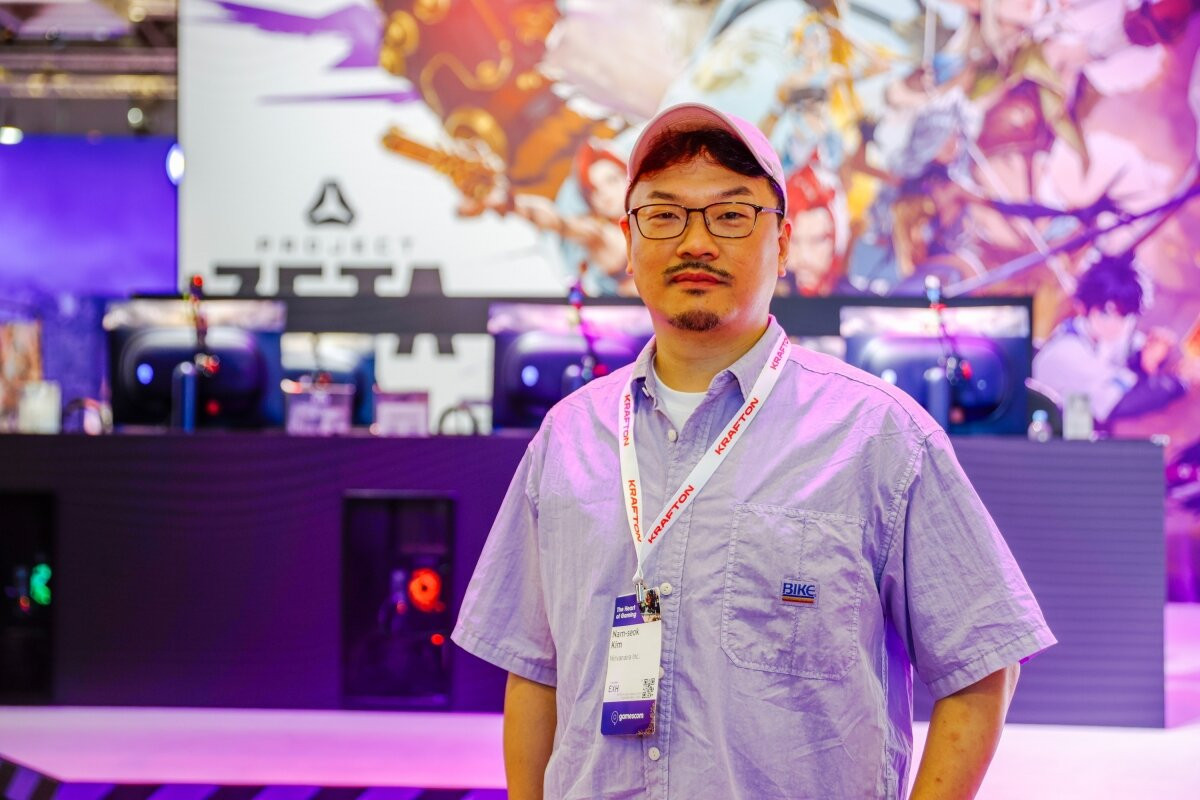
Krafton’s upcoming ‘Project ZETA’ is a third-person multiplayer game that defies traditional genre labels such as MOBA, battle royale, and hero shooter. Developer NIRVANANA introduced the term ‘Multi-team Tactical Arena’ (MTA) to describe the game, where four teams of three compete over a core resource called the ‘Prism’ on the ‘Aran Plateau.’ The objective is to deposit the Prism into the ‘Stabilizer’ at the center of the map to earn points, with the first team to reach 5 points winning the match. Matches last around 20 minutes and focus on strategic team-based gameplay.
‘Project ZETA’ differs from traditional MOBAs by eliminating the laning phase and base structure, encouraging early teamfights and strategic positioning. The game maintains the core fun of MOBAs while increasing the frequency and density of teamfights with four teams competing in real time.
Unlike battle royale games, ‘Project ZETA’ does not feature limited lives, instead opting for infinite respawns and a score racing format. This approach encourages bold and assertive plays, with a focus on team strategy and quick decision-making.
The game also sets itself apart from hero shooters by prioritizing positioning, teamwork, and skill usage over manual aiming. Players must focus on reading the battle situation and executing well-timed attacks, creating a combat experience similar to a 3D fighting game.
The ‘Fighting Spirit’ system in ‘Project ZETA’ allows for instant revives and full health restoration when a team eliminates their opponents, encouraging bold and stylish play. The system aims to address structural challenges in multi-team matches and reward intuitive gameplay.
While the game faced issues with early departures during testing, the developers are working on solutions to address matchmaking imbalances and ensure a more balanced and engaging gameplay experience. Overall, ‘Project ZETA’ offers a unique and innovative multiplayer experience that challenges traditional genre conventions. They intend to separate solo and duo queues as much as possible, matching players based on skill levels and introducing an early ‘safe placement’ buffer to aid players in adjusting. To provide trailing teams with opportunities when leading teams make mistakes, the enhanced Prism stage will be moved forward from 4 points to 3 points, with increased supply. Adjustments will also ensure that the leading team’s Prisms decay faster when carried. In PvP matches transitioning to normal matches, ranking points will be given to 1st and 2nd place while deducting points from 3rd and 4th place, giving value to finishing 2nd.
The map has undergone a complete overhaul following a Korean test earlier this year, reducing the number of participating teams from 5 to 4. This change aimed to optimize teamfight density, speed, and predictable routing. The game’s progression could be confusing for newcomers, so real-time navigation was introduced as a solution, providing guidance based on various in-game situations. CEO Kim believes that the best tutorial is the intense experience of fighting over a Prism boss in Phase 2 or Phase 3.
Regarding conflicting strategies among teammates, placing two major objectives per phase and displaying floor pathfinding guides have reduced instances of aimless wandering. Additionally, improvements to communication tools like pings and voice chat are planned. A focus on information warfare has been added to the game, allowing players to gain a clear picture of other teams’ positions and statuses.
In response to feedback on spectator appeal during GCT1, changes will be made to basic attack animations and dash cooldowns to improve the overall gameplay experience. While concerns about the third-person back-view camera system were raised, CEO Kim defended it as standard grammar in action games, allowing players to maintain focus on the battlefield while moving their characters. Creative Director Kwon emphasized that ZETA focuses on narrative and super plays that viewers can clearly appreciate, rather than just fast-paced action. He stated that while there may be a slight increase in difficulty, they believed that the rewards would be much greater. The goal was to create a virtuous cycle where high-skill super plays would become popular, gain momentum, and contribute to the matchmaking pool.
In terms of hero additions, the hero roster was tested with 14 heroes during GCT1, and for GCT2, two new heroes will be added – ‘Nova Crash’ and ‘Azrael.’ The total hero count will be 16, with the launch roster expected to have around 17 heroes. The plan is to accelerate the hero update cadence significantly.
The game will stick to a single map but will introduce variations to keep the gameplay fresh. Instead of adding multiple maps, major teamfight zones or boss patterns will be adjusted to rotate the meta. New modes are still in the planning phase, with 1v1 team battles and solo drop-in warm-up modes being considered.
Controller support is a major focus for the game. From the beginning of development, combat, controls, and UI/UX were designed for both keyboard/mouse and controllers. The aim is to provide a balanced gameplay experience for all players, whether they use a controller or keyboard/mouse.
The official title of the game is ‘Project ZETA,’ which is based on a project within the game’s lore. The game’s lore involves assembling heroes to close a dimensional storm over the Aran Plateau. The game is being developed by NIRVANANA, with a global publishing partnership with Krafton.
When asked about their chances of success in the market, Kim acknowledged the challenges of competing in the MOBA genre. He believes that a new MOBA alternative could emerge if a game can provide the core fun of the genre more frequently and densely in a shorter time. Kim emphasized the importance of open development and listening to player feedback to increase their chances of success.