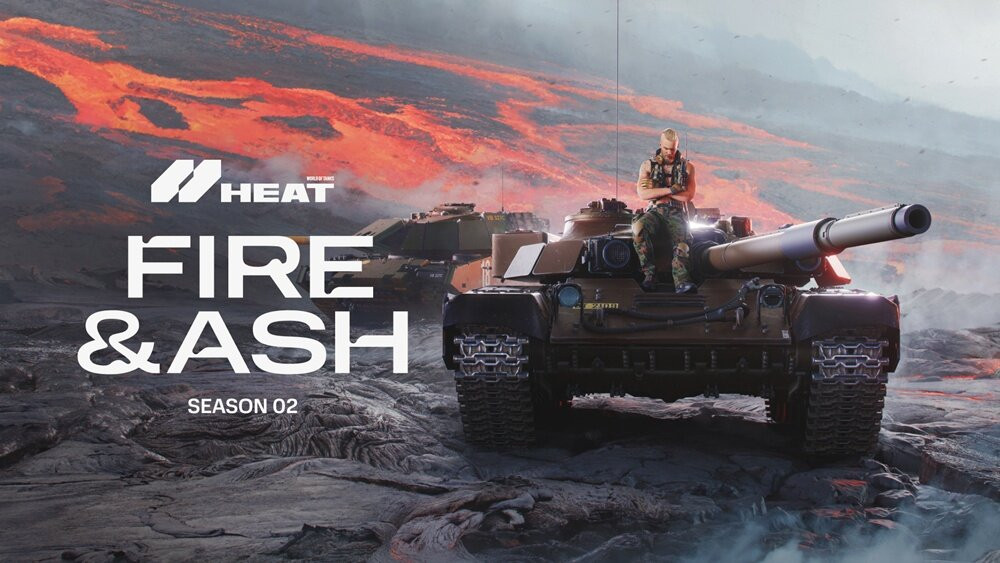
World of Tanks: HEAT is kicking off full-fledged seasonal operations with its second season, Fire and Ash. Featuring a new Agent, new tanks, a new map, and 20v20 large-scale battles, Season 2 serves as the initial template for future seasons, which are scheduled to run on roughly three-month cycles.
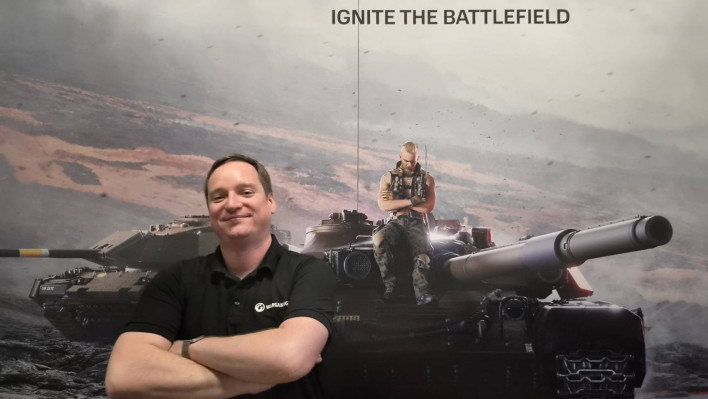
At Gamescom 2026, we met with Luke Nicholls, Head of Community for World of Tanks: HEAT, to hear directly about Season 2. Nicholls presented the key content for Season 2 and demonstrated the new tanks and 20v20 battles through a live gameplay demo.
Season 2, Fire and Ash, launches on September 2. While Season 0 was closer to a five-week thank-you event and Season 1 was a somewhat experimental, condensed format, Season 2 marks the implementation of the development team’s planned regular three-month seasonal structure.
The approach of tying an entire season together under a single theme is also fully taking shape. Beyond just the season title, new maps, Agents, and cosmetics will all be interconnected around one narrative theme, accompanied by dedicated lore. The developers noted they are still exploring effective ways to deliver this lore in-game, and they plan to release related videos alongside the season launch.
Season 2 introduces a new Agent, new tanks, a new map, and a 20v20 game mode. Additional updates and quality-of-life improvements will continue throughout the season, with the developers also mentioning content in the works for Halloween.
New Agent Gambit and Season 2’s New Tanks
Season 2’s new Agent, Gambit, is a Defender Agent. Rather than simply absorbing hits with high durability, he is designed to inflict disadvantages on opponents who attack him.
As a result, when engaging in battles for the same capture point, entry routes and strategies must be flexible and adapt as the match progresses. Inferno One represents the development team’s initial foray into dynamic map design, and depending on player feedback, they are contemplating incorporating similar dynamic elements into upcoming maps.
A significant addition is the introduction of 20v20 Conquest, doubling the size of the existing 10v10 Conquest with 40 players facing off on a single battlefield. However, the objective was not simply to increase player numbers for chaotic skirmishes. To maintain a tactical combat atmosphere, 20v20 matches will only be available on select large maps that can accommodate the scale.
20v20 will not immediately become a permanent core game mode. Similar to how Season 1 featured Plant & Defuse on specific weekends to gauge player response, 20v20 will be accessible through a separate queue on designated weekends during Season 2. The developers aim to collect play rates, player feedback, and combat data before deciding on the future of the mode. Currently, it is in an experimental phase tested alongside players rather than being a permanent core mode.
The impact of large-scale combat was evident during the live demonstration. While the core balance structure remains relatively unchanged from standard Conquest, firefights break out simultaneously across expansive maps, leading to massive engagements when both teams converge on a single capture point. The goal is to enhance combat intensity and scale while upholding standard Conquest rules.
Furthermore, there are adjustments to how seasonal operations operate. Starting in Season 2, Battle Passes will no longer expire when a season concludes; instead, they will be stored in an “Archive.” Players can continue to spend Intel on any Battle Pass of their choice, and those who purchased a premium Battle Pass will retain its benefits. Additionally, premium Battle Passes from past seasons will be available for purchase later on.
Tanks included in Battle Passes can also be earned at a later date. The development team’s rationale for this system is to alleviate pressure on players who feel rushed to complete remaining tiers before a season ends, while also allowing newcomers to access past content.
Season 2 is not just a single major update launching on September 2. Subsequent updates, including quality-of-life enhancements, will be continuously rolled out after the launch. With Season 0 and Season 1 serving as experimental phases and a commitment to a regular three-month seasonal format starting with Season 2, Fire and Ash marks the first complete season showcasing how World of Tanks: HEAT will structure and run its future seasons.
After the introduction of the new season, a brief Q&A session was held with Luke Nicholls. We need feedback on player preferences and dislikes, as well as collecting internal gameplay data simultaneously.
The current balance is not perfect, with notable examples that require further investigation. For example, Rakta’s Ultimate ability grants temporary invulnerability, which can be perceived as too powerful in certain game modes. However, this ability is essential to Rakta’s identity as an Agent. Instead of simply nerfing it, we need to find a way to tweak it while maintaining that core identity.
Similarly, landmines posed a similar challenge in the past due to their high damage and difficulty to avoid. Rather than reducing the damage, we adjusted the distance for full damage and expanded the blast radius to maintain their identity as lethal threats while allowing opponents to spot and react to them.
While some issues can be resolved with numerical tweaks, preserving gameplay identity requires us to reconsider how abilities should function.
When it comes to the Battle Pass reward structure, offering it for free is an advantage, but some players may feel that the reward value is low. We aim to strike a balance where casual players can earn sufficient rewards while still providing goals for more active players.
As for adding new content, we plan to introduce at least one new Agent and two tanks each season. While players may want more content, the development process for each new addition is complex and time-consuming.
In terms of game balance, we do not focus on a specific game mode but aim for holistic balance across all modes. Balancing around a single mode could disrupt others, so we look at the big picture.
Dynamic changes in maps, such as shifting lava in Inferno One, can have a significant impact on gameplay by altering entry routes and forcing players to adapt their tactics. We see these changes as an interesting experiment and look forward to seeing how players respond in live matches.
In larger modes like 20v20, individual player impact may be diminished compared to smaller modes. However, this aspect is a natural part of the gameplay dynamics in such modes.
Testing firsthand and observing player responses is crucial, which is why we are planning to open up the 20v20 mode as a separate playlist queue during specific weekends in Season 2. While we have already validated the mode through internal testing and select playtesters, gathering feedback from a large player base directly engaging with it is essential.
Our goal is to track player engagement and gather combat data to evaluate the mode’s potential direction. As an experimental feature, 20v20 will be continuously tested alongside our player base to determine its future.
Season 2 will bring a wealth of content, including a new Agent, tanks, a new map, and the 20v20 mode. When considering the future direction of HEAT, what do you believe is the most critical factor?
Luke Nicholls: At the launch of Season 2, our focus is on delivering content, with ongoing additions and quality-of-life improvements planned throughout the season. The first update will introduce features like a Friends List and Discord integration, addressing player requests and enhancing the core game experience.
While adding new content and tanks is exciting, improving the core game experience remains a top priority. Prioritizing player feedback and continually enhancing gameplay are key aspects of our community team’s role. Our goal is to provide a fulfilling gaming experience by focusing on quality improvements rather than simply expanding content volume.
Please rewrite the following sentence.