Table of Contents
As anticipation builds for the upcoming First Stand tournament starting this Monday, the global League of Legends community is eagerly focusing on the teams representing their regions. Looking back at the winter splits that led us to this point, we can analyze the viewership data and audience dynamics that shaped the current landscape.
While many regions have shown positive growth or stability, there is a noticeable disparity in performance among them. Some leagues have successfully adapted to format changes and team shifts, but one particular region has experienced a decline across all key indicators due to various internal and external factors.
LCK (South Korea)
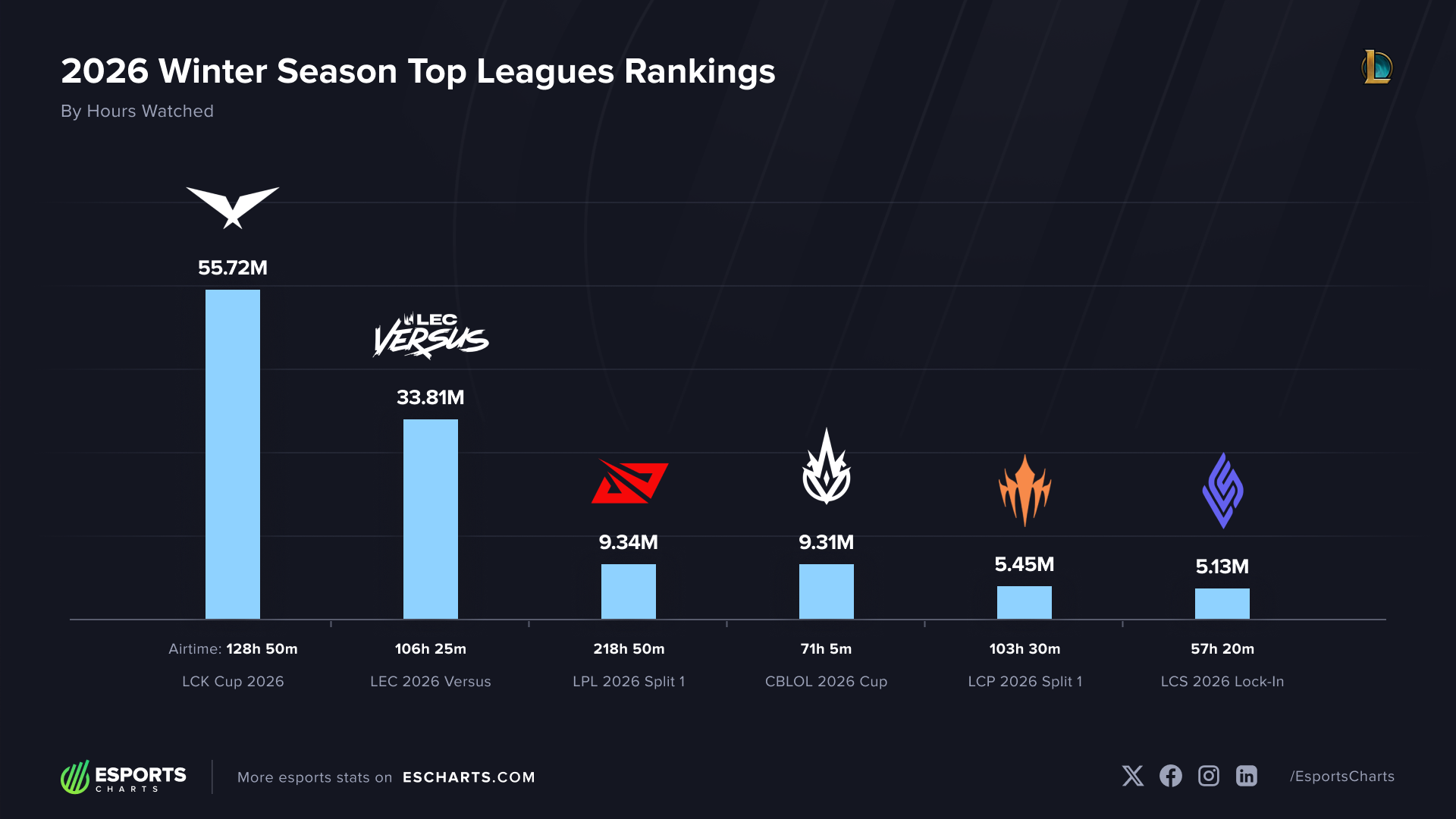
During the winter season, the LCK maintained its traditional structure but witnessed changes in key metrics. A decrease in “clean” 2:0 series led to longer broadcast times. Despite a slight rise in Average Viewers, the total Hours Watched significantly increased.
However, the league may have missed out on even greater success. The early exit of T1, a major viewership driver in the region, impacted peak viewership numbers. While overall metrics remain strong, the absence of T1 in the finals prevented the league from reaching potential record-breaking viewership levels.
LEC (EMEA)
The LEC’s winter changes yielded clear outcomes. The inclusion of two popular ERL teams, Los Ratones (NLC) and Karmine Corp Blue (LFL), notably boosted overall audience interest. Matches featuring Los Ratones were particularly successful, capturing significant attention from viewers across the EMEA region.
Although average viewership saw a slight decline compared to Winter 2025, the larger number of matches in the tournament helped maintain an upward trend in total Hours Watched. Despite a minor decrease in peak viewership, there are no significant structural concerns for the league.
CBLOL (Brazil)
CBLOL returned as a standalone tier-1 league this year after the conclusion of the LTA experiment. The integration of Leviatán from Argentina into the Brazilian circuit further enriched the winter split.
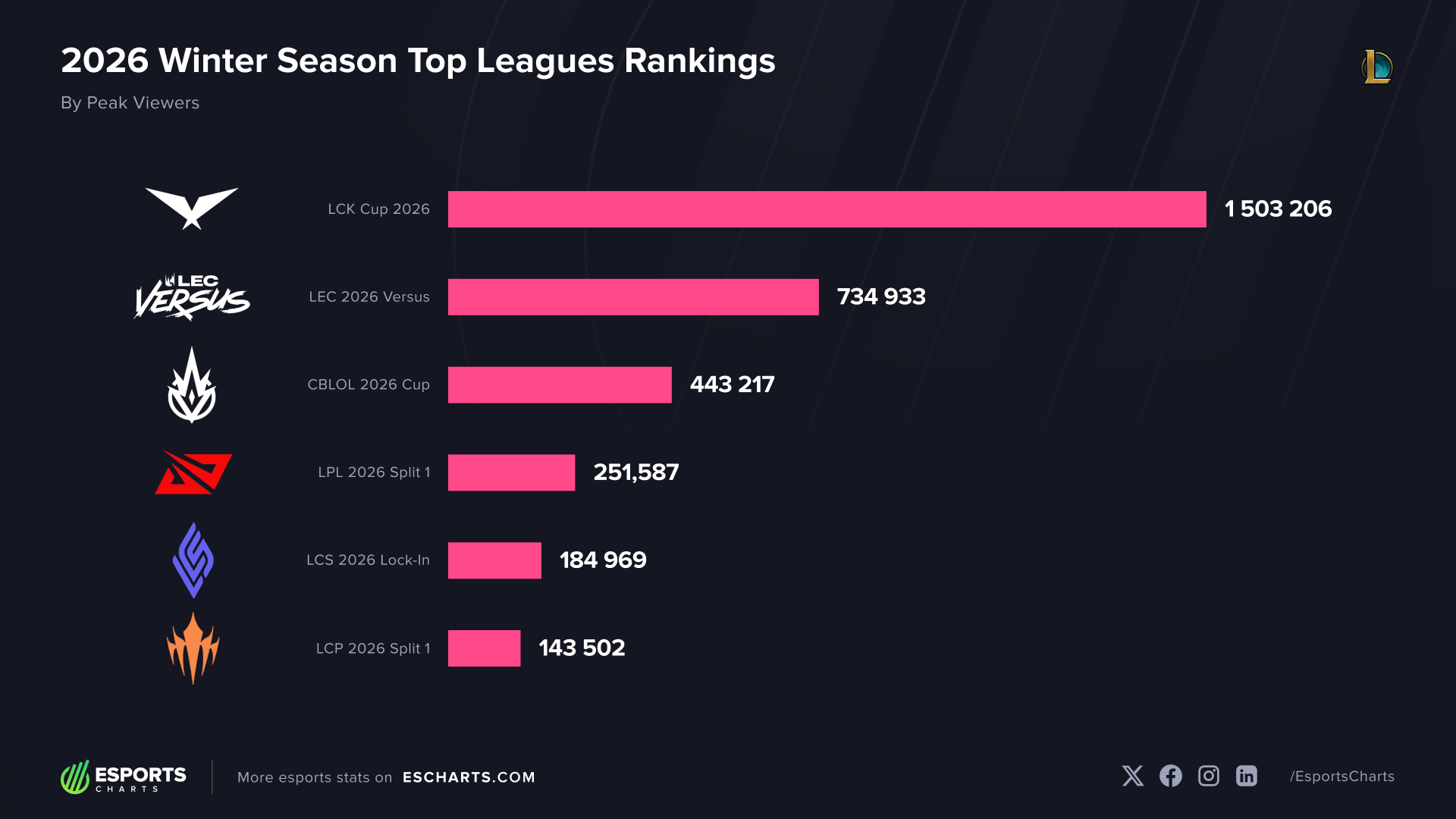
While comparing Hours Watched with the previous year’s LTA South split is challenging due to differing formats, peak viewership numbers paint a positive picture. CBLOL recorded the highest percentage increase in peak viewership among major leagues this winter, showcasing the enduring strength of Brazilian broadcasts as an independent entity.
LCS (North America)
With the return of the LCS brand, the league has stabilized its audience. While the team lineup remains mostly unchanged, the shift to a more comprehensive format, including a full group stage and playoffs, contributed to an increase in Hours Watched.
Compared to Winter 2025, peak viewership also saw an uptick. This positive trend signals growth for the region, although the league has yet to reach viewership levels seen during its peak years.
LPL (China)
The LPL underwent significant changes this year, reducing the number of participating teams and introducing a new multi-stage group format. Despite the smaller team pool, the league experienced a notable increase in Hours Watched compared to Winter 2025, with peak viewership reaching a two-year high.
LCP (Pacific)
In contrast to other leagues, the LCP saw declines across all major metrics compared to Winter 2025. Various factors, including early eliminations of fan-favorite teams and roster changes, contributed to this downturn. Additionally, adjusting broadcast times may have hindered accessibility for certain viewer groups.
First Stand begins
The 2026 international clash kicks off on Monday, March 16. For details on the format, participating teams, and match schedules, refer to our comprehensive First Stand 2026 guide.