Table of Contents
The Intel Wildcat Lake “Core Series 3” CPUs: A Cost-Optimized Solution for PCs
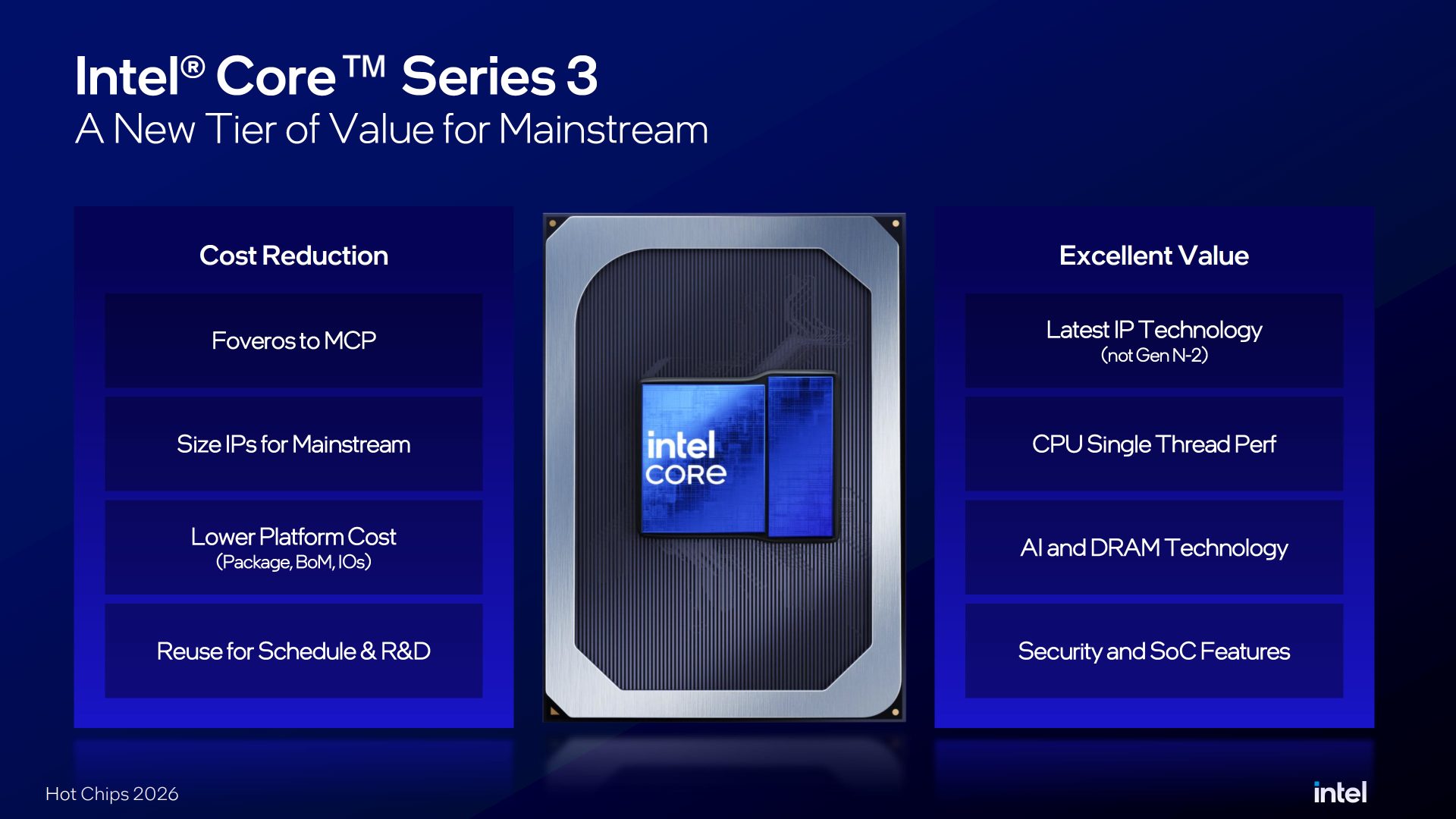
Intel recently unveiled its Wildcat Lake “Core Series 3” CPUs, targeting the PC market with cost-optimized solutions. These chips, based on the Panther Lake architecture, were designed to offer value while meeting the standards set by competitors like Apple’s MacBook Neo.
Intel’s Approach to Wildcat Lake
Intel’s aim with Wildcat Lake was clear – to provide a value-optimized processor for PCs, including laptops, with modern connectivity features like Thunderbolt 4, Wi-Fi 7, and Bluetooth 6. These chips were also designed to extend beyond laptops to edge deployments like robotics, smart buildings, and terminals.
The Wildcat Lake “Core Series 3” CPUs delivered impressive performance enhancements, including up to 2.7x faster AI performance, all-day battery life, and 2.1x faster creation and productivity. These improvements were achieved while maintaining a 64% lower processor power compared to previous chips.
Optimizations in Packaging and Design
One significant change in the Wildcat Lake CPUs was the adoption of a Multi-Chip Package (Organic) substrate over the Foveros solution used in the Panther Lake chips. This switch eliminated the need for a base die, reducing assembly costs and improving yield. The MCP package also offered benefits like simplified power management and signal routing.
Intel carefully selected process technologies like 18A for the compute die and TSMC N6 for the IO tile to optimize performance and efficiency in Wildcat Lake chips. These choices resulted in a leaner chip design with key features tailored for mainstream users.
Key Changes in Wildcat Lake
Compared to Panther Lake, Wildcat Lake saw several key changes, including a reduction in die size for the compute and IO tiles. The removal of certain features like the IPU and Pro Media components helped streamline the design and improve cost-effectiveness.
Intel’s move to the MCP package also led to significant savings in board space and power delivery, contributing to overall cost reductions in the platform. The integration of essential components like WiFi7 and PD controllers further enhanced the value proposition of the Wildcat Lake CPUs.
Conclusion
Wildcat Lake represents Intel’s strategic approach to delivering cost-effective yet high-performance processors for PCs. By optimizing packaging, design, and key features, Intel has created a compelling lineup of CPUs that cater to the needs of mainstream users and edge deployments. The advancements in Wildcat Lake underscore Intel’s commitment to innovation and value creation in the competitive PC market.