Table of Contents
In a surprising turn of events, OpenAI has unveiled its latest innovation – the Jalapeno chip, a formidable creation that has raised eyebrows in the tech industry. By utilizing its cutting-edge models running on NVIDIA GPUs, OpenAI has developed the Jalapeno chip and paired it with its Gluon kernel programming language. This move poses a direct challenge to NVIDIA’s dominant CUDA technology, marking a significant shift in the landscape of AI hardware.
Exploring the Architecture of OpenAI’s Jalapeno Chip

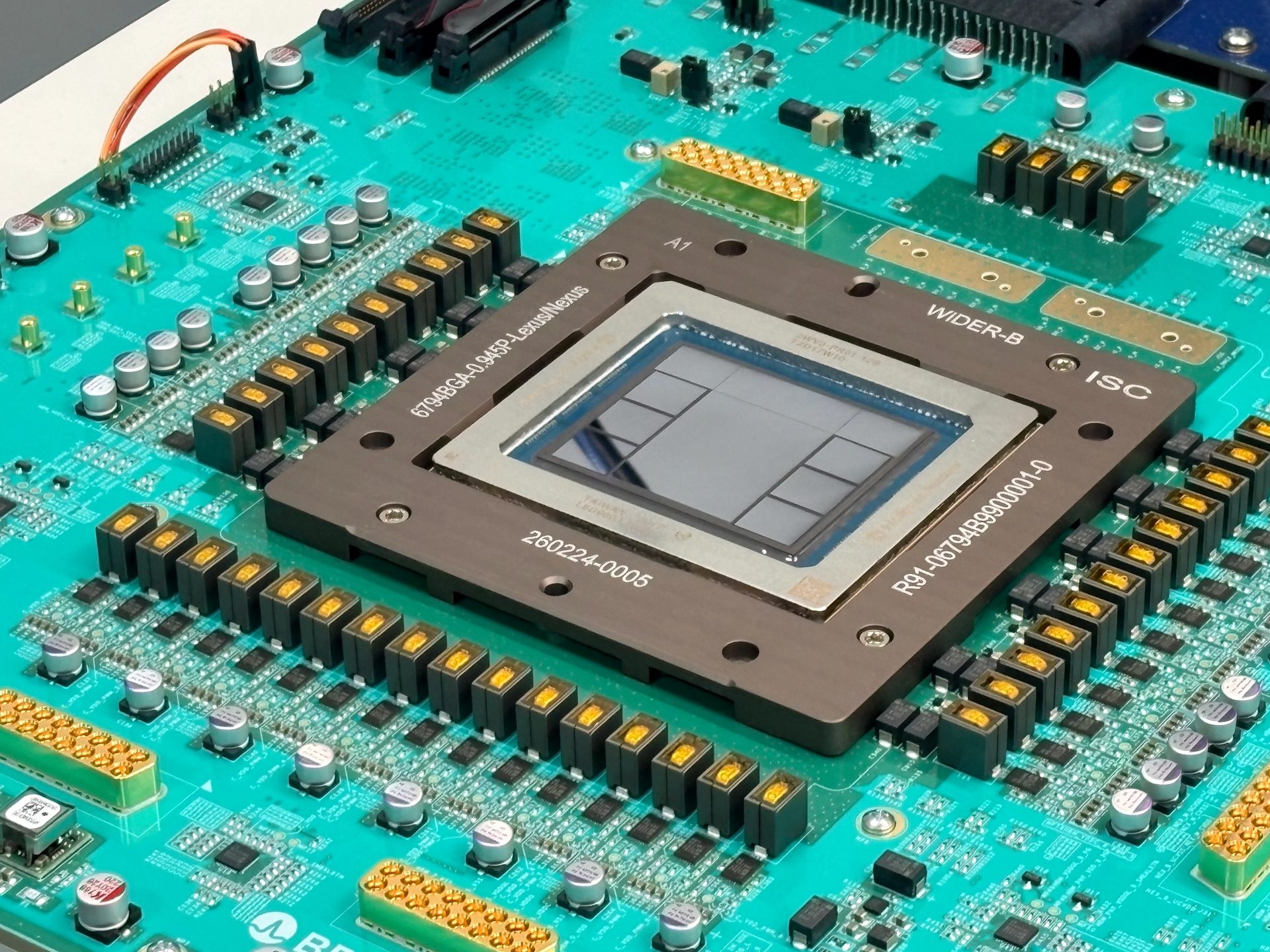
Recent analysis by SemiAnalysis has shed light on the innovative architecture of OpenAI’s Jalapeno ASIC, showcasing a unique design that offers significant economies of scale. The Jalapeno chip features a single compute die, manufactured on TSMC’s N3P node, coupled with an N3E I/O chiplet and HBM4 memory modules, likely sourced from Samsung. This configuration delivers an impressive 15.4 TB/s of memory bandwidth per package.
The Matrix Engine and Compression Techniques
AI models operate on vast amounts of data organized in grids or matrices, rather than processing data line-by-line. To accelerate these grid-based computations, the Jalapeno chip incorporates a specialized matrix engine designed to handle complex math problems efficiently.
Unlike traditional AI systems that use standard numerical formats, Jalapeno employs MXFP formats for data compression. This innovative approach reduces the memory requirements by grouping numbers together and sharing a single scaling factor. The result is a more streamlined data processing pipeline, enhancing overall performance.
The Systolic Array and Weight-Stationary Design
One of the key features of the Jalapeno chip is its weight-stationary systolic array, a design that minimizes data bottlenecks by allowing seamless data flow through a grid of processing cells. This approach eliminates the need for constant read/write operations to external memory, significantly enhancing computational efficiency.
Additionally, the matrix engines in Jalapeno are weight-stationary, meaning that once the model weights are loaded into the grid, they remain static throughout the processing, further optimizing performance and reducing computational overhead.
The Vector Cores and Complete Rack-Scale Solution
In addition to the matrix engines, OpenAI’s Jalapeno chip features 64-bit scalar cores for managing control code and memory operations. These scalar cores, equipped with Out-of-Order execution pipelines and L1 cache, work in tandem with the matrix engines to streamline data processing and ensure efficient task execution.
The Jalapeno chip is part of a comprehensive rack-scale solution that includes the CPU Host Rack (Katsu) with Turin-class AMD EPYC processors, and the ASIC Accelerator Rack (Vindaloo) housing multiple Jalapeno chips. This integrated setup delivers unparalleled processing power and memory bandwidth, positioning OpenAI at the forefront of AI hardware innovation.
OpenAI’s Jalapeno Chip Sets a New Standard

The Jalapeno chip has demonstrated exceptional performance in inference workloads, outperforming the best NVIDIA chips in terms of efficiency and latency. With a focus on peak throughput and end-to-end latency, the Jalapeno chip showcases its versatility and raw computational power across a wide range of AI models.
According to SemiAnalysis, the Jalapeno chip achieves an impressive 13.4 PFLOPs of MXFP4 performance while maintaining a TDP of 700W. This remarkable efficiency, coupled with the chip’s sustained power consumption under heavy workloads, highlights the engineering prowess of OpenAI in developing cutting-edge AI hardware.
The Jalapeno chip’s Single-Token Prediction architecture further sets it apart from competitors, offering a streamlined approach to data processing without compromising performance. By optimizing the chip for single-token predictions, OpenAI has created a hardware solution that excels in AI tasks with precision and efficiency.
In Conclusion
OpenAI’s Jalapeno chip represents a paradigm shift in AI hardware design, leveraging innovative technologies and architectures to redefine the boundaries of computational efficiency. With a focus on performance, scalability, and versatility, the Jalapeno chip has set a new standard for AI hardware, solidifying OpenAI’s position as a trailblazer in the field of artificial intelligence.