Table of Contents
The Evolution of NVIDIA’s Vera CPU: Redefining Computing Architecture for Agentic AI
As technology advances and the demands of artificial intelligence (AI) grow, NVIDIA’s Vera CPU is leading the charge in redefining computing architecture. Moving away from traditional, task-isolated paradigms, Vera is creating an orchestrated, agentic intelligence ecosystem that transforms the role of the central processing unit (CPU) into a specialized conductor for AI agents.
The Shift Towards Single-Threaded Performance and Agentic AI
In a recent exclusive interview with Wccftech, NVIDIA’s Vera team shared insights on the emergence of the CPU in the agentic AI economy. The focus has shifted from cloud infrastructure prioritizing massive core counts to a new era where agentic AI demands high single-threaded performance and optimized CPU-to-GPU interactions.
The Paradigm Shift: From Cloud to Agentic AI
In the past, data center design emphasized maximizing individual processor core performance, resulting in high single-threaded performance but limited overall throughput. However, as cloud hyperscalers expanded, the industry favored packing more cores into servers at the expense of single-core optimization. This led to high throughput but low single-threaded performance.
The rise of Agentic AI has placed the CPU back at the forefront of hardware design, requiring a balance of speed, memory access, and minimal lag to support AI agents’ rapid reasoning loops between the CPU and GPU.
NVIDIA’s Solution: The Vera CPU
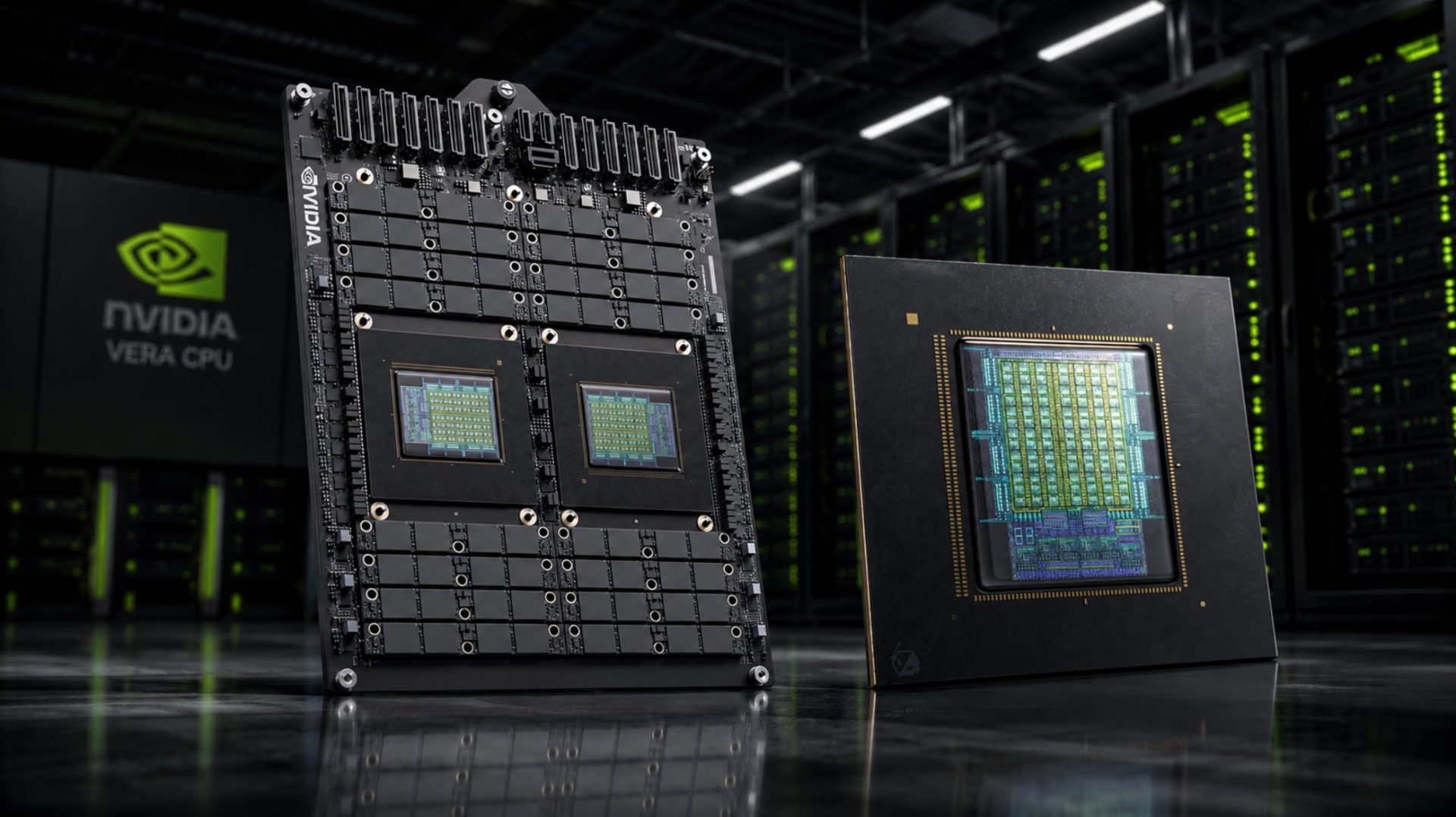
NVIDIA’s Vera CPU breaks the historical trade-offs of the cloud era by offering high single-threaded performance and high throughput. This is achieved through specific design choices, including high per-core speed, a custom LPDDR5X memory subsystem for increased bandwidth, and a single monolithic compute die powered by the second-gen NVIDIA Scalable Coherent Fabric to eliminate latency.
The Future of CPU Functionality and Disaggregation
With the evolving landscape of AI infrastructure, NVIDIA is exploring disaggregation in CPU functions to optimize efficiency in modern AI workloads. By splitting processing phases across specialized hardware clusters, such as pre-fill and decode tasks, NVIDIA is adapting to the trend of heterogeneous infrastructure in AI.
NVIDIA’s original CPU strategy, demonstrated with the Grace processor, focuses on creating a “host node” to feed data to GPU clusters efficiently.
In Conclusion
NVIDIA’s Vera CPU represents a significant leap forward in computing architecture, catering to the demands of agentic AI and optimizing CPU performance for AI workloads. By prioritizing high single-threaded performance, memory bandwidth, and low latency, Vera sets a new standard for CPUs in the AI ecosystem.
The Shift Towards Standalone CPU Racks for AI Workloads
As technology advances, the demands for agentic workflows and reinforcement learning have pushed NVIDIA to make a significant pivot in its approach. This shift was driven by the realization that there is a growing need for pure CPU racks to handle agent tool calls and reinforcement learning tasks.
“…we were focused on CPU with grace as a host node, as the 1-8 or 1-4 in a rack, we wanted the best host node possible. Then we realized, we saw that actually there is a point where you would actually want a lot of standalone CPUs, like pure racks of just CPUs because for all those agent tool calls for reinforcement learning…”
This pivot has transformed the Vera CPU from being viewed strictly as an integrated component within a GPU-CPU architecture to a standalone CPU asset. NVIDIA now offers “pure racks” of Vera processors dedicated to handling massive volumes of agent tool calls and reasoning loops.
“…that pivot is a lot like disaggregation in a way, because you’re saying instead of it just being part of the Vera-Rubin stack, we think that there’s an importance of having Vera standalone CPU. So I guess in a way to answer your question, that pivot with Vera in and of itself is a step in that direction. But I don’t know, like in the particular use case you described, if we have plans along doing something very similar.”
Summary: NVIDIA’s pivot towards standalone CPU racks for AI workloads signifies a broader trend in the industry moving towards disaggregation. Vera’s commercialization as an independent CPU asset reflects the market’s need for dedicated CPU resources for agent tool calls and reinforcement learning tasks.

The Performance Leap of Vera CPU
When comparing Vera CPU to its predecessor Grace, NVIDIA has achieved a significant performance boost. Vera delivers 1.5x faster performance than Grace and scales up to 2x faster than leading x86 processors on agentic workloads like Python scripting and code compilation.
“…we’re 1.5x faster than Grace, but we’re also 2x faster on agentic workloads versus x86. So not versus Grace, but versus the leading x86 part. We are 2x faster for agentic workloads.”
Unlike traditional Simultaneous Multithreading methods, NVIDIA’s spatial multithreading feature ensures optimal resource allocation by dedicating threads for worker and I/O operations. This approach prevents core starvation during heavy compute loads, maintaining efficiency without incurring any performance tax.
“…NVIDIA employs their own proprietary spatial multithreading… It allows you to provision, like, one thread as your worker thread and one thread as your I/O thread. And it’s a way to have more optimal resource allocation.
And that underloads, oftentimes, in other competing architectures. You might rob your worker thread of cycles in order to feed I/O or other cores because of the load. And so our spatial multithreading actually allows you to maintain that type of resource balance.”
Summary: NVIDIA’s Vera CPU outperforms Grace and leading x86 processors on agentic workloads, thanks to its spatial multithreading feature that optimizes resource allocation without performance penalties.
NVIDIA’s Perspective on CPU-to-GPU Ratio
When discussing the CPU-to-GPU ratio in AI environments, NVIDIA remains cautious about projecting specific ratios. However, with the increasing demand for agent tool calls and sandboxes, the industry is shifting towards a heavier reliance on CPUs. This trend is driving the need for standalone CPU racks like Vera to support massive workloads.
“We are generally very, I mean, to be honest, I know that folks will ask this question. We don’t frankly, quite honestly, truthfully, we do not have a point of view on the ratio question. People ask often and we don’t.
And, you can imagine why we wouldn’t want to say, we wouldn’t want to put anything out there because that would immediately signal something about the direction of the business.”
Conclusion: NVIDIA’s strategic pivot towards standalone CPU racks with the Vera CPU showcases the company’s commitment to meeting the evolving demands of AI workloads. By focusing on dedicated CPU resources for agent tool calls and reinforcement learning tasks, NVIDIA is at the forefront of driving innovation in the AI infrastructure space.
The Innovative Design of NVIDIA Vera CPU
In the competitive world of CPU technology, NVIDIA has taken a bold step with the development of Vera, a revolutionary CPU designed specifically for ultra-high-performance AI data centers. Unlike traditional x86 manufacturers who cater to a wide range of consumers, NVIDIA’s approach with Vera is refreshingly singular and focused.
The Monolithic vs. Chiplet Architecture Debate
One of the key decisions NVIDIA made with Vera was to opt for a monolithic die instead of the chiplet architecture favored by its competitors. This deliberate choice was made to address the unique demands of AI agents and data analytics in a way that maximizes performance.
By keeping all cores on a single continuous piece of silicon, Vera eliminates the internal performance bottlenecks that can occur when data has to traverse boundaries between separate chiplets. This design decision has resulted in a significant performance advantage for collaborative computing, with Vera achieving an impressive 3.4 terabytes per second of bisection bandwidth.
A Focus on Data Movement and Collaboration
The monolithic die design of Vera allows processor cores to communicate seamlessly, facilitating faster collaboration and sharing of contextual information. This enhanced data movement capability is a game-changer for AI applications, enabling cores to work together more efficiently than ever before.
While NVIDIA’s choice of a monolithic die was driven by the need to meet specific performance targets, the company remains open to exploring chiplet technology in the future if market demands require it. This pragmatic approach underscores NVIDIA’s commitment to adapting to evolving market needs while prioritizing engineering utility.
Conclusion: A Bold Leap into the Future
In conclusion, NVIDIA’s Vera CPU represents a bold leap into the future of CPU design, tailored specifically for the demands of AI data centers. By embracing a monolithic die architecture and prioritizing data movement and collaboration, NVIDIA has positioned Vera as a powerhouse for high-performance computing. As the industry continues to evolve, NVIDIA’s flexibility and innovation ensure that Vera remains at the forefront of cutting-edge CPU technology.
Title: The Rise of Battle Royale Games in the Gaming Industry
Battle Royale games have taken the gaming industry by storm in recent years. With titles like Fortnite, PUBG, and Apex Legends dominating the charts, it’s clear that this genre is here to stay. But what exactly is it about Battle Royale games that make them so popular? Let’s dive into the phenomenon and explore why these games have captured the hearts of millions of players worldwide.
H2: The Thrill of Survival
One of the key appeals of Battle Royale games is the adrenaline-pumping thrill of survival. Players are dropped into a high-stakes, last-man-standing scenario where every decision could mean life or death. The tension of trying to outlast opponents while scavenging for resources creates a sense of urgency and excitement that keeps players on the edge of their seats.
H3: Strategic Gameplay
Unlike traditional shooter games, Battle Royale games require a mix of skill, strategy, and luck to come out on top. Players must carefully plan their movements, manage their resources, and make split-second decisions in order to survive. The ever-shrinking play area forces players into intense encounters, making every match a unique and unpredictable experience.
H3: Social Connection
Another factor contributing to the popularity of Battle Royale games is the social aspect. Whether playing with friends or strangers, these games provide an opportunity for players to come together and work towards a common goal. The shared experiences of triumph and defeat foster a sense of camaraderie and community among players, creating lasting bonds and friendships.
H2: The Future of Battle Royale
As the gaming industry continues to evolve, it’s clear that Battle Royale games will remain a dominant force. With new titles constantly being released and existing ones receiving regular updates, the genre shows no signs of slowing down. As developers continue to innovate and push the boundaries of what is possible in the Battle Royale space, players can expect even more thrilling and immersive experiences in the years to come.
Conclusion:
In conclusion, the rise of Battle Royale games has forever changed the gaming landscape. With their unique blend of adrenaline-fueled gameplay, strategic depth, and social connectivity, these games have captured the hearts of millions of players around the world. As the genre continues to grow and evolve, one thing is certain: Battle Royale games are here to stay.