Table of Contents
Revolutionizing AI Workloads: DFSX’s Breakthrough in Memory Bandwidth
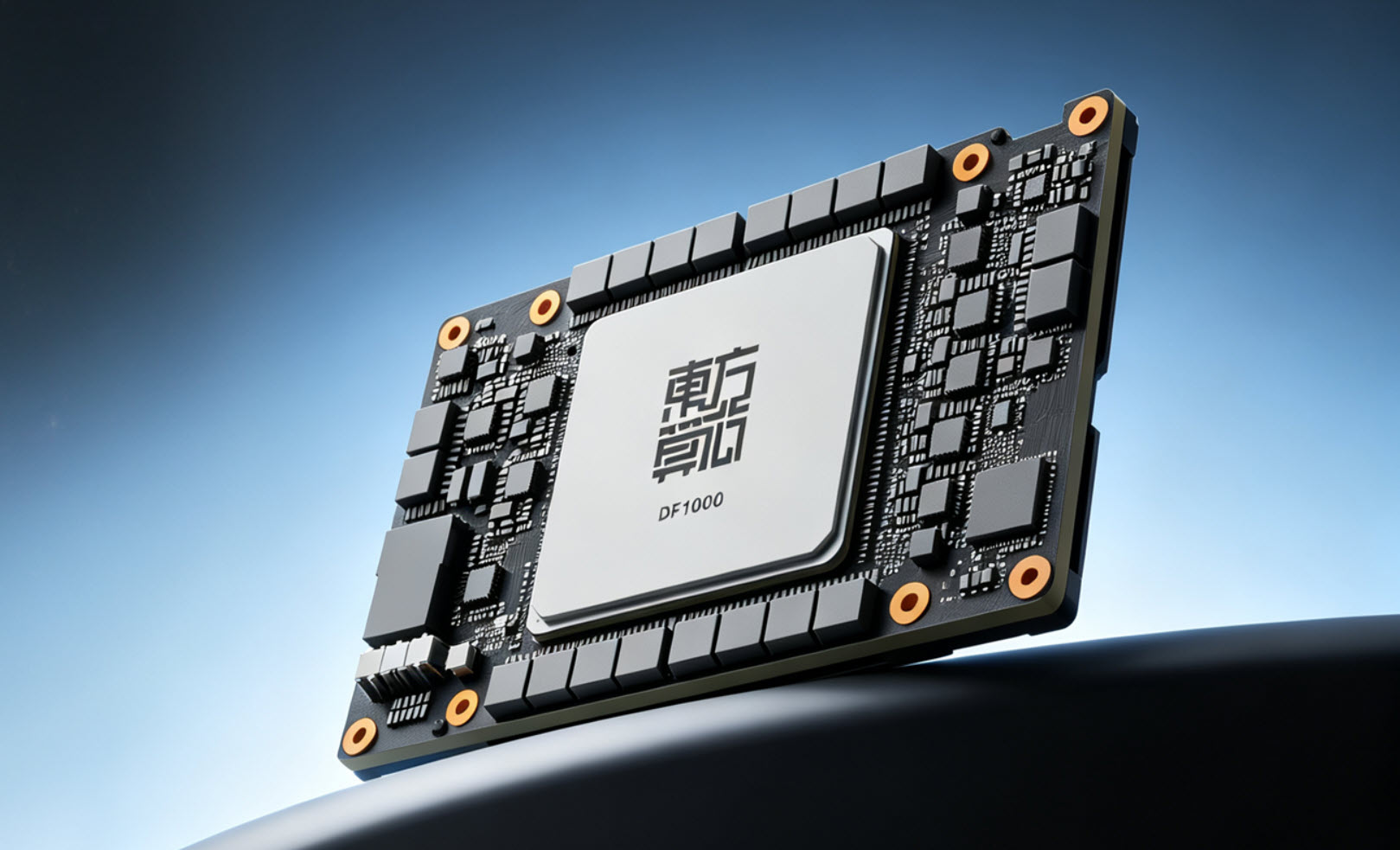
When it comes to AI workloads, the focus has often been on node miniaturization. However, China’s Dongfang Suanxin (DFSX) is challenging this notion with its innovative approach centered around memory bandwidth. The DF1000 and upcoming DF2000 chips from DFSX are setting new standards in the industry, particularly with their TY64 SuperNodes that aim to rival NVIDIA’s GB200 NVL72 system.
The Ingenious Architecture of DFSX Chips
DFSX’s DF1000 chip, built on the mature 14nm process, introduces a groundbreaking 3D near-memory compute architecture. By stacking memory directly on top of the compute layer and utilizing 3D wafer-level hybrid bonding, DFSX eliminates traditional microbumps or wires. This unique approach enhances data transfer speeds significantly, resembling millions of ultra-fast vertical elevators.
On the other hand, the DF2000 chip takes this concept further by incorporating a 3.5D Infinity Chiplet layout. Instead of a single memory layer, the DF2000 integrates multiple stacked memory-compute towers on a base foundation, creating a custom-engineered 3D Dynamic Random-Access Memory (DRAM) layout. This design boosts the chip’s capacity to hold temporary data within its structure.
Unleashing Unmatched Memory Bandwidth
DFSX’s emphasis on memory bandwidth is evident in the performance metrics of its chips. The DF2000 chip offers an impressive bandwidth of 15TB/s, which escalates to a remarkable 960TB/s when organized in a TY64 SuperNode configuration. In comparison, NVIDIA’s GB200 NVL72 system lags behind with a total memory bandwidth of just 576TB/s.
While the DF2000-based TY64 SuperNode may have lower BF16 compute scores than its counterparts, the doubled memory bandwidth compensates for any computational disparities. DFSX is redefining the AI landscape by prioritizing memory throughput over traditional metrics like FLOPS.
The Future of AI Computing
Looking ahead, DFSX’s DF3000 chip promises even higher memory bandwidth of 20TB/s, reaching 1,280TB/s within the TY64 SuperNode configuration. Despite NVIDIA’s Vera Rubin NVL72 system offering a marginally higher total memory bandwidth of 1,580TB/s, DFSX’s relentless focus on memory optimization positions them as a formidable player in the AI computing realm.
In Conclusion
DFSX’s innovative approach to AI workloads, prioritizing memory bandwidth over node miniaturization, is reshaping the industry’s landscape. With groundbreaking chips like the DF2000 and future advancements on the horizon, DFSX is poised to revolutionize AI computing and drive unprecedented efficiencies in data processing.