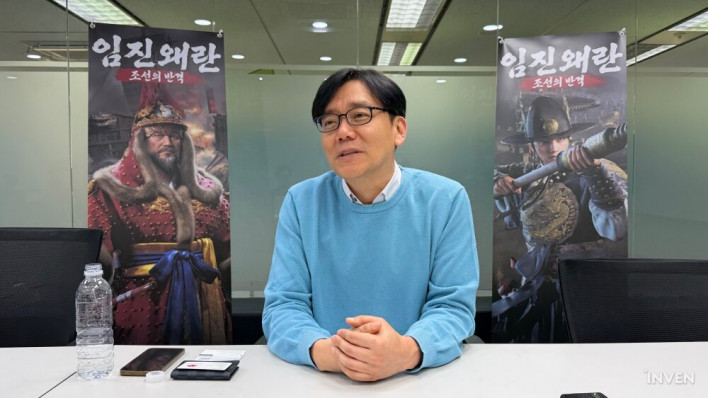
A young man who started his game development journey in 1995 by creating ‘Chungmugong-jeon’ has now evolved into a seasoned developer with 30 years of experience. PD Kim Tae-gon, known for leading the Korean strategy simulation genre with ‘Imjin-rok’ and ‘Gersang’, is a true witness to the history of Korean historical games.
Throughout his career, the ‘Imjin War’ has been more than just a backdrop; it has been the foundation of the worlds he builds. Despite exploring global themes with ‘Atlantica’ and broadening his horizons with ‘Romance of the Three Kingdoms: The Legend of Cao Cao’, a part of him has always yearned to return to the Imjin War, his creative home.
In 2024, PD Kim Tae-gon took a bold step by leaving a large corporation and using his own savings to establish the independent studio ‘Red Ginkgo’. The name ‘Red Ginkgo’ symbolizes his desire to interpret history with a unique sensibility, much like the enduring vitality of a ginkgo tree. He envisions ‘Red Ginkgo’ not as a game factory, but as a ‘historical game workshop’ where craftsmanship is valued.
“After over 30 years in the industry, I realized that if I don’t do this now, I never will.” This strong sense of purpose, self-imposed and unwavering, is not about resting on past achievements. PD Kim Tae-gon aims to create a space akin to a beloved local eatery, reflecting the owner’s dedication, rather than a generic franchise cafe. This philosophy is deeply ingrained in his latest title, ‘Imjin War – Counterattack of Joseon’, which encapsulates the historical essence of the Imjin War in his unique style.
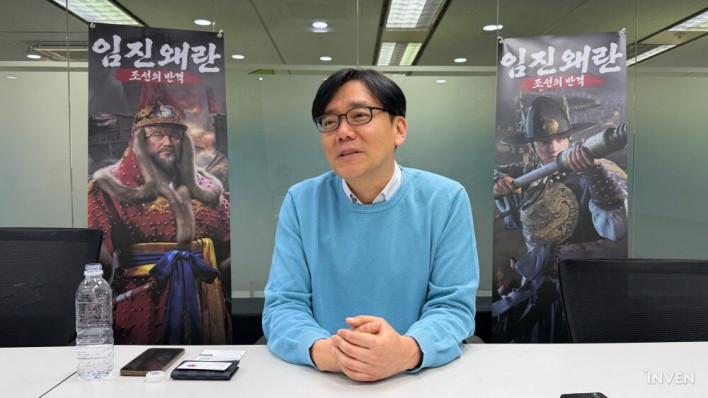
What drew you to focus on the ‘Imjin War’ amidst countless historical events?
“From ‘Chungmugong-jeon’ in 1995 to the ‘Imjin-rok’ series and ‘Imjin-rok Online: Gersang’, the Imjin War was my primary focus in the early 2000s. Despite creating games like ‘Atlantica’ and ‘Romance of the Three Kingdoms: The Legend of Cao Cao’, I always gravitated towards history and geography in my development journey. I attempted to work on Imjin War-based games multiple times, but faced challenges in securing funds for global expansion or due to limited user interest. In 2024, I realized it was now or never, leading me to establish ‘Red Ginkgo’ and embark on a game centered on the Imjin War.
What drove your deep immersion in the Imjin War and how does it set your games apart from other historical titles?
“My fascination with ‘Warcraft’ as an amateur inspired me to create a strategy game. However, I sought to differentiate my work from typical Western fantasy themes, leading me to choose the Imjin War. This era holds a special place in my heart as a game developer, offering a rich tapestry for game development. Unlike games like ‘Romance of the Three Kingdoms’ or those set in Japan’s ‘Sengoku period’, the Imjin War presents a massive international conflict with distinct nations, advanced weaponry, and significant naval battles. This unique setting provided the perfect backdrop for creating a game that focuses on strategic warfare and resource management. The scarcity of mainstream titles set in this Joseon period further fueled my passion for this subject.
What inspired the choice of ‘Red Ginkgo’ as the company name?
“The name ‘Red Ginkgo’ symbolizes strength and endurance, much like the ginkgo tree that withstands the test of time. By incorporating the color red, we emphasize our unique interpretation of history in our work. Despite misconceptions associating ‘Ginkgo’ with Japanese culture, it is simply an English word derived from the Japanese pronunciation of the Chinese character for ginkgo.
Red Ginkgo strives to embody a ‘historical game development workshop’ that resembles a cozy neighborhood eatery run by skilled craftsmen rather than a corporate giant or an independent game studio. The official launch date is set for April 28, which coincides with Admiral Yi Sun-sin’s birthday.
The founder of Red Ginkgo expresses a deep sense of personal mission in creating games that leave a lasting impact on players. The goal is to establish a unique identity in the gaming industry, akin to renowned series like ‘Romance of the Three Kingdoms’ or ‘Civilization’, focusing on historical themes and fostering long-term relationships with players.
The company’s commitment to the historical genre is evident in their upcoming release, ‘Imjin War – Counterattack of Joseon’, which serves as a foundation for future expansions and explorations within the Imjin War universe. The founder acknowledges past disappointments, such as the canceled ‘Dawn of the Frozen Land’, and aims to eventually revisit and realize such projects.
Red Ginkgo’s dedication to a specific style of gameplay, characterized by management-centered strategy simulations, is driven by a desire to refine and perfect their craft over time. Rather than conforming to fleeting trends, the company values the steady accumulation of expertise and the establishment of a legacy akin to successful franchises like ‘Resident Evil’.
Looking towards the future, the ultimate goal for Red Ginkgo is to create a game that stands the test of time, fostering a community of history enthusiasts and gamers who appreciate the depth and quality of their offerings. The company aims to build a sustainable model based on reasonable pricing, high quality, and organic word-of-mouth promotion, akin to the beloved retail brand ‘Daiso’.
The core pillars of Red Ginkgo’s game design – ‘Hunting, Siege Warfare, and Economic System’ – are carefully crafted to provide engaging gameplay experiences that leverage historical elements and strategic depth. The simplified scale of siege warfare reflects a conscious decision to cater to modern gaming preferences, focusing on accessibility and streamlined mechanics. When people envision MMORPG siege warfare, they often think of large-scale battles involving dozens or even hundreds of players on both offense and defense. However, this grandiose scale often limits the accessibility of such content to the majority of users, depriving them of the opportunity to experience the most exciting aspects of the game.
To address this issue, I have redesigned siege warfare to be more compact and accessible. Instead of requiring a large number of players, even a small group can now engage in both offensive and defensive activities. Additionally, I have introduced a PvE element where players can challenge AI strategies and dismantle enemy defenses. This new approach allows anyone to enjoy siege warfare as a core daily activity without feeling overwhelmed.
In terms of monetization, we have adopted a freemium model to avoid alienating users with excessive microtransactions. By keeping development and marketing costs low, we can offer paid content at a reasonable price point. We have also implemented an integrated marketplace where all paid goods can be traded between users, further enhancing the player experience.
To prevent inflation in the game economy, we strictly control the distribution of high-tier items and limit the effectiveness of gold farming macros. By focusing on resource balance and consumption, we ensure a stable in-game economy that is not easily manipulated by external factors.
Feedback on the motivation limit system has been taken into account, and we have adjusted the action power recovery time to provide more motivation through in-game activities. This system not only prevents macros but also adds a strategic element to resource management, enhancing the overall gameplay experience.
When it comes to historical accuracy, we strive to balance authenticity with creative liberties. While we incorporate real historical figures and events, we also introduce fictional scenarios to keep the game engaging and unpredictable. Our goal is to create a cohesive narrative that seamlessly blends real history with alternative storylines.
Despite the presence of real historical figures in the game, we have not received any concerned contact from their descendants. We take great care to respect the historical context and ensure that our portrayal does not cause any harm or offense to those who are connected to these figures. “We are also considering the production of physical merchandise such as character figurines, posters, and other collectibles. These offline events and merchandise would not only deepen the connection between the game and its fans but also serve as a way to promote the game in a more tangible and engaging way. We are excited about the possibilities and look forward to bringing these ideas to life in the near future.” Like enthusiasts who participate in reenactment events for World War I and II or medieval times, I am interested in creating a romantic Imjin War culture. I envision gatherings at historical sites like Jinju Fortress during the Jinju Battle event, where we can come together and immerse ourselves in the experience.
Following the enthusiastic response to the Shorts video showcasing the in-game ‘Hwacha’ model, which was created and painted by the CEO using a 3D printer based on blueprints, we are considering introducing various merchandise that users will truly enjoy.
The ‘Imjin War’ theme has a distinct Korean flair. As we prepare for global expansion, we are planning to launch two English versions initially. While showcasing the game to a Steam representative, we received a positive reaction, with them expressing surprise at the uniqueness of our project. However, our primary focus remains on gaining recognition and feedback from Korean users, known for their high standards and discerning taste.
As for our upcoming project, ‘Project Jindallae,’ it falls under the RTS genre. Our veteran developers are currently engaged in basic R&D, focusing on terrain implementation, unit production, movement, and attacks. Despite the challenges posed by the genre’s decline in Korea and the absence of freemium models, the interest from users following a brief Shorts release has been overwhelming. We aim to unveil specific design details around next year.
Rather than opting for a conventional English working title, we have affectionately named the project ‘Jindallae’ (Azalea), inspired by a favorite flower next to a ginkgo tree. The team’s morale is high, and we plan to infuse elements like Royal Azaleas into our future endeavors. Could you please rewrite the following text?