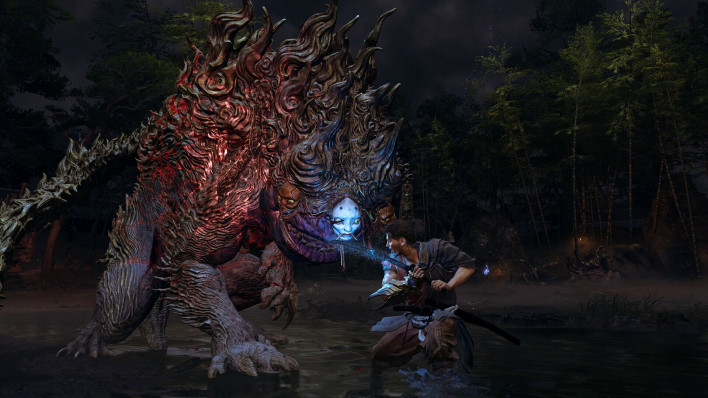
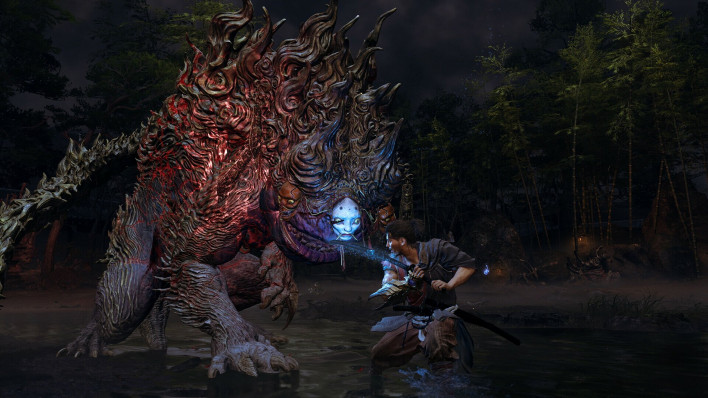
On September 4, ‘Onimusha’ returns with its first completely new title in over 20 years. Based on a reimagined worldview, the game features Miyamoto Musashi as the protagonist and blends dark fantasy with bizarre legends from Kyoto, the thousand-year capital. While it retains the series’ iconic soul absorption and ‘Issen’ (critical strike) mechanics, it adds modern sword-fighting actions such as parrying, deflecting, and using the surrounding environment to one’s advantage.
With this title, the development team aimed to create a samurai action experience where players choose how to respond to situations, rather than repeating a fixed clear strategy. We spoke directly with the developers about elements inherited and evolved in the new ‘Onimusha,’ from motion capture involving real sword-fighting experts to the relationship between Miyamoto Musashi and Sasaki Ganryu, boss and difficulty design, and the newly introduced ‘Break Issen.’
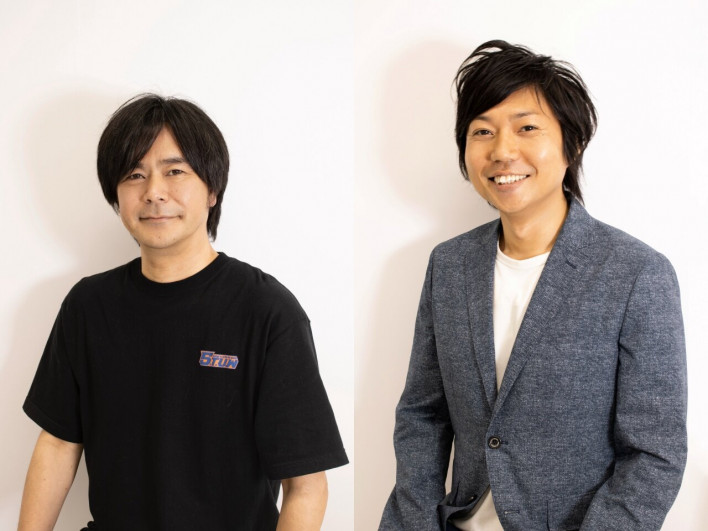
The combat in this title is not only impactful but also visually engaging. In particular, the various motions using dual blades highlight the character’s personality. What combat motions is the development team most proud of, and which action sequences required the most time and effort.
“ We put a lot of effort into character design. For the protagonist, we focused on expressing ‘Musashi-ness’ in everything from his idle animations to the way he shakes blood off his blade after a strike. Since the character is Miyamoto Musashi, we were conscious of making his motions feel somewhat rough rather than overly polished.
Furthermore, to implement realistic samurai movements, we invited masters of sword-fighting and iaido to every motion capture session. I consulted with them on how they actually move to build the animations. We avoided leaning toward any specific school of swordsmanship, prioritizing the realism of the samurai above all else. We also developed a real-time calculation system to ensure that actions like sword-locking on sloped terrain look natural.
The demo build ends with a battle against Sasaki Ganryu. Players new to the series might find it difficult to understand the relationship between the two or the background leading up to the fight. Will these relationships and conflicts be fully explained in the full version.
“ Playing the full version will allow you to grasp the relationship between the two characters much more clearly.
As you saw in the trailer, Ganryu wears the ‘Oni Gauntlet.’ This time, we thought about the fun of a storyline that feels like an ‘Onimusha vs. Onimusha’ confrontation. We intentionally set up a character who might make you think, ‘He’s wearing the Oni Gauntlet, so is he an ally?’ as an enemy, making him a compelling antagonist for Musashi. Ganryu is a crazed, psychopathic character who seems to mock Musashi with his genius-level movements, designed to contrast with the more human-like Musashi.
The delicate facial expressions and movements of Musashi and Ganryu were impressive. It seems closely tied to gameplay, with different parry motions for each boss and the ability to seal patterns by cutting specific parts. What was the process for completing these facial animations and motions, and can we expect this in other Capcom titles in the future.
“ All characters use face models of real people. Lead characters, excluding Musashi, were chosen through auditions. For the other 100 or so characters, we mostly scanned the faces of our own employees.
We wanted to portray Sasaki Ganryu as a character driven by madness, so we chose a model who fit that mysterious atmosphere. Since the old reference materials for Toshiro Mifune’s face were black-and-white photos, we confirmed skin tone, mole placement, and tooth structure with Mifune Productions before creating the model.
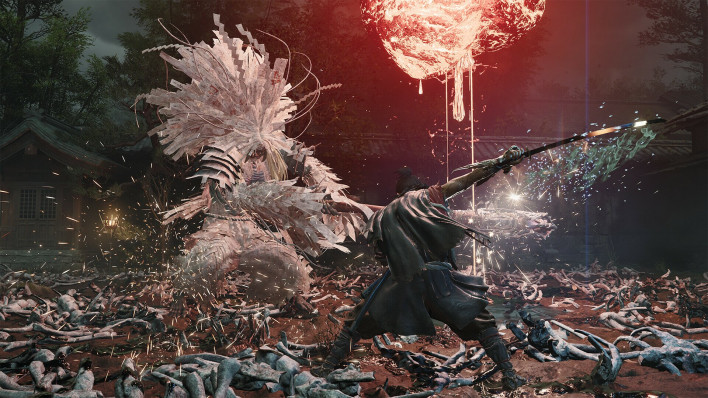
This title features Miyamoto Musashi as the protagonist and is set in Kyoto. Why did you choose this setting? Also, is this Musashi the same character who appeared in the ‘Onimusha’ anime.
“ Miyamoto Musashi is one of the most famous samurai, making him easy to introduce to a global audience. Beyond that, I wanted to depict a samurai who fights desperately using whatever is at hand, someone who fights fiercely even while covered in blood and mud. Miyamoto Musashi was the perfect fit for the protagonist we wanted to portray.
We chose Kyoto because it is known as the ‘thousand-year capital’ and is rich in history and folklore, including real legends and terrifying anecdotes like Minamoto no Yorimasa’s slaying of the Nue. We felt it would be unique from an entertainment perspective to add a setting where the Genma are actually involved in these stories. Also, this is a completely new title with a reimagined worldview and is set apart from the anime version.
Unlike recent action games, this title does not have a jump action. Is this an intentional design choice.
“ It is intentional. We prioritized depicting a samurai-like ‘chanbara’ (sword fighting) and focused on the ground-level clashes between blades. We structured the game to be a sword-action experience where you can have new encounters, such as successfully deflecting an enemy so they crash into a wall or collide with other enemies.
For the feel of the sword action, I felt the vibration could be stronger. Do you have plans to add options to adjust vibration intensity or enhance it.
“ The vibration has been adjusted to provide the most appropriate intensity for various situations.
While the vibration function can be toggled on and off, we designed it to be enjoyable even without step-by-step adjustment options. This article was initially in Korean and translated with the assistance of AI technology. Subsequently, it was revised by a native English-speaking editor. All translations supported by AI undergo a thorough review and refinement process by our editorial team.
[Read Original]