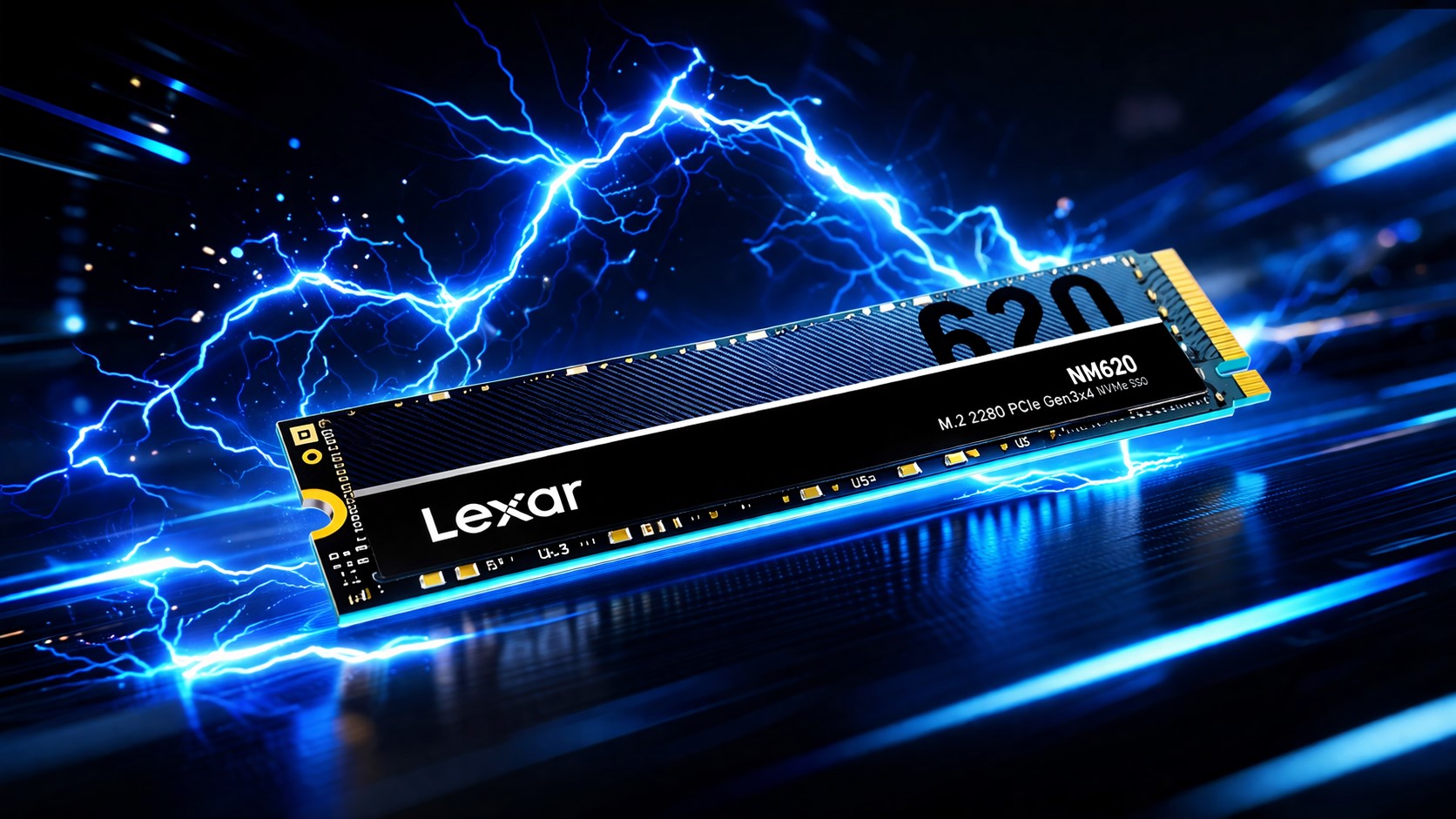
There seems to be a shift in the market’s preference for lower capacity storage drives, while lower RAM capacity is still widely accepted.
Lexar Notes Decrease in Demand for Smaller Capacity SSDs, But Smaller RAM Kits Remain Popular
Building a PC involves considering various components, with RAM and SSDs being crucial. Despite the recent surge in prices, gamers prioritize different aspects of these components. RAM significantly impacts gaming and other tasks, while SSDs mainly contribute to faster loading speeds. Although faster SSDs are preferred, especially by gamers, the choice between a fast NVMe SSD or a traditional hard drive varies.
Capacity plays a vital role, especially as games become larger and more demanding. Most users opt for higher-capacity memory and SSDs. In gaming, anything below 16 GB RAM is less desirable, yet gamers seem more willing to compromise on RAM capacity than on storage drive capacity. This trend was highlighted in an interview with Lexar by Digital Foundry, revealing an interesting market trend.

Grace Su, Lexar’s EU General Manager, shared with Digital Foundry that transitioning to lower-density flash memory for RAM kits and storage drives revealed an unexpected trend. While lower capacity RAM kits met anticipated demand, lower capacity storage drives only received a fraction of the expected interest. Although specific RAM capacities were not disclosed, the dominance of 8 GB DDR5/DDR4 RAM modules in the entry-level market suggests that 8 GB sticks continue to be popular.
Interestingly, users seem hesitant to invest in 256 GB or 512 GB SSDs. Most prefer to avoid sub-Terabyte storage drives. Lexar finds this trend surprising, but the reason is straightforward. While users can easily upgrade both RAM and SSDs by adding more modules or drives, adding another RAM module is simpler than settling for a lower-capacity SSD that lacks sufficient space for games and data.

If a user is building a PC from scratch and cannot currently afford two drives due to budget constraints, they are likely to opt for a 1 TB SSD. This decision stems from a significant portion being allocated to the OS, leaving limited space for personal data. As a result, 256 GB and 512 GB SSDs offer insufficient space for modern games that can consume hundreds of gigabytes.
News Source: Digital Foundry

About the author: Sarfraz Khan is a hardware reporter focusing on PC components and the builder community. With extensive experience in writing about PC hardware and laptops, his work has been featured in reputable technology publications.
Sarfraz’s hands-on experience shines through his detailed accounts of using and comparing different hardware configurations, offering practical insights for everyday users. His technical analysis is respected within the enthusiast community and has been referenced by specialized hardware sites like Germany’s Igor’s Lab.
Follow Wccftech on Google for more news coverage in your feeds.