Table of Contents

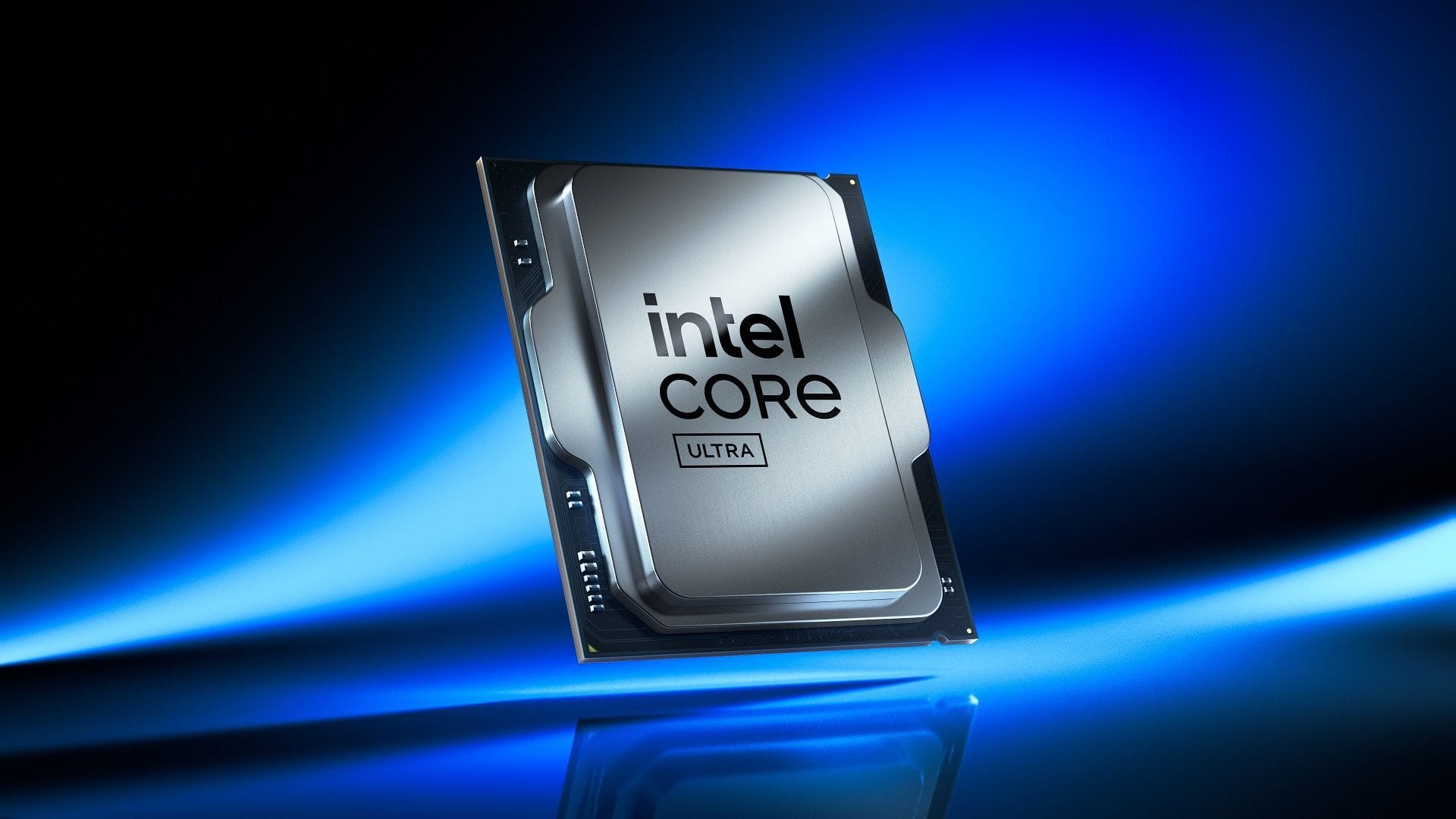
An upcoming leak has unveiled crucial details about Intel’s future Nova Lake-S desktop processors and their associated platform, covering core counts, multi-die setups, RAM speeds, platform durability, and power usage.
Intel seems to be prioritizing platform longevity, an aspect that has historically been a weak point for the company. This article delves into the leaked information surrounding the new Intel Nova Lake-S CPU. Continue reading to discover more.
Note: This article is based on leaked data, so readers are advised to approach it with caution.
Intel’s Nova Lake-S desktop CPU: All You Need to Know
The latest leak comes from Videocardz, revealing that the upcoming Intel Nova Lake-S CPUs will be part of the Intel Core Ultra 400 series. According to the leak, Nova Lake-S processors will consist of five single-die packages ranging from 8 to 28 cores.
Additionally, there will be dual-die configurations with core counts reaching up to 52 cores, likely catering to the HEDT segment. While Intel has traditionally used the X branding for its HEDT lineup, the exact nomenclature remains to be seen.
Core Configurations and RAM Speeds
As per Videocardz, the Intel Nova Lake-S CPUs will retain P and E-core configurations but with updated core architectures. These processors are expected to feature Coyote Cove P-cores and Arctic Wolf E-cores, serving as advancements over the Lion Cove P-cores and Skymont E-cores found in the current Core Ultra 200S.
All models in the Core Ultra 400 series will incorporate four LP E-cores (Low Power). This suggests that the lowest 8-core variant may only include four P-cores without any E-cores, with the four LP E-cores compensating for the absence of E-cores. Higher-core-count variants will comprise a mix of P-cores, E-cores, and LP E-cores.
The leak also indicates that the Nova Lake-S CPUs will support DDR5 memory with speeds of up to 8,000 MT/s, although these are likely JEDEC speeds. DDR5 XMP variants are expected to surpass 10,000 MT/s. Videocardz mentions that DDR5 memory will be available in dual-channel configurations in ECC, CUDIMM, and CSODIMM formats.
The lack of quad-channel support, especially for the dual-die HEDT variants, might disappoint some enthusiasts.
Platform Longevity
Intel seems to be placing a strong emphasis on platform longevity, possibly in response to the success of AMD’s AM4 platform in the consumer space. Materials related to Nova Lake-S, as reviewed by VideoCardz, hint at forward socket compatibility, suggesting that Intel might stick to using the same LGA 1954 socket for future processor generations.
PCIe Lanes, Thunderbolt Support, and Other Platform Features
According to the leak, Nova Lake-S CPUs will offer 28 PCIe 5.0 lanes directly from the processor. Additionally, VideoCardz mentions the presence of two Thunderbolt 5 ports, with the chipset providing three x4 PCIe 5.0 links, enabling support for up to eight SSDs across all available PCIe lanes.
An NPU6 for AI tasks will also be included, although specific details regarding its configuration or performance metrics in TOPs have not been disclosed.
Integrated Graphics Chip
All Nova Lake-S CPUs will come equipped with two Xe3 GPU cores for display output and basic multi-monitor functionality. Even in the case of dual-tile variants, the iGPU is limited to just two Xe3 cores, suggesting that it is not tailored for gaming purposes.
SKUs, TDP, and Manufacturing
The leak mentions a total of 13 SKUs categorized under the Core Ultra 3, 5, 7, and 9 tiers. These SKUs will be available in 35W, 65W, 125W, and 175W power configurations, with the 125W and 175W variants likely representing the unlocked K-series models. VideoCardz speculates that mass production of Nova Lake-S CPUs is slated for Q4 2026, indicating a potential market arrival in early 2027. CES 2027 could serve as Intel’s official launch event.
Edited by Suraj Bhowal