

Challenges with visas persist in esports, particularly during tournaments in the United States.
Wolves Esports faced elimination from the BLAST R6 Salt Lake City Major due to visa rejections, not performance.
The team expressed disappointment on X: “It is very disappointing that we will be unable to take our spot on the international stage after all the hard work our team put into qualifying.”
It’s a disappointing outcome for the team, who secured their spot in the Salt Lake City Major through the Phase 1 Play-In Stage, finishing third. They were scheduled to face LOS in the upper bracket Quarter Final. It remains uncertain if another team will replace Wolves Esports.
This isn’t the first instance of visa issues in Rainbow Six Siege or esports in general. A colleague delved into the visa challenges amid global political unrest this year. Securing visas for American events has become increasingly complex (even if teams desire to compete in the United States).
Riot faced criticism for hosting the League of Legends World Championship 2026 across various U.S. cities. When asked about visa delays, Global Head of Esports Chris Greeley appeared unfazed.
“We’re always prepared for contingencies, regardless of the event location. I can’t recall an international event in recent years without visa or immigration concerns leading up to the event.
“If a team encounters difficulties, we work closely with them, our agencies, and relevant government contacts to facilitate entry. Our priority is to assist teams in gaining access. In isolated cases where a player or team is unable to attend, we explore alternative options, as we have done before.”
Is America Truly a Bad Place to Host Esports Events?
Debates continue regarding the decision to host esports events in the United States despite mounting political and safety concerns, with teams frequently withdrawing due to visa challenges.
However, not everyone believes the U.S. is routinely denying visas.
Esports journalist Kevin Hitt questioned: “Is there genuine investigative journalism in esports? Articles on visa denials lack crucial details. When were applications submitted, and why were they rejected?”
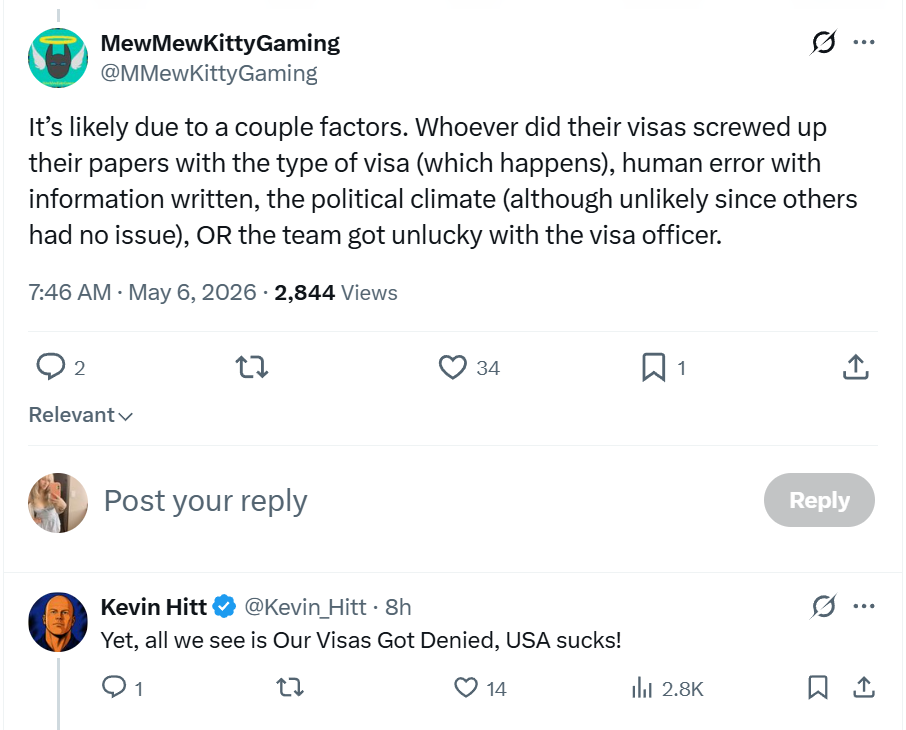
Hitt posed these questions to Wolves Esports without receiving a response. Another Rainbow Six enthusiast suggested visa paperwork errors or political circumstances might have played a role, noting that other teams did not encounter similar issues.
Hitt retorted: “Yet, all we hear is ‘our visas were denied, U.S. is to blame!’”
A valid point. The reasons behind Wolves Esports’ visa rejections remain unclear. However, leaving visa applications until the last minute, especially with significant prize money at stake, seems peculiar.
Someone questioned why teams delay their applications. Yet, this delay may not stem from laziness but rather from the necessity of qualifying first, which can prolong the process. Proof of tournament participation is required for visa approval.
This situation appears convoluted and frustrating. While it may not solely revolve around politics, there should be a clearer process in place.
Regardless, missing out on Salt Lake City doesn’t seem like a significant loss.