
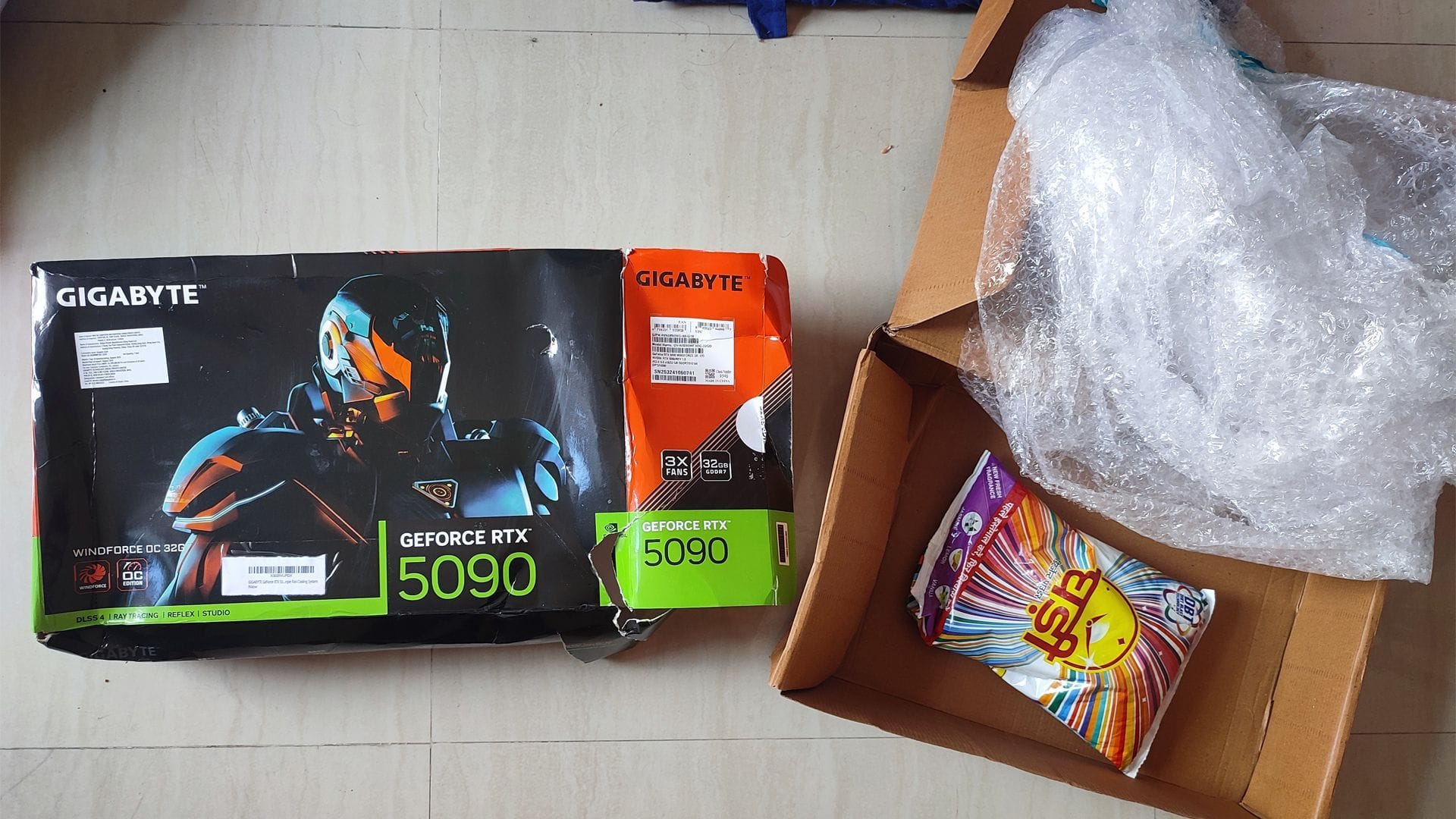
When purchasing top-of-the-line PC hardware online, there is always a risk of falling victim to scams. A recent incident involving Amazon India serves as a stark reminder of how serious this risk can be. On March 22, 2026, a user known as @autocarrot ordered a Gigabyte GeForce RTX 5090 Windforce OC 32G graphics card for Rs 290,000, only to receive a 1 kg packet of Ghadi detergent instead. What makes this situation particularly alarming is that the order was labeled as “Fulfilled by Amazon” (FBA), indicating that the product should have been handled directly by Amazon’s warehouse.
While tampering with packages is not uncommon in the e-commerce industry, this case took a troubling turn when the buyer provided photographic evidence and uncut unboxing footage showing the discrepancy, yet Amazon refused to provide a refund.
Why Amazon’s refusal to refund the missing RTX 5090 is extremely concerning
Amazon’s decision to close the investigation highlights the risks associated with e-commerce platforms and the potential for disputes over high-value hardware. The evidence presented by the buyer clearly contradicted Amazon’s claim that the correct item was shipped.
The unboxing footage documented physical tampering, revealing that the GPU box had been previously opened, the original manufacturer seals were broken, and clear tape with a fake Amazon barcode (“X002IVLPDX”) had been applied.
Furthermore, the weight discrepancy is a red flag: the shipping label indicated 1.56 kg, significantly lower than the expected weight of a properly packaged Gigabyte RTX 5090, which is around 3 kg. The weight aligns more closely with a 1 kg detergent packet and basic cardboard, suggesting that the GPU was never inside the box.
The invoice raised additional concerns, showing 0% IGST for a Rs 2.9 lakh electronics purchase in India, which should legally be 18%. This discrepancy is particularly troubling considering the tax regulations in India and the need for compliance.
The situation escalates with reports from other buyers who also received washing powder from the same seller, “FAB WORLD Point,” shortly before. Despite clear evidence of ASIN tampering, weight discrepancies, invoice issues, and seller history, Amazon maintained its decision to deny a refund, leaving the buyer with no option but to pursue a bank chargeback or seek redress through consumer court. This case underscores the limitations of FBA buyer protection and the importance of exercising caution when making high-value purchases on the platform.
Edited by Mainak Kumar Dey