2025 was a very bad year for Mike Bithell. In August, he announced that the majority of full-time staff were being let go from Bithell Games, with 11 jobs being made redundant.
Bithell rose to prominence as one of the wave of outspoken indie creators in the early 2010s, releasing his breakout hit Thomas Was Alone in 2012. He followed that up with the stealth game Volume in 2015, along with the “Bithell Shorts” Subsurface Circular and Quarantine Circular. But then Bithell Games started to take on bigger, licensed properties, beginning with John Wick Hex in 2019 and followed by a collaboration with Disney on Tron: Identity and Tron: Catalyst, released in 2023 and 2025, respectively. The company’s headcount grew.

Ultimately, it didn’t work out. John Wick Hex did well, selling nearly 450,000 units across Steam, PlayStation, and Xbox, according to estimates from Video Game Insights. But the Tron games bombed. VGI reckons that Tron: Catalyst sold only around 16,000 units across Steam, PlayStation, and Xbox (the game was also released on Switch, for which figures aren’t available). VGI data for Tron: Identity are even lower – just under 9,000 units for Steam (again, Switch sales are unavailable).
Given those numbers, it’s little surprise that the company had to downsize. Bithell Games is now just three people: “myself, Alexander [Sliwinski] my business partner, and a marketing person,” Bithell tells GamesIndustry.biz. He’s frank about the awfulness of the situation he faced last summer.
“It sucked,” he says. “It was a very talented team. They were fucking awesome. They were the best people I’ve ever worked with.”
.jpg?width=2048&height=2048&fit=bounds&quality=85&format=jpg&auto=webp)
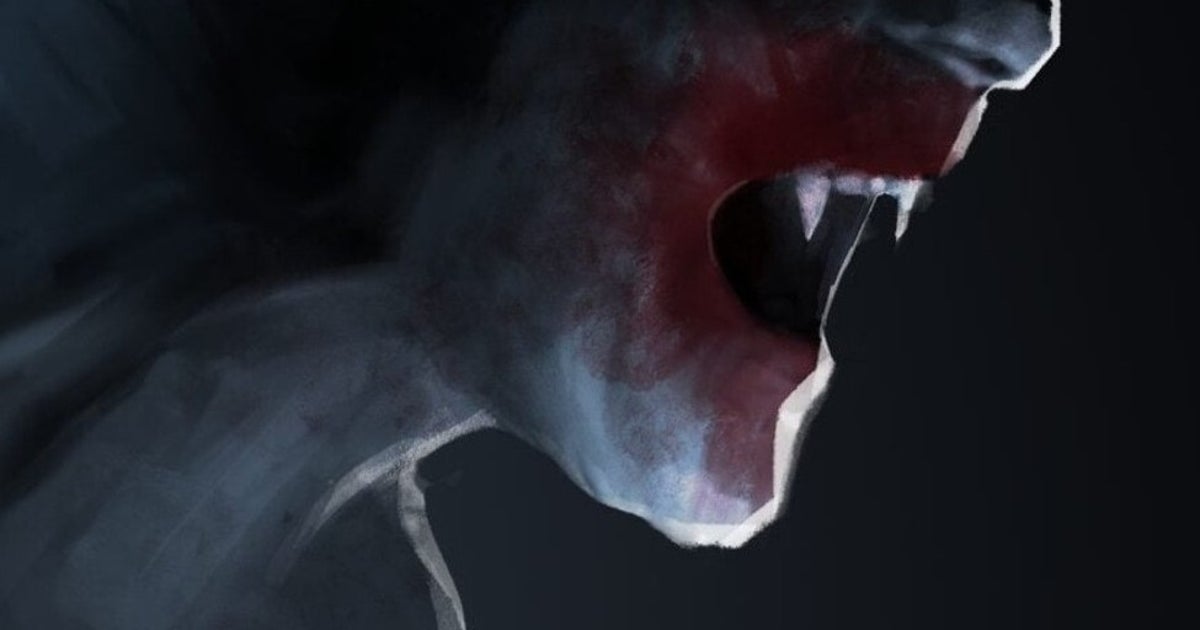
Coming back from that dreadful summer has been hard. “It was a little while before I got started again,” says Bithell. “But I distract myself by coding, and that weirdly ended up being something interesting.” That weird something is Vampirium 1997, an immersive sim in which Dracula is the King of England (the similarity to Kim Newman’s Anno Dracula novels is entirely coincidental, Bithell says – he wasn’t aware of Newman’s books).
“I needed a project just from a ‘keeping myself sane’ point of view,” explains Bithell. “I decided to learn Godot, because I’ve been using Unity for all these years and I was ready to try something else. So just as a hobby thing, I started to play with Godot, and then made prototypes of different things, because that’s how I learn engines. And one of them, a couple of months later, turned into the beginnings of this. But it was a tough time. It was a really tough time.”
Im-slim
Vampirium 1997, as a small, experimental game based on new IP, is the antithesis of working on Disney-licensed titles. “It is nice to have complete control and to… not have to worry about the absolutely reasonable concerns of major corporations,” says Bithell, who’s relishing the freedom to “just make something that feels very me, and to be able to talk about it completely freely and give honest, complete answers to what we’re doing with it. I’m really enjoying that aspect of it.”
“Right now I’m loving what I’m doing,” he adds. “I want to go wherever this game takes me. I genuinely think there’s awesome potential.”
In Vampirium 1997, the player is an assassin in the employ of Dracula. But unlike the giants of the immersive sim genre like Thief, Deus Ex, or Dishonored, the game uses a minimalist, top-down approach with static character portraits and verb-based choices. Bithell is calling it an “im-slim”.
“It’s taking the possibility space, the verbiage, the ability to figure out your own path through a space of immersive sims, but then abstracting it into this tile-based game,” he says.
“I can make a mechanic very quickly, I can add a new verb to the game in a couple of days”
It’s a bold format to experiment with. Games in the genre are often critically well received, but are rarely huge sellers, and often take an enormous amount of time to produce owing to the complexity of the emergent gameplay. It seems like an awful lot to take on as a single developer. Is it really possible to do an im-slim?
“I hope so,” responds Bithell. “It’d be a terrible shame if it wasn’t. I think for me, it’s much like real dieting. It’s about slimming the right aspects of it.”
His strategy is to make the visuals of the game as simple as possible while putting the majority of development time into the game’s intricate web of interactions. “That, to me, is the thing that I care about as a player of those games.” Trimming the game down to tiles and words “frees me up to massively overinvest in the possibility space,” he says. “So I can make a mechanic very quickly, I can add a new verb to the game in a couple of days. And when you compare that to if you wanted to add a new mechanic to a traditional 3D game, obviously that’s an enormous investment of time.”
.jpg?width=2048&height=2048&fit=bounds&quality=85&format=jpg&auto=webp)
Of course, with something like that, the temptation is to always keep adding. “As a designer, the form encourages experimentation, it encourages you to keep expanding,” acknowledges Bithell. “In a traditional 3D environment, that’s feature creep. That’s a nightmare for your entire team. With this game though, something that starts as a very small idea can scale up and become something.
“That is the essence of the game’s strength,” stated Bithell.
A sense of unity is being felt as people come together to share warmth.