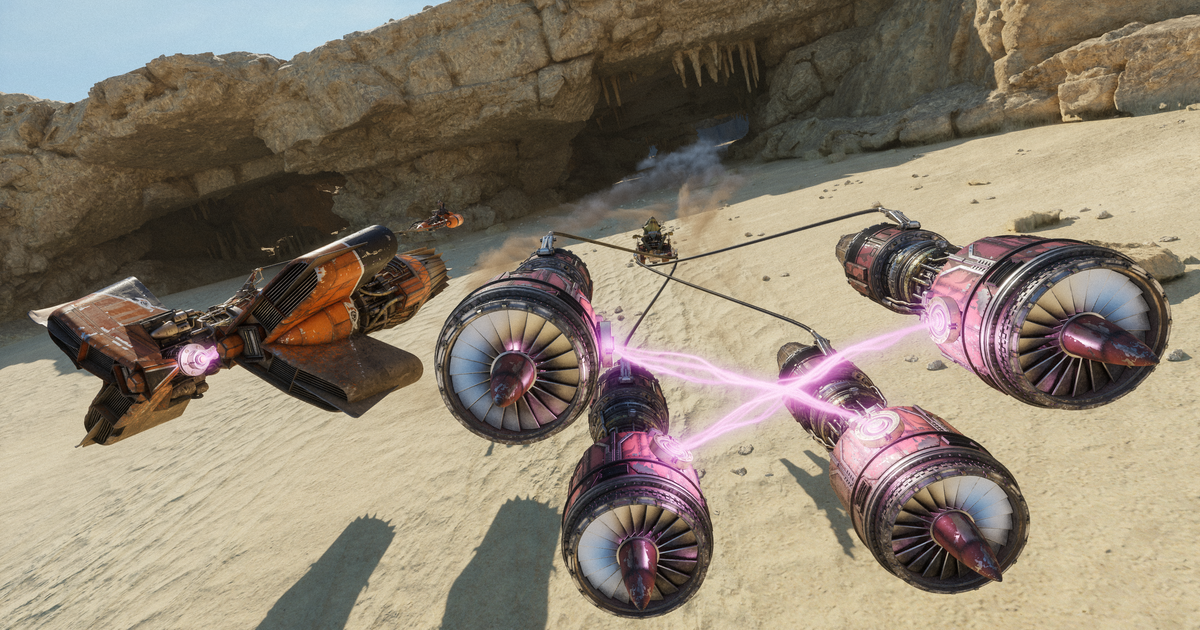
The reception to Star Wars: Galactic Racer has left CEO Matt Webster of Fuse Games feeling ecstatic. The game has garnered a Metacritic score of 88 for the PS5 version, and Webster expressed his satisfaction with how well it has been received. Speaking to GamesIndustry.biz at Game Republic New Horizons, he mentioned that they had a feeling of having something special but acknowledged that the success of a game is always uncertain.
While Webster is pleased with the audience’s positive response to the game’s innovation, he remains cautious about sales figures, stating that it is too early to determine if the game has met expectations as they are still in the initial stages post-launch.

Webster highlighted the unique elements of Galactic Racer, particularly its departure from conventional racing game norms that focus solely on winning. The game’s roguelike structure allows players to find satisfaction even in challenging eighth-place finishes, a departure from the typical gameplay experience.
Reflecting on a review by Stephen Totilo about his son’s introduction to the game’s roguelike mechanics, Webster emphasized the value of failure and resilience in both gaming and real-life experiences.
Galactic Racer stands out not only as a success story for a new UK studio but also for its unconventional development process. Unlike traditional AAA game development with large in-house teams, the core team behind Galactic Racer comprised only 75 members, showcasing a more streamlined approach.
Instead of expanding the core team significantly, Fuse Games opted for a distributed development model, leveraging external providers to scale capacity and capability. Webster emphasized the importance of maintaining a smaller core team while collaborating with external partners to enhance the development process.
Fuse’s distributed development model operates on a three-tier structure, with varying degrees of collaboration with external teams. From traditional outsourcing for art assets to co-development with closely integrated external partners, the approach allowed for flexibility and efficiency in game production.

Webster emphasized the significance of choosing co-development partners that aligned with Fuse’s core values, fostering a collaborative and innovative environment for game development. He underscored the importance of careful planning and management in implementing a distributed development model successfully.
Looking ahead, Webster shared that while ideas for the next game are brewing, the focus remains on supporting Galactic Racer through continuous updates and improvements based on player feedback. He emphasized the iterative nature of game development and the need for flexibility and adaptability in responding to audience input.
For Fuse Games, the launch of Galactic Racer marks just the beginning of their journey in the gaming industry.