Table of Contents
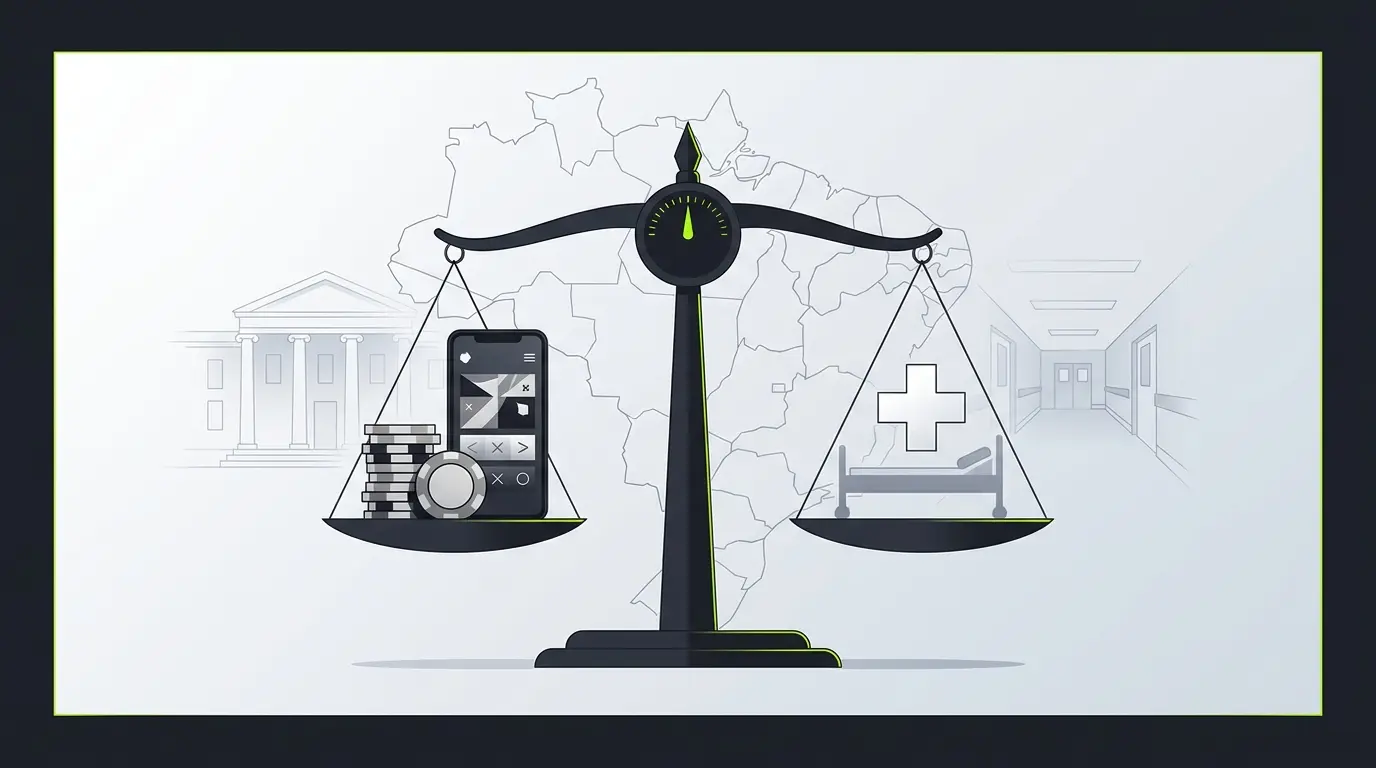
Brazil’s gambling industry is facing a significant legal challenge as the Attorney General’s Office (AGU) has filed a lawsuit against 17 betting companies in the Federal Court of Pernambuco. The lawsuit seeks an estimated BRL2.6 billion for alleged costs to the public health system, along with at least BRL1 billion in collective moral damages. These figures underscore the legal risks that operators in the market are currently facing.
The AGU claims that gambling has led to increased mental health expenses for bettors and argues that companies should contribute to covering the costs on the Unified Health System (SUS). This marks a new phase in Brazil’s efforts to regulate the industry, shifting the focus from operational restrictions to accountability for the societal impacts of gambling.
A lawsuit lands amid Brazil’s betting crackdown
The case was brought in Pernambuco due to the region’s high concentration of socioeconomically vulnerable individuals engaged in high-risk gambling activities. The AGU argues that the current contributions from operators are insufficient to cover healthcare expenses, with only 0.12% of revenue allocations going to the Ministry of Health.
This legal action comes at a time when the industry is already under pressure. President Luiz Inácio Lula da Silva recently announced a ban on licensed betting sites in Brazil, prompting industry organizations to challenge the decision in the Supreme Court. The regulatory landscape in Brazil is rapidly evolving, with a focus on addressing the societal impacts of gambling.

Brazil’s online betting laws, established in 2018 and 2023, laid the foundation for a regulated market. The current lawsuit poses a fundamental question about whether operators should bear the costs associated with public health issues linked to their operations.
Two claims, not one BRL3.6 billion award
The BRL2.6 billion sought by the government is an estimate for SUS damage reimbursement, pending further calculation. The claim covers a five-year period pre-lawsuit filing and may extend based on court-recognized damages. Additionally, the government is pursuing at least BRL1 billion in collective moral damages from the named companies, emphasizing their significant market presence.
This legal action introduces potential civil liabilities for operators and affiliates in an already complex regulatory environment. The industry in Brazil now faces not only compliance challenges but also legal claims seeking accountability for societal and health-related impacts.
A high-stakes test for the regulated market
The outcome of this case could have far-reaching implications for how Brazil addresses gambling-related healthcare costs. While the government’s allegations require legal scrutiny, stakeholders in the industry, including operators, bettors, and esports partners, are closely monitoring the proceedings. The resolution of this case will shape the financial risks associated with operating in a regulated market.
This legal dispute occurs against a backdrop of increased political attention to gambling disorders and their impact on individuals and families. The focus on the societal costs of gambling-related issues highlights the broader implications of this legal battle beyond mere licensing concerns.