Table of Contents
Welcome to the ASUS CROSSHAIR X670E Hero Controversy: A Deep Dive into the CPU Drama
Imagine the excitement of upgrading your gaming PC with a powerhouse processor like the Ryzen 9 9950X3D, only to be met with a system that refuses to boot. This is the predicament faced by a user who decided to swap out his older Ryzen 5 8500G for the newer, more powerful CPU on the ASUS CROSSHAIR X670E Hero motherboard.
The Mystery Unfolds: Two CPU Victims
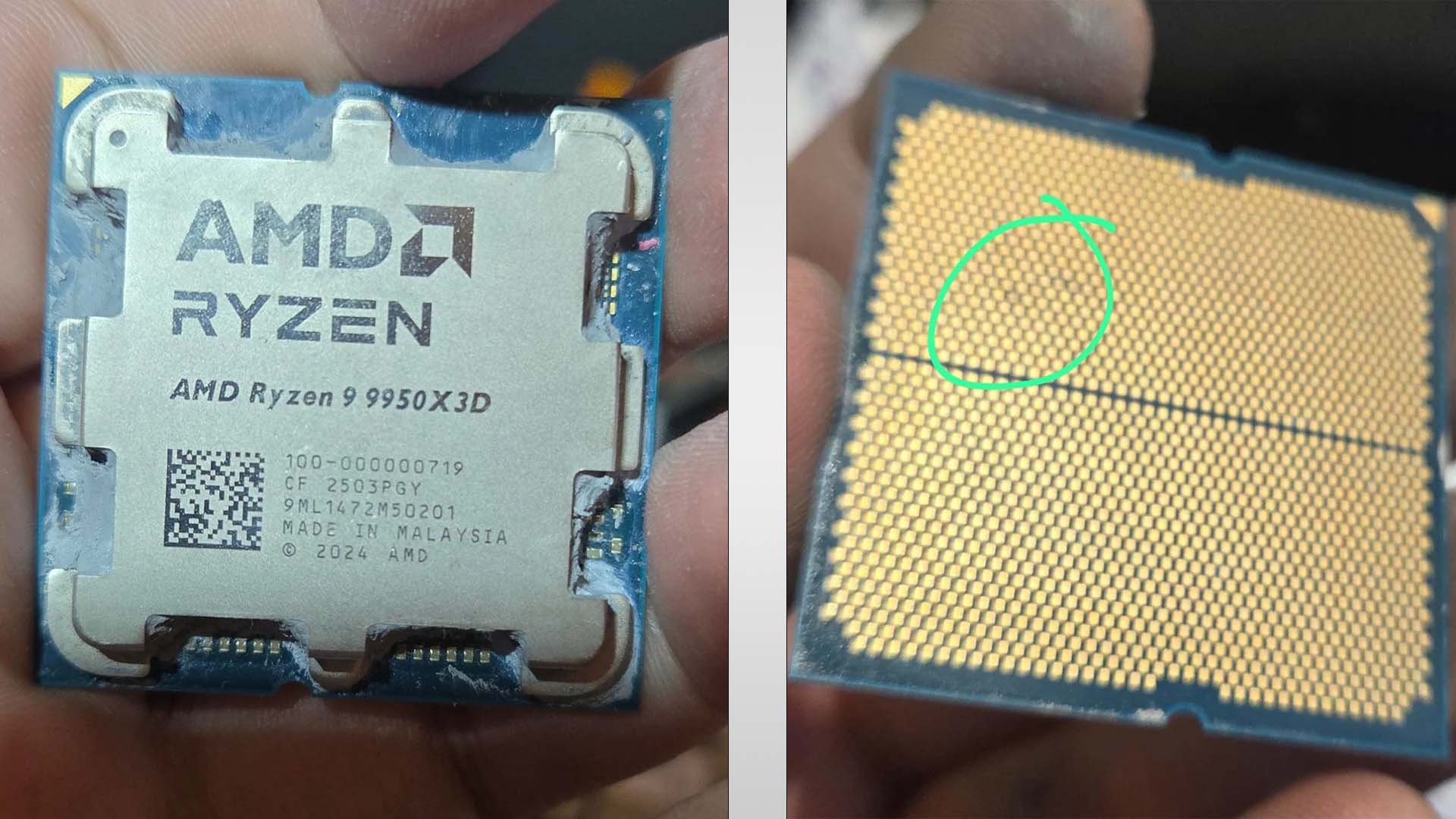
After the new processor was installed, the system failed to boot into Windows 11. Upon closer inspection, it was discovered that the Ryzen 9 9950X3D had two mysterious brown marks on it. Surprisingly, the older Ryzen 5 8500G also suffered a similar fate when inserted into the ASUS CROSSHAIR X670E Hero, leaving the user with two non-functional CPUs.
The Experiment Gone Wrong
The user, known as “SpecialistConcept423” on Reddit, shared that no manual overclocks were applied to the CPU or RAM. However, things took a turn when the user experimented with the hardcoded RAM presets in the ASUS UEFI BIOS. Opting for a setting tailored to SK Hynix 2×32 GB dual-rank 6,200MHz modules, disaster struck when the system displayed error code “00” upon reboot.
Despite running the latest BIOS version on the CROSSHAIR X670E Hero, removing the Ryzen 9 9950X3D revealed the troubling brown marks on the processor, hinting at a potential issue.
A Series of Unfortunate Events
With hopes pinned on a backup processor, swapping the Ryzen 9 9950X3D with the Ryzen 5 8500G led to another error code: “4D.” Despite ruling out bent pins on the motherboard, it was evident that something was amiss with the system.
Interestingly, the Ryzen 9 9950X3D had functioned flawlessly on an ASRock X670E Taichi Carrara under similar memory settings. The sudden malfunction upon moving the CPU to an ASUS motherboard raised eyebrows, especially considering past reports of AMD CPUs encountering issues.
In Search of Answers
As the user seeks a resolution, questions linger about the root cause of the CPU failures. While the user asserts no manual voltage adjustments were made, the outcome remains a mystery. The demand for a refund is justified, given the circumstances surrounding the failed CPUs.
In Conclusion: A Lesson in Tech Troubleshooting
The ASUS CROSSHAIR X670E Hero saga serves as a cautionary tale for PC enthusiasts. While the allure of upgrading to a high-performance CPU is enticing, meticulous attention to system compatibility and settings is paramount to avoid unexpected outcomes. As the investigation continues, the incident highlights the intricate nature of PC hardware and the importance of thorough testing before implementing major upgrades.