Table of Contents
Decoding PC Game Optimization: A Comprehensive Guide
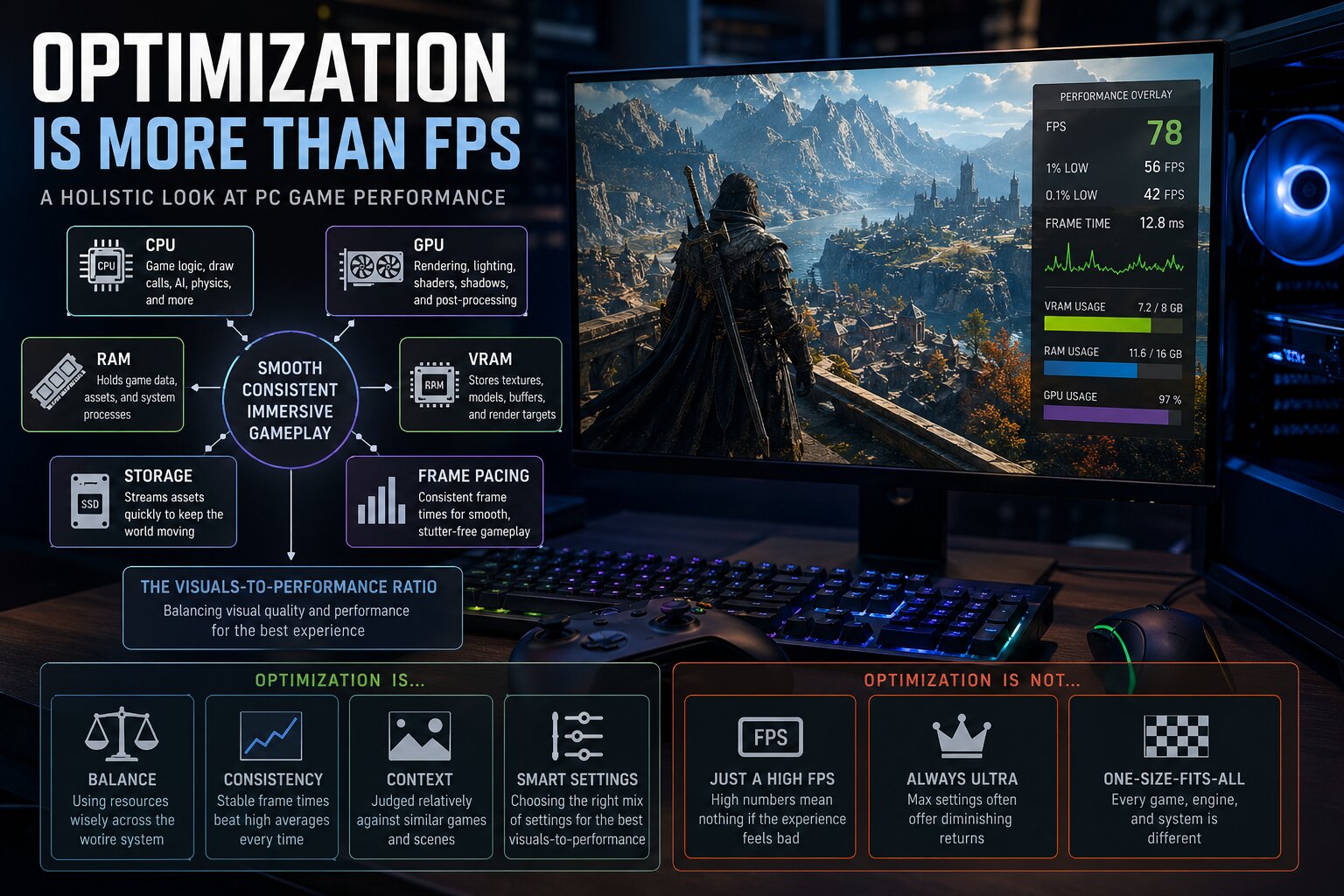
When it comes to PC gaming, the term “badly optimized” is thrown around frequently, akin to a grenade in a crowded lobby. Gamers often judge a game solely based on its frames per second (FPS) performance, deeming it either “unoptimized” or “well optimized” within seconds of gameplay. However, the reality is far more complex. PC game optimization is a multifaceted puzzle that involves various components beyond just the graphics processing unit (GPU). From CPU render workloads to shader compilation, memory usage, asset streaming, and more, the optimization process is a delicate dance that determines the overall performance and visual quality of a game.
PC Game Optimization Is a Whole-System Problem, Not Just a GPU Problem
Many gamers make the mistake of solely focusing on their GPUs when assessing performance. In reality, modern games are intricate systems that stress multiple hardware components and software aspects of a PC. From CPU bottlenecks to memory limitations, a game’s performance can be impacted by various factors beyond the GPU. Understanding the interplay between different components is crucial in evaluating a game’s optimization.
Why Average FPS Is Not Enough
While average FPS is a common metric used to assess game performance, it often fails to provide a complete picture. Factors like frame time consistency and stuttering play a significant role in determining the overall smoothness of gameplay. Frametime, which measures the time taken to render each frame, is a more accurate indicator of performance quality. Consistent frametimes contribute to a smoother gaming experience, highlighting the importance of looking beyond average FPS numbers.
The Visuals-to-Performance Ratio
Instead of fixating on raw performance numbers, it’s essential to consider the visuals-to-performance ratio of a game. This ratio reflects how well a game balances visual quality with hardware demands. A game that achieves high FPS but lacks visual depth may not necessarily be better optimized than a visually stunning game with slightly lower FPS. The key lies in intelligently allocating resources to deliver a visually captivating and responsive gaming experience.
The “Ultra” Trap: Why Optimized Settings Are the Real Test
Optimized graphics settings, rather than ultra-maxed out presets, serve as a more accurate benchmark for evaluating game optimization. Games like Red Dead Redemption II demonstrate the importance of fine-tuning settings to achieve optimal performance without sacrificing visual fidelity. A well-optimized game provides players with the flexibility to customize settings for an optimal balance between visuals and performance.
Good Optimization Does Not Mean “No Visual Sacrifices”
Contrary to popular belief, a fast-running game doesn’t always equate to perfect optimization. Developers often make strategic compromises to enhance performance without compromising visual quality. Balancing visuals and performance is a delicate art that involves making smart trade-offs to ensure a seamless gaming experience. The key lies in harmonizing visuals, performance, and hardware resources to deliver an immersive gameplay environment.
VRAM, System RAM, and Why Stutter Often Comes From Memory Pressure
Issues related to VRAM and system RAM play a crucial role in determining a game’s performance. VRAM pressure, caused by high-resolution assets and textures, can lead to stuttering and performance fluctuations. Understanding how a game utilizes memory resources is essential in optimizing performance and minimizing disruptions during gameplay.
Shader Compilation Stutter: The PC Problem That Refuses To Die
Shader compilation stutter remains a persistent challenge in modern PC gaming. The compilation of shaders and pipeline state objects (PSOs) can cause interruptions in gameplay, impacting the overall smoothness of the experience. Pre-compiling shaders and optimizing compilation processes are key strategies in mitigating stuttering issues and ensuring a seamless gaming performance.
Upscaling and Frame Generation Are Useful, But They Complicate Optimization Talk
Temporal upscaling and frame generation technologies offer performance enhancements but come with trade-offs in image quality and latency. While these technologies can improve fluidity, they should not serve as band-aid solutions for underlying optimization issues. Evaluating a game’s native rendering performance and the efficacy of upscaling methods is essential in assessing overall optimization.
The Myth That Older PC Games Were Always Better Optimized
Contrary to popular belief, older PC games faced optimization challenges similar to contemporary titles. Nostalgia often clouds the memory of past games, leading to a misconception that they were flawlessly optimized. The evolution of hardware and software has contributed to the improved performance of older games on modern systems, highlighting the ongoing complexity of optimizing PC games.
Optimization Can Also Be Perceived Subjectively
Subjectivity plays a significant role in how gamers perceive optimization. Factors like personal preferences, hardware configurations, and display setups influence individual experiences of game performance. Acknowledging these subjective differences is crucial in conducting fair and comprehensive evaluations of PC game optimization.
How PC Game Optimization Should Be Judged More Fairly
Shifting the focus from raw performance metrics to a holistic evaluation framework is essential in assessing PC game optimization. By considering factors like scope, comparable scenes, optimized settings, CPU performance, memory health, and native rendering quality, gamers can gain a deeper understanding of a game’s optimization. Moving beyond one-dimensional assessments and embracing a multifaceted approach is key to fostering informed discussions about PC game optimization.
Final Words
PC game optimization is a nuanced process that extends beyond mere numbers. Achieving an optimal balance between visuals, performance, and hardware demands is the hallmark of a well-optimized game. As games become increasingly complex, the importance of thoughtful optimization practices cannot be overstated. By adopting a comprehensive evaluation framework and considering the intricate interplay of various elements, gamers can appreciate the technical craftsmanship behind their favorite PC titles.