
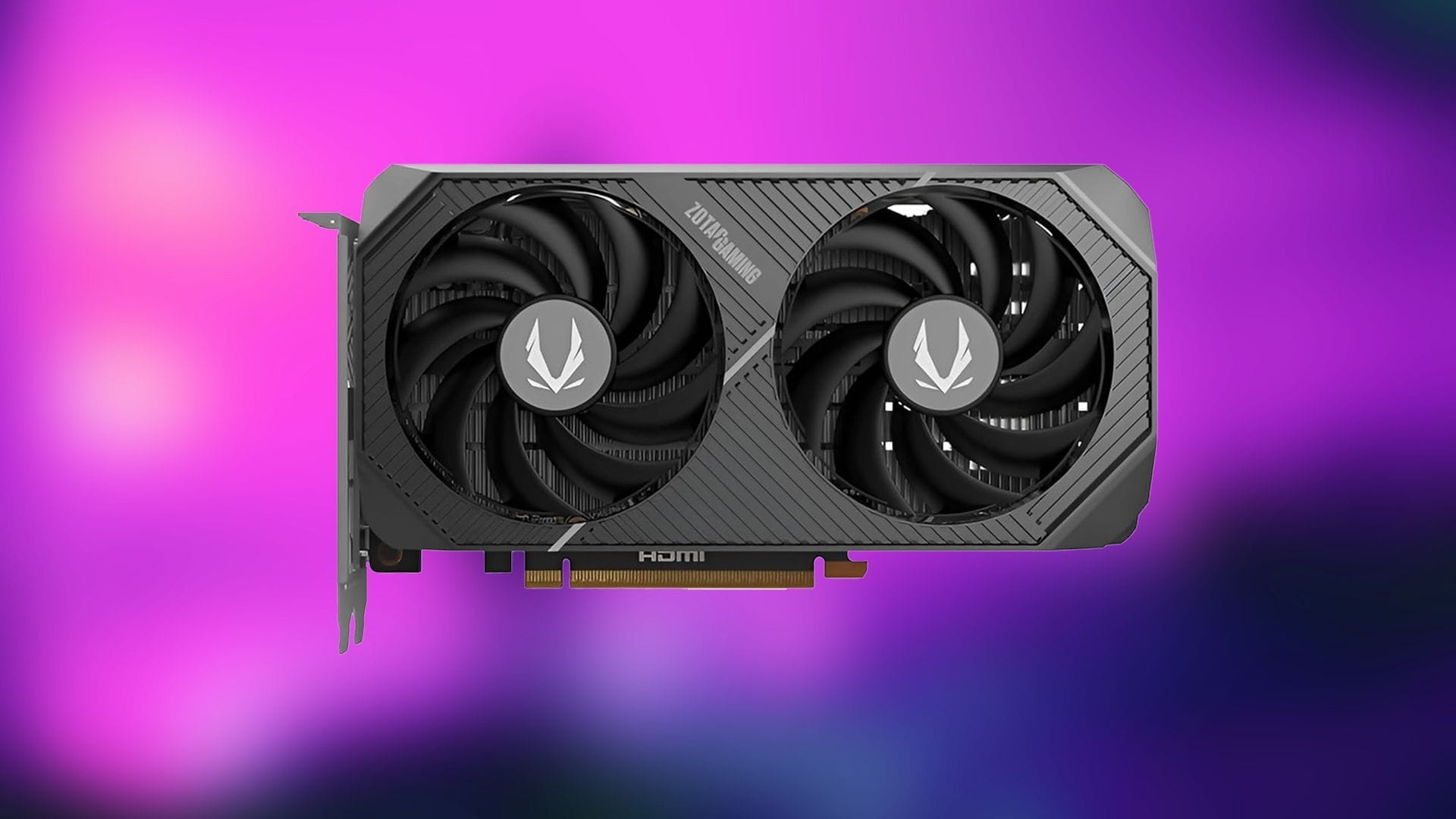
NVIDIA’s decision to reduce VRAM from 12GB on the RTX 3060 to 8GB on the RTX 4060 and RTX 5060 has caused frustration among many, and understandably so. With modern AAA games demanding more VRAM, especially for high-resolution textures, the step back to 8GB can seem outdated, leading gamers to question its relevance. In certain scenarios, the 8GB of VRAM may indeed feel outdated, particularly when pushing the boundaries with ultra settings in newer AAA titles.
In a surprising turn of events, Nvidia seems to have a solution to the VRAM dilemma. They aim to address this by utilizing more efficient memory management techniques, incorporating AI into the mix. Here’s a comprehensive look at why 8GB of VRAM might suffice in the future.
Note: Some parts of this article are subjective and represent the author’s viewpoint.
How Nvidia’s Neural Rendering enhances VRAM utilization
Traditionally, games have rendered content in a conventional manner: storing textures, lighting, and geometry, and processing them directly on the GPU. This is why modern games consume significant amounts of VRAM. Each detail needs to be stored in VRAM, and as visual quality improves, VRAM usage continues to rise.
Enter Neural Rendering, which brings forth its advantages. Instead of storing everything in full detail, AI models are used to handle parts of the image. This approach eliminates the need for the GPU to load the entire texture, lighting, and geometry data, as it can now reconstruct or generate elements of the scene in real-time using trained neural networks.
However, Neural Rendering is just one piece of the puzzle; Neural Texture Compression is Nvidia’s strategy to tackle the VRAM challenge. Upon reviewing the company’s Neural Rendering demo, it’s evident that scenes that previously required over 6GB of VRAM now operate under 1GB using this method, all while maintaining visual fidelity.
Why 8GB VRAM on Nvidia cards could see a resurgence
The reason why 8GB GPUs may remain relevant isn’t due to games becoming less demanding; it’s because of the evolving data handling methods in games. Previously, enhanced visuals equated to higher VRAM usage because materials, lighting, and textures were stored separately, leading to increased memory consumption as details became more intricate, hence the limitation of 8GB.
With the introduction of Neural Rendering and Neural Texture Compression, the landscape shifts significantly. This technology efficiently compresses data into a smaller dataset, allowing the GPU to dynamically reconstruct the full output using AI in real-time. As a result, there is less data residing in memory, reducing the strain on allocated VRAM and resulting in lower active VRAM usage.
With this paradigm shift in effect, games can maintain detailed visuals without constantly loading extensive data into VRAM. This shift indicates a high likelihood that 8GB of VRAM, present in cards like the RTX 3070, RTX 3070 Ti, and RTX 3060 Ti, could experience a resurgence. As more game developers and studios adopt these technologies, the dependence on raw VRAM capacity is expected to diminish. However, this advantage currently leans towards NVIDIA, as its hardware is tailored for these AI workloads. Notably, the company has made this technology open-source by providing the SDK to developers.
Nevertheless, the functionality of this compression technology heavily relies on Tensor Cores for real-time mathematical processing, making it predominantly beneficial for RTX cards. While the tools are available, its efficacy across different GPUs hinges on how competitors leverage their own AI accelerators. Therefore, while 8GB of VRAM may remain viable in the future, its longevity will be influenced not only by NVIDIA but also by the industry’s response to this transformation.
Edited by Mainak Kumar Dey