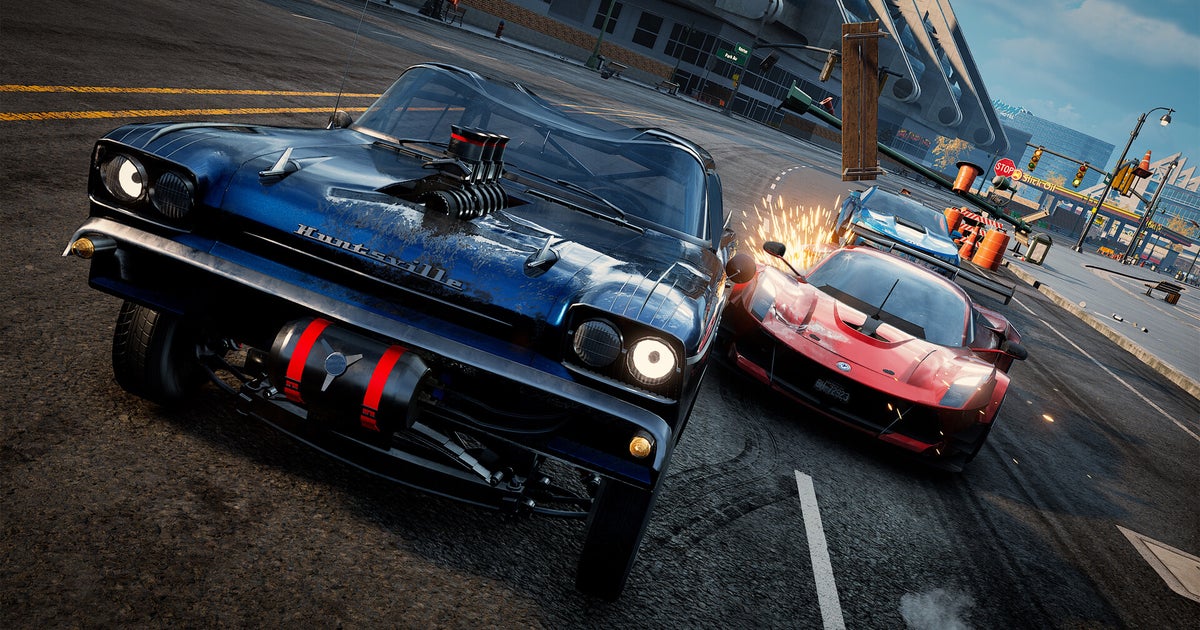
When we last heard from Fiona Sperry in December, she had just put the entire team at Three Fields Entertainment on notice of redundancy.
The studio had released driving game Wreckreation barely six weeks previously. But in a LinkedIn post, Sperry – who was previously studio head at Burnout maker Criterion – explained that Three Fields would “not see revenue from game sales for the foreseeable future,” and that without “the enthusiasm or financial support from our publisher [THQ Nordic] to continue development, we simply cannot sustain the studio in its current form.”
Eight months later, a lot has changed. “As it turned out, I didn’t make any redundancies,” Sperry tells GamesIndustry.biz.

She went public early about the risk of job losses as a way to raise awareness of the crisis Three Fields found itself in. “I thought, well, no one can help us if they don’t know we need helping,” she says. “It was shit timing because it was before Christmas.”
In response, several people suggested starting a Patreon for Wreckreation, and Sperry noted the game Paralives from Alex Massé had found success through its Patreon programme. “And so we said, ‘Well, do you know what? We’ll give it a go’.” The company launched its Patreon the same month.
“Then in January, the team all came back from Christmas and they were like, ‘Look, we want to carry on.’ And I said, ‘Well, it’s a bit risky, because basically we’ve got about three months’ worth of money. So we can give it a go, but obviously what we’re risking is your redundancy money’.”
But the plan worked. Thanks to Patreon funds donated by more than a thousand backers, Three Fields was able to continue working on Wreckreation, ultimately delivering eighteen updates to fix problems like the cars’ handling (an issue that was picked up on in reviews).
Now, Wreckreation 2 has been announced. But it’s being made by a completely different company – When Tides Turn. So what’s going on?
End of the road
Sperry calls the last year “one of the most commercially challenging periods in my career,” a time when she was worrying whether the company would even be able to make payroll. Wreckreation was released even though the team knew it had problems. “We were aware of all our issues, but we got to a point where we had to publish it,” she says. “We’d had to make decisions that we probably wouldn’t have done otherwise if we didn’t have to get a game out and just get money in the door.”
There were misaligned expectations, too. “I think people were expecting a kind of Burnout-style game, and we made a game that was more about an exploration of freedom and creativity in racing games, which perhaps wasn’t what people wanted.”
Sperry says she “immediately got on Discord” at launch and started talking to players, some of whom were initially cynical. But gradually, Three Fields was able to build, and in some cases rebuild, the relationship with its player base, to the point where Wreckreation 2 is now on the cards.
“If you’d said to me in January we’d be here now in July having announced a sequel, and having actually a lot of support from our players… It’s been quite a journey.”
But the sequel isn’t being made by Three Fields – it’s being made by a new company called When Tides Turn, which has Sperry as its sole director. (Three Fields was originally founded in 2014 by Sperry and Alex Ward, creative director for the Burnout games, who has now taken a step back from the games business.)

Three Fields is still going, Sperry explains. “It’s still the home of those old games,” she says, which include titles like Dangerous Golf and Dangerous Driving, along with Wreckreation. “So if we do any more updates on Wreckreation 1, it would be done under the Three Fields name.”
However, no one works there anymore. “All of the team have been transferred to the new company,” she says. “I remain as a director of both, but they are separate entities.”
Sperry says there are a few reasons for starting a new firm. One is to do something completely on her own. “It’s the first time I’ve started a studio,” she says, adding that the name is intentional. “It’s evocative of how I feel that tides have turned, and looking back over my quite long career and feeling like it’s a new start.”
The sequel dilemma
When Tides Turn is able to make a sequel to Wreckreation because “we essentially sold the [IP] rights from one company to another company,” explains Sperry. As to why, the answer is a little more complex.
“People say, ‘Why are you doing this rather than continue with Wreckreation 1?'” says Sperry. “And it’s like, well, we continued with Wreckreation 1 as long as we could. We did 18 updates. Six of them were content packs, the other 12 were fixes and improvements and things people were asking for.
We attempted to continue in that direction for as long as we could, but the truth was that our efforts were ultimately in vain.
“To ensure the future of our team and avoid falling back into a redundancy situation, creating a new game was the only viable option.”
While starting a new game was inevitable, choosing to make another Wreckreation was not a clear choice. With Wreckreation selling only around 32,500 units across different platforms, it did not indicate a strong demand for a sequel.
“We did consider creating a new title,” Sperry explains, “but we have a dedicated audience who are still loyal to Wreckreation, investing countless hours into it. We felt a responsibility to them to continue and improve upon it.”
Despite the popularity of the old Burnout games, with the r/Burnout subreddit boasting 10,000 members, the decision to stick with Wreckreation over Burnout was based on the loyal fanbase and their desire to see the game evolve.
Sperry believes that arcade racing games still have a place in the market, contrary to the belief that the genre is dying. The team’s new project reflects this belief, aiming to rejuvenate the arcade racing genre and prove that there is still interest in such games.
Acknowledging the challenges faced by indie developers in securing funding, Sperry remains optimistic about When Tides Turn’s ability to raise the necessary resources for Wreckreation 2. With support from Patreon, the UK Games Fund, and potential angel investors, she is confident in the team’s ability to fund the game without requiring exorbitant amounts.
Taking a more transparent approach to development this time around, When Tides Turn is actively involving players in the creation process of Wreckreation 2. By seeking feedback through Steam’s playtest facility, the team aims to ensure that the game meets the expectations and desires of its audience, following the successful example set by other developers in the industry.
Working in an open development environment is truly exhilarating and helps maintain a high level of honesty.
The team’s six months of open development for the Wreckreation updates have been a game-changer. “Despite the pressure, I’m actually enjoying myself a lot. Being so close to our customers is truly fantastic,” one team member shared.

This experience has highlighted the gap between developers and players in terms of priorities. “My initial list of issues with Wreckreation 1 was essentially thrown out on day one,” she explained. “It’s when players start engaging with your game that you truly understand what matters, and it’s often not what we originally anticipated.”
Although Wreckreation 2 has only been in development for a short time, players were already testing early versions within a month of starting. With the technical challenges from the first game resolved, the team is now able to build upon a solid foundation.
“It’s when players start engaging with your game that you truly understand what matters”
Looking ahead, there is optimism. “We now have the necessary technology, the right team, and an engaged audience – even if it’s currently small. We have a dedicated group of about a thousand fans,” she stated.
For her, this is a promising start. Additionally, she has been heartened by the support from the UK gaming industry during challenging times.
“The support I’ve received over the past six months has been incredibly encouraging,” she noted. “It reflects a shared desire within the UK to recognize our strengths in game development. It’s reassuring to see this commitment to maintaining a British presence in the industry.”