Table of Contents
Insomniac Games’ take on Wolverine has had an eventful route to market.
Announced in 2021, Marvel’s Wolverine was among several Insomniac titles affected by a 2023 data breach involving 1.67 TB of internal information. The leak revealed early development details, including gameplay footage, level design, plot elements, and character information.
Three years later, it launches as a first-party Playstation exclusive following a run of controversial decisions by the company, including the discontinuation of physical disc production in 2018 and the company’s separation from Hideo Kojima and the Physint project.
Marvel’s Wolverine is unlikely to improve the company’s mood, as the reception has been mixed. While the game holds a Metacritic score of 78, criticism has focused on dated gameplay mechanics, repetitive combat, and frequent comparisons to Insomniac’s Spider-Man titles.
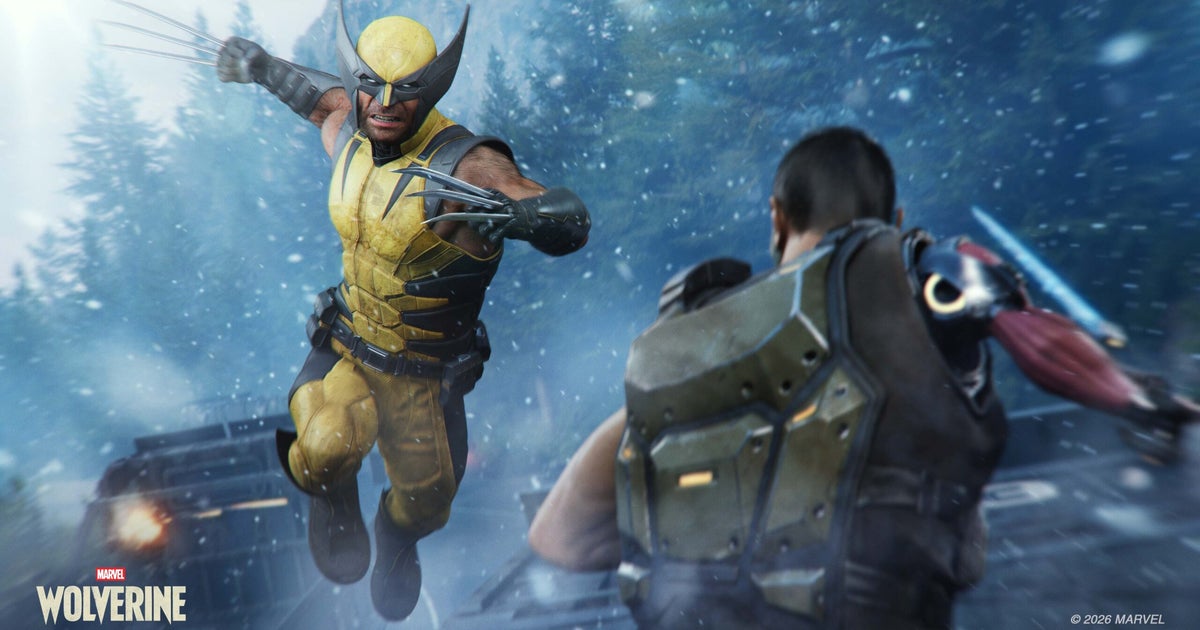
Combat
In his 3/5 review, The Guardian‘s Keith Stuart described Marvel’s Wolverine as “like its hero, an unreconstructed brawler.” A highlight for Stuart was the rage-meter, which boosts Wolverine’s attack and defence stats. “At the final stage you become an almost indestructible machine of carnage, which is immensely liberating.”
However, he noted that while the fights feel smooth and empowering, they rarely require creativity or experimentation.
Stuart compared it unfavourably to Insomniac’s Spider-Man games, noting that “the character’s grace, his web-throwing, the three-dimensional nature of his movement, all encourage you to fight beautifully; here I was reminded of 80s beat-’em-ups, or PS3 brawlers – a bludgeoning production line of identical fights against increasingly over-familiar enemy types.”
Eurogamer‘s Chris Tapsell, who also rated the game 3/5, said the overall gameplay had “little to no invention throughout,” but it was most noticeable in the combat, “which really has to be the backbone of a linear action game like this, let alone a Wolverine one.”
“There’s all the inherent satisfaction of a good parry-counter, of leaping around fully in character as this unleashed beast, of enacting righteous vengeance on your foes. It’s just there’s also a sense – that only builds over time – it’s all slightly too one-note and one-pace.”
“Meanwhile, after the fourth, fifth, sixth, seventh wave of jump-and-parryable-attack guys comes at you with the exact same cadence of parry timing and bullet-dodging you just start to glaze over a little.”
Writing for VGC, Jordan Middler was even more critical, describing the gameplay as highly repetitive and monotonous.

“The issue is that I never felt all that more powerful at the end of the game than I did at the start,” Middler wrote in his 3/5 review. “You’re limited to four abilities out of the six, but I’d have happily only taken two, considering how ineffective they felt compared to my standard moveset.”
“Enemies are repetitive, and even though their outfits may change, they fall into the same small group of archetypes, making every fight feel or maybe monotonous. There are large enemies that are so spongy that fighting them is only ever a chore.”
“I don’t feel like Wolverine is using claws, it feels like he’s got blunt kitchen knives on the ends of his fists”
Jordan Middler, VGC
Middler continued: “By the end of the game, I was legitimately sighing when more enemies would appear because I just wanted to see how the story would progress. Boss fights are similar slogs, relying on parrying sequences that you’ll master long before you actually wear down their health. The combat is never bad, but it’s never truly engaging, and barely evolves.
“The biggest issue with Marvel’s Wolverine is that it’s just rather boring to fight as Wolverine, which should be the absolute top priority. I don’t feel like Wolverine is using claws, it feels like he’s got blunt kitchen knives on the ends of his fists.”
Simon Cardy at IGN held similar sentiments to Middler in his 6/10 review. “There’s no denying that wielding those claws is slick, punchy, and wonderfully bloody. It’s just a shame, then, that halfway through Wolverine’s 15-hour string of missions, I felt like I’d had my fill.”
“The fundamentals are solid, but combat needed a stronger sense of progression to sustain that sensation over a game of this length – especially when you’re asked to cut down hundreds of enemies at a near-relentless pace. Yes, there are unlockable skills and special abilities to build into your repertoire, but only a handful, and you’ll gain access to them relatively early on.”
“This lack of evolution in Logan’s toolset puts the pressure on two other factors in order for the action to remain exciting: enemy variation and encounter design. Only one of those is executed somewhat successfully.”
Linear limitations
Unlike the open world of Insomniac’s Spider-Man games, Marvel’s Wolverine offers a linear experience that reviewers found monotonous. Eurogamer’s Chris Tapsell described it as “a repetitive, overlong, and overfamiliar slog.”
“Moving to a linear format versus an open world makes total sense, and there’s absolutely space for this kind of game,” he noted. “But with so little invention Wolverine feels like less of a throwback than it does a relic.”
The Guardian’s Stuart felt this most clearly as Wolverine travelled the world: visiting “big, inviting cities such as Madripoor or Tokyo, we find roads closed off and invisible walls directing us back to the action.”
“The whole world feels like a theatrical backdrop, untouchable and aloof, and many miles from the bustling metropolis we got to live in and explore as Spidey,” he wrote.
Experiencing Tokyo in such intricate detail and captivating visuals, only to have most of it inaccessible, can feel rather harsh.
According to IGN’s Cardy, the linear gameplay leads to missions feeling like a series of corridors leading to predictable ambushes in arenas.
“The entire world seems like a distant backdrop, unapproachable and detached, far removed from the vibrant city we once roamed and explored as Spidey”
Keith Stuart, The Guardian
“Constantly jumping between enemies and evading projectiles with timed dodges consumes most of your gameplay, causing the locations of these battles to blend together quickly. Wolverine encourages a direct, action-packed approach, resulting in a somewhat repetitive experience.”
In contrast, VGC’s Middler commended Marvel’s Wolverine for its linearity, stating that the game’s technology allows for more in a linear setting than in an open world.
“While not truly open-world, certain zones offer surprising freedom for exploration. It almost feels like the game was originally designed for Logan to freely navigate these hubs before a more linear direction was chosen.”
Characters & storyline
Critics unanimously praised the characters as the standout feature of Marvel’s Wolverine, as highlighted by Middler.
“Introducing numerous significant personalities while maintaining a cohesive narrative is a daunting task for any game, and Marvel’s Wolverine accomplishes this. The evolving relationship between Logan and Jean Grey is a highlight, as well as Troy Baker’s portrayal of Nathanial Essex.”
However, IGN’s Cardy felt that characters beyond Logan and Jean lacked depth in development. “These characters often serve to hinder Wolverine or offer brief advice, with limited roles outside of these interactions. Despite this, the writing manages to maintain a balance between tender moments and intense violence when Wolverine unleashes his claws.”
While Logan’s writing and performance received praise from critics like Eurogamer’s Tapsell and The Guardian’s Stuart, both criticized the lack of on-screen character development.

Tapsell mentioned that Wolverine feels somewhat passive in his own story. “There could have been an opportunity to explore themes like identity and inner struggles, which are central to this character. However, the execution falls short, leaving much to be desired.”
Stuart criticized the lack of interactivity in Logan’s character development. “While the game promises to delve into Wolverine’s past trauma, much of this exploration occurs through unlockable lore during mini-challenges, which may not be the most sensitive portrayal of PTSD.”
Cardy also expressed a desire for more interactive elements in exploring Wolverine’s backstory. “Engrossing cutscenes capture the story effectively, but the intervening sequences of slow-paced exploration through mundane areas seem like unnecessary filler in an otherwise engaging but not overly lengthy adventure. There seems to be untapped potential for more interactive storytelling.”
Overall assessment
Critics agree that while Marvel’s Wolverine isn’t a poor game, its weaknesses overshadow its strengths.
“It restrains a character that should excel in video games with repetitive combat and outdated gameplay, leaving a rather lackluster experience,” noted VGC’s Middler. “While playing, there’s enjoyment, but once you stop, the impact fades quickly.”
The game’s strength lies in the compelling performance of its main character and the supporting mutant cast.
“The likability of Logan, the emotional depth portrayed by Insomniac’s characters, and the genuine humanity they convey, along with the occasional action spectacle in bite-sized doses, prevent it from being a disaster. Instead, it falls into a category of ‘just okay’,” concluded Eurogamer’s Tapsell.
Please rewrite the statement for me to better understand it.