
Table of Contents
Crimson Desert has recently released a comprehensive set of PC benchmarks, featuring five tiers of graphics cards capable of running the game at various performance levels. The range aligns with what was stated in the earlier Steam Store listing. As advertised, it is indeed possible to run the game on a GTX 1060, albeit at the lowest settings and with suboptimal frame rates.
If you’re curious about how well your GPU can handle Crimson Desert and whether it meets the requirements, here’s a general overview of what to expect at each tier.
Older GPUs that can run Crimson Desert (with low settings)
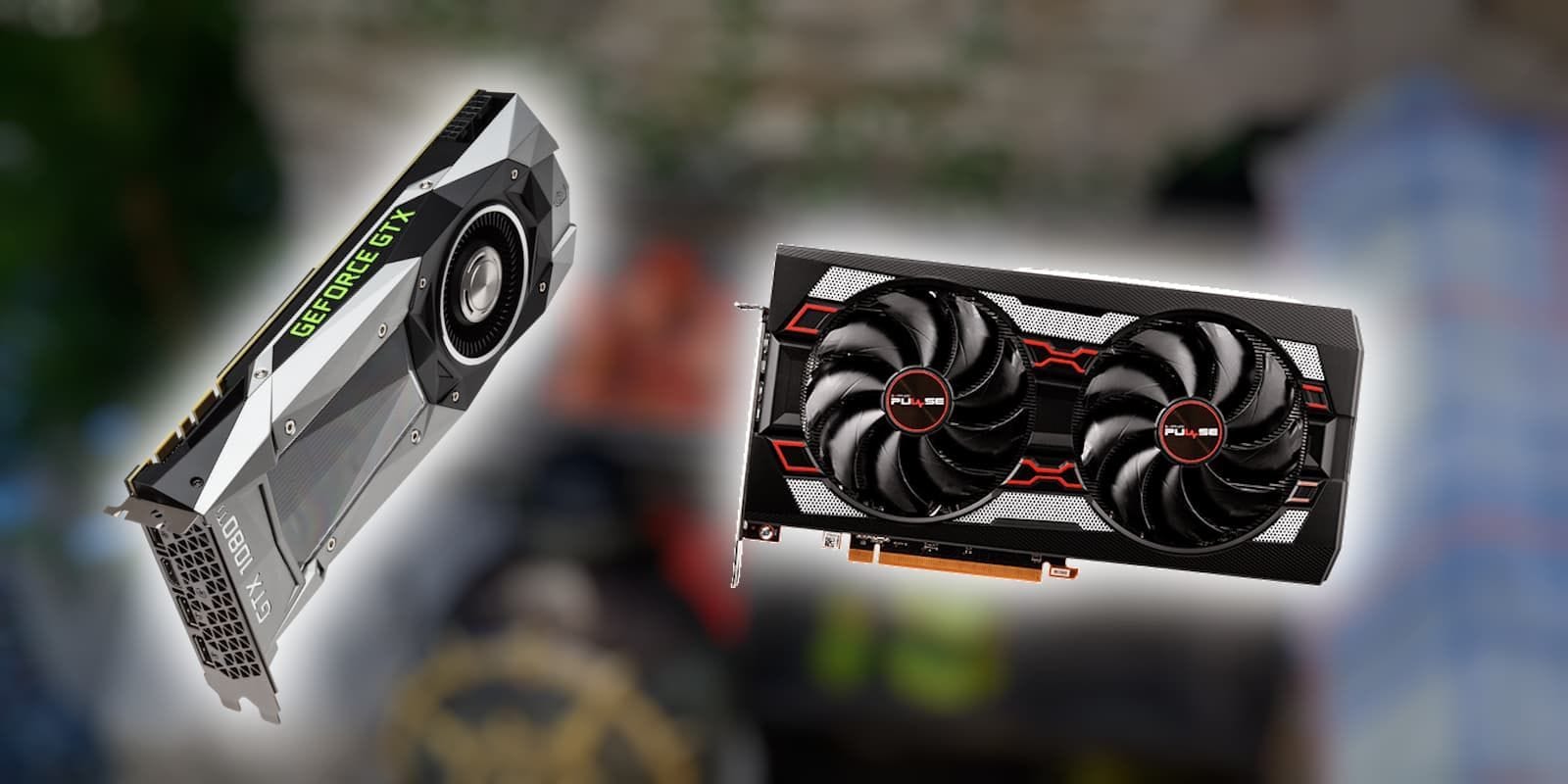
If you’ve heard that an old GPU can run this upcoming open-world action-adventure game, it’s worth noting that using a GTX 1060 would be more of a stress test than a smooth gaming experience.
The GTX 1060 will make a valiant effort to maintain 30 fps on Crimson Desert at Full HD, albeit upscaled from 900p. This performance is achieved with the bare-minimum settings allowed by Crimson Desert, and without hardware-accelerated RT features.
It’s important to note that we’re referring to the GTX 1060 6 GB variant, as the 3 GB VRAM version would struggle to render such a detailed game even at 720p.
Another consideration is how the game will look with all settings set to low, especially in terms of playability at 30fps on a standard HDMI PC monitor. Inconsistent frame pacing can result in non-responsive gameplay, so here are the GPUs you should avoid playing this game on:
- AMD: Anything below an RX 5500 XT may experience significant performance drops, with RX 570, 580, or 590 potentially struggling to run the game at all.
- Nvidia: GPUs like the GTX 970 and lower should be avoided, while the GTX 1050 TI might barely meet the requirements. The GTX 1650 (or Super) could perform even worse.
- Intel: The Arc A380 may be able to run the game, but expect challenges with frame pacing.
For older cards, a minimum of a GTX 1070/TI, 1080, or 980 is recommended to maintain a consistent 30+ FPS. These GPUs can easily achieve 30fps at 1080p without dips, and potentially even reach 40+ fps on 720p:
- AMD: The AMD RX 5700 can aim for performance similar to the Quality mode on the base PS5 at slightly lower framerates, while the XT variant may approach 60fps (upscaled from 900p). Cards like the 6600 and above could achieve a consistent 60 fps on low-medium settings at 720p.
- Nvidia: The GTX 1660 (Super/TI) can handle higher settings and maintain 30+, while the reliable 1080 TI could potentially handle 1440p. The 980 TI is a safe bet among older GPUs.
Top GPUs for running Crimson Desert at optimal settings and framerates

Given the support from the GTX 10 series, there is a wide range of cards that can provide acceptable settings to run Crimson Desert. Even without the per-pixel Ray Tracing features, the game still looks impressive, with the criteria being to maintain 60fps with medium or medium+ settings at 1080p native.
According to the official recommendations, an RTX 2080 or RX 6700 XT can offer this experience. Here are some options that fall into the good-enough™ category:
- Most of the RTX 20 series can handle medium-high settings with an RT profile, except for the RTX 2060, which may perform similarly to the RX 5700 XT. The RTX 30 series follows a similar pattern, with the exception of the RTX 3050 requiring lower settings to potentially reach 60fps. GPUs like the 3070 and above can experiment with high settings and 1440p gaming.
- The RTX 40 series introduces DLSS 4.5, offering advanced upscaling technology. Even the RTX 4060 could achieve upscaled 1440p at medium+ settings while maintaining 60FPS.
- For AMD GPUs, the 6800 series and above can handle high settings and proper Ray Tracing at 1080p native.
- The Intel Arc B580, with the latest drivers, can run the game well at recommended medium+ settings, surpassing the 3060 at native 1080p.
Notably, most of the aforementioned options could potentially upscale to 4K at 30fps with adjusted settings. The RTX 40 cards, in particular, are ideal for this due to DLSS 4.5 compatibility, offering the best upscaling technology available. The latest DLSS model L profile provides exceptional visual quality as well.
Top budget graphics cards for comfortable Crimson Desert gameplay
For those on a budget building a new PC, the best budget-friendly option for running Crimson Desert is the Intel Arc B580, especially if available for around $200 or less.
Depending on availability and pricing in your region, the RX 7600 could be a more affordable choice that still offers decent performance for the game. Another budget-friendly option is the RTX 3060, although the Arc B580 is preferred if pricing is similar across options.
Also Read: NVIDIA reportedly planning an RTX 5050 9GB GDDR7: Could it be the budget savior GPU we didn’t expect?
Requirements for running Crimson Desert at 4K native on PC

For those aiming to run Crimson Desert at 4K native resolution on PC, the official recommendations suggest an RTX 5070TI or RX 9070 XT for achieving 60fps on the Ultra preset. Here are some options for achieving this without upscaling:
- Graphics cards like the RTX 4070 Super and RX 7800 XT could potentially reach 40-60 fps, depending on settings.
- The RTX 4070 TI, TI Super, and RX 9070 can handle medium-high settings with a stable 60fps.
- For the highest-end performance (Ultra settings with top RT module), a RTX 4080 Super, 5080, or RX 7900 XTX would be required. The RX 7900 XTX was notably used in custom rigs by Pearl Abyss during a closed-door hands-on creator preview, making it a reliable choice.
- For enthusiasts looking to push settings beyond the Ultra preset at 4K native resolution, options like the RTX 4090 and 5090 would be ideal (although these are premium-tier GPUs).
If upscaling is acceptable, there are more affordable options that could still deliver decent performance:
- RTX 20 series cards and those below the 3070 may need to reduce settings significantly and disable RT to achieve playable performance at 4K native resolution. With aggressive upscaling, achieving low-medium settings and consistent 30fps could be possible on the 3060 (although this is a generous estimate). The RX 6800 might offer better value for this scenario.
- The RTX 3080 TI and 3090 (including the RX 6950 XT) could potentially support upscaled 4K at 40-50 fps or higher, depending on optimized settings (medium+).