Table of Contents
The Rise of BeastLink: Grove Street Games’ Ambitious Original IP
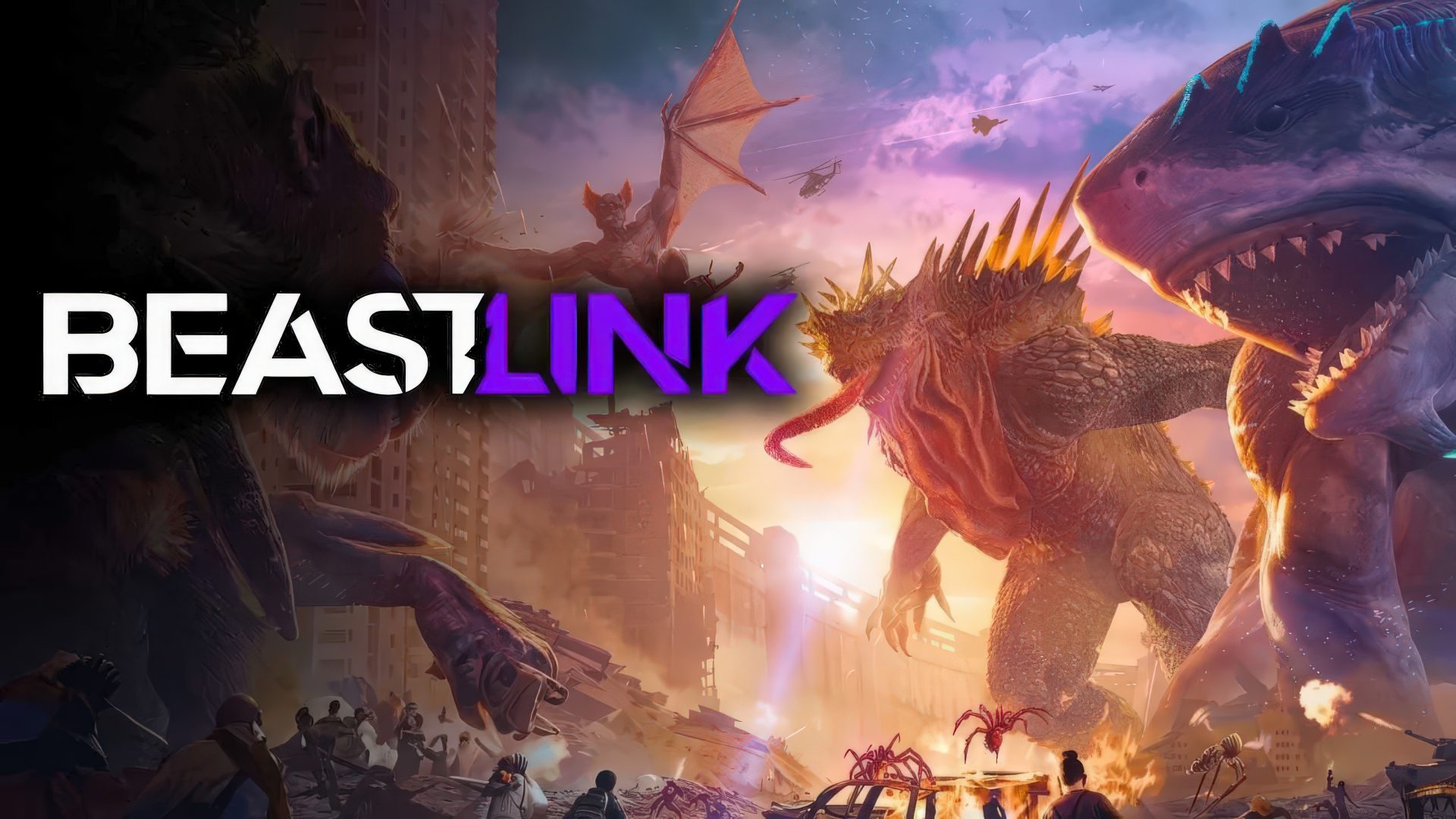
Grove Street Games has long been synonymous with porting iconic titles like the Grand Theft Auto Trilogy – The Definitive Edition. However, the studio is now venturing into uncharted territory with its latest project, BeastLink. This multiplayer kaiju action game introduces players to a world where humanity struggles to survive amidst the chaos of colossal Beasts.
A New Era of Destruction
In BeastLink, players must scavenge resources, engage in battles with rival factions, and most notably, “link” with dormant kaiju to harness their immense power. The game’s standout feature is the SuperDestruction system, a groundbreaking technology that allows for real-time map reshaping. With over 250,000 destructible objects and millions of individual pieces, BeastLink promises an unparalleled level of chaos and destruction in the multiplayer gaming landscape.
Behind the Scenes with Thomas Williamson
As Grove Street Games prepares for the Early Access launch on Steam, we had the opportunity to interview Thomas Williamson, the owner, and CEO of the studio. Williamson shared insights into the development process of BeastLink, the technical intricacies of creating a destructible environment on such a massive scale, and the studio’s transition from porting games to developing its original IP.
Grove Street Games’ Legacy and GTA Trilogy: Definitive Edition
Before delving into BeastLink, it’s essential to acknowledge Grove Street Games’ legacy, particularly its work on the Grand Theft Auto Trilogy: Definitive Edition.
From Humble Beginnings
Thomas Williamson: Reflecting on the studio’s journey, Williamson highlighted the early days of War Drum Studios and the pivot towards mobile gaming. While the studio gained recognition for its work on the GTA Trilogy remaster and other high-profile titles, its roots in mobile game development played a pivotal role in shaping its trajectory.
Williamson emphasized the studio’s commitment to quality and innovation, citing projects like the Ark Mobile port and the Nintendo Switch adaptation as milestones that paved the way for BeastLink’s ambitious vision.
Navigating Mixed Reactions
Thomas Williamson: Addressing the reception of the GTA Trilogy: Definitive Edition, Williamson acknowledged the mixed reactions from fans and critics alike. While the project garnered attention for its historical significance, Williamson expressed a nuanced perspective on the challenges of remastering beloved classics.
Despite the varied responses to the remaster, Williamson underscored the studio’s gratitude for the opportunity to contribute to gaming history and engage with a passionate fan base.
Embracing Innovation with BeastLink
As Grove Street Games embarks on a new chapter with BeastLink, the studio’s foray into original IP signals a bold step towards innovation and creativity. With BeastLink’s impending Early Access launch, players can anticipate a gaming experience that pushes the boundaries of destructible environments and multiplayer mayhem.
The Future of Grove Street Games
Looking ahead, Grove Street Games aims to solidify its position as a trailblazer in the gaming industry, leveraging its expertise in porting and technical prowess to create immersive and unforgettable gaming experiences. BeastLink represents a turning point for the studio, marking a transition from adaptation to innovation and setting the stage for future groundbreaking projects.
A New Dawn for Grove Street Games and the Gaming Community
As BeastLink prepares to make its mark on the gaming landscape, Grove Street Games stands at the threshold of a new era of creativity and excitement. With a legacy built on innovation and a commitment to pushing boundaries, the studio’s evolution from porting powerhouse to original IP creator exemplifies the transformative nature of the gaming industry. BeastLink heralds a promising future for both Grove Street Games and gamers worldwide, inviting players to embark on a thrilling journey of destruction, discovery, and unparalleled adventure.
Unleashing Kaiju Chaos: Inside the World of Beastlink
The gaming world is abuzz with excitement over the rare and remarkable remaster of Beastlink. This colossal project has defied the odds to receive widespread acclaim, a testament to the dedication and innovation of its creators.

The Core Concept of Beastlink
Evolution of a Kaiju Masterpiece
Thomas Williamson: The concept of Beastlink has been a labor of love, evolving over years of observation and innovation. Inspired by the success of the Monsterverse films, we set out to fill a void in the gaming world with a high-end kaiju experience like no other.
The challenge of multiplayer destruction at scale drove us to create a game that seamlessly blends the power of kaijus with the ingenuity of human players, leveraging modern hardware to deliver an epic gaming experience unlike anything seen before.
Balancing Act: Humans vs. Kaijus
Thomas Williamson: The key to balancing humans against kaijus lies in strategic gameplay mechanics. By allowing players to embody both beasts and pilots of powerful vehicles, we provide a dynamic and engaging experience where teamwork and skill determine the outcome.
While kaijus may seem unbeatable, their presence adds a thrilling element of unpredictability to the game, challenging players to adapt and strategize in the face of overwhelming power.
Player Counts and Squad Dynamics
Thomas Williamson: In Beastlink, we strive for balance and fairness by ensuring that both teams have equal access to kaijus in PvP game modes. By maintaining symmetry in player counts and squad compositions, we create a level playing field where skill and coordination reign supreme.
For PvE experiences, players can engage in dynamic encounters that pit humans against kaijus or beasts against humans, offering a variety of gameplay options to suit different preferences.
Map Diversity and Destructibility
With three expansive and fully destructible maps available at launch, Beastlink promises a rich and immersive gaming environment where every choice and action has consequences. Our commitment to quality ensures that each map offers a unique and engaging experience for players to explore and conquer.

The Tech Behind the “SuperDestruction” and Server Networking
Innovation in Action: SuperDestruction
Thomas Williamson: By integrating our proprietary technology, SuperDestruction, into Unreal Engine, we unlock new possibilities for harnessing the full potential of consumer hardware. This innovative approach enables us to push the boundaries of gameplay and visual effects, creating a truly immersive and exhilarating gaming experience.
Beastlink stands as a testament to the power of innovation and collaboration in the gaming industry, offering players a glimpse into the future of interactive entertainment.
The Evolution of SuperDestruction in Gaming
Imagine a world where GPUs are not just used for AI and rendering, but for something truly groundbreaking. This is the concept behind SuperDestruction, a revolutionary idea that has the potential to change the way we experience games.
Unleashing the Power of GPUs
SuperDestruction is all about harnessing the immense power of GPUs to drive physics collision, destruction, and environmental updates. By moving these processes to the GPU side, developers can unlock a new level of simultaneous simulation that was previously unimaginable.
Synchronizing Destruction in Multiplayer Games
One of the biggest challenges in implementing SuperDestruction in multiplayer games is synchronizing destruction across all players. Thomas Williamson, a game developer, explains that ensuring destruction is consistent on both the client and server sides is crucial. By carefully managing the state of destruction and implementing efficient communication protocols, developers can minimize discrepancies and create a seamless experience for all players.
Optimizing Network Compression for Realism
With millions of destructible elements in a game like SuperDestruction, optimizing network compression becomes essential. Developers must strike a balance between visual realism and network efficiency to create an immersive gameplay experience. By focusing on macro-destruction and strategic design choices, developers can enhance gameplay without compromising networking performance.

The Role of AI in Game Development
On the Steam page of Beastlink, there is a disclaimer regarding the use of AI in the game’s development. Thomas Williamson clarifies that while AI tools were not extensively used in the creation of the game, the disclaimer is a precautionary measure due to the use of third-party assets. The studio emphasizes the importance of handcrafted content and transparency in game development.
The Future of AI in Game Development
While AI tools like Claude have garnered attention in the industry, Williamson believes that the role of AI in game development is still evolving. He emphasizes the need to balance AI’s capabilities with the creative art of game development. Looking ahead, he envisions AI as a tool to accelerate creative work rather than replace human input entirely.
Conclusion
SuperDestruction, AI in gaming, and the evolution of technology are shaping the future of the industry. By embracing innovation while preserving the core principles of game development, developers can create immersive and engaging experiences that push the boundaries of what is possible in gaming.
Unleashing Unreal Engine 5: A Game-Changer in the Making
In the ever-evolving landscape of game development, staying ahead of the curve is crucial. Epic Games, with its Unreal Engine 5, is leading the charge towards the future of gaming. We had the privilege to sit down with Thomas Williamson, a game developer at the forefront of this technological revolution, to discuss the impact of Unreal Engine 5, the future of Blueprints, and the possibility of bringing games like Beastlink to the Nintendo Switch 2.
Unreal Engine 5, Blueprints, and the Nintendo Switch 2
You have certainly seen Unreal Fest, where Epic unveiled an MCP integration with Unreal Engine. What was your take on that?
Thomas Williamson: An official MCP plugin was inevitable. A lot of independent developers were already making custom MCPs for Unreal, so Epic had to make an official alternative. I feel like their hands were tied there; I don’t necessarily blame them for making that decision at all. I am curious because a lot of people think Epic is focusing on it more for their scripting tools to push developers towards using AI with scripting layout pipelines, but I’m not entirely sure that’s true. We have to wait and see.
Another big announcement at Unreal Fest was Epic’s stated goal to slowly phase out Blueprints. How do you feel about that, as a fairly small studio?
Thomas Williamson: We use Blueprints here, but a lot of smaller indie studios are going to be damaged if Blueprints get heavily deprioritized. They’ve invested a lot of time into understanding Blueprints and building technical prowess around them. I don’t think Unreal Engine 5 is going away anytime soon, though—Unreal 5 games are going to be shipping for the next five years easily, so we all have time to sort of figure out what we want to do next. If studios want to pivot away from Unreal for that reason, that’s fine. If they want to learn Verse over the course of the next several years, they can do that, but change is inevitable. As a studio, we don’t use Blueprints extensively because we don’t think it has high execution velocity. I don’t entirely disagree with trying to push developers toward a more efficient scripting language, provided the replacement is suitable for entry-level developers trying to get their feet wet.
Epic is trying to sell Verse as something that’s, you know, more easily approachable by developers. Do you think that’s true?
Thomas Williamson: They are going to try to sell it, though. The jury’s out, and we’ll find out. I’m along for the ride. Verse as a language is a little cumbersome, but I haven’t spent a ton of time in it because this is brand new for me, too.
Can you share what Unreal Engine 5 build you are on right now with Beastlink?
Thomas Williamson: We’re currently on Unreal Engine 5.7 right now. Once 5.8 gets a minor stability upgrade, we’ll probably upgrade to it. We try to maintain the most recent Unreal version because they typically have the most optimizations.
I think 5.6 and 5.7 introduced many optimizations to Unreal Engine, right?
Thomas Williamson: Yes, and once we got FSR integrated into our Xbox build internally, it stabilized significantly. We’re not fully committing to it yet, but we have internal test versions of the game running at 60 FPS on the Xbox Series X. I don’t think that would have been possible on Unreal 5.5, but on 5.7, we are able to hit those frame rates.
Do you think Beastlink could run on the Nintendo Switch 2?
Thomas Williamson: If the game is successful, I’ll certainly try. It depends on the success level, really. I love working on smaller hardware—it’s no secret if you look at our porting history. I do think it’s possible. It won’t look exactly the same as the PC edition, but I think we can get it 75% to 80% of the way there so people can have that portable experience. But I don’t want to commit to it until we know we have the available development bandwidth.
A lot of people believe that Nintendo was kind of helped by the fact that, you know, there is the Xbox Series S, so developers already have to optimize for that platform, and it’s not that much more powerful than the Switch 2.
Thomas Williamson: Yes and no. The only problem is there are still some structural constraints on that hardware not related to sheer rasterization and compute power. The Switch 2’s biggest hurdle is that it is really difficult for Nanite to run on. Nanite is fundamental to a lot of modern Unreal Engine 5 games. Until Epic or Nintendo solves the Nanite issue on mobile chipsets, it’s going to be highly problematic for developers to port to it.
I anticipate you’ll see far fewer third-party Unreal Engine ports on the Nintendo Switch 2 unless that optimization issue gets solved. It’s concerning because Epic didn’t announce a lot of Nanite pipeline improvements that would make that feasible with version 5.8, and they’ve stated that 5.8 is likely their final major iteration of Unreal Engine 5. I’m concerned it might really limit the potential of the Switch 2 to receive third-party Unreal-based ports.
Campaign Mode, Release Window, and Pricing
What’s your current early access launch window for Beastlink? And also, can you share something about the price?
Thomas Williamson: It’s coming out this year, I can say that for sure. And it’s not going to be a $60 game, I can tell you that. It’s an indie title, and we’re going to price it as an indie title.
Did you ever consider adding a campaign mode to the game if there is enough demand?
We have a complete story and lore built up. For the campaign, we are going to include a single-player mode that allows you to play through levels that unlock different items.
In Conclusion
As the gaming industry continues to push boundaries and explore new technologies, Unreal Engine 5 stands out as a game-changer. With developers like Thomas Williamson leading the charge, the future of gaming looks brighter than ever. From the phasing out of Blueprints to the potential challenges of porting to the Nintendo Switch 2, the journey ahead promises innovation and excitement at every turn.
The Evolution of Multiplayer Games: What Lies Ahead?
Multiplayer games have come a long way since their inception, offering players the chance to connect, compete, and collaborate in virtual worlds. However, despite the advancements in multiplayer frameworks, there is still a missing piece in the puzzle – a fully-fledged narrative campaign with dedicated cinematics and high production value.
The Current State of Multiplayer Games
While multiplayer games provide thrilling scenarios and engaging gameplay, they often lack a deep, immersive narrative experience. Players are left craving a more robust story that unfolds through dedicated cinematics and engaging plotlines. Games like Beastlink 2 have the potential to bridge this gap and offer players a cinematic gaming experience like never before.
The Future of Multiplayer Games
As technology continues to advance and game developers push the boundaries of creativity, the future of multiplayer games looks promising. With the potential for immersive storytelling, stunning visuals, and rich narratives, the next generation of multiplayer games could redefine the gaming landscape. Players can look forward to experiencing fully-fledged narrative campaigns that rival blockbuster movies in terms of production value and storytelling.
A Look Ahead
While multiplayer games have thrived on engaging gameplay and competitive experiences, the future holds the promise of a new era – one where narrative campaigns take center stage. With games like Beastlink 2 on the horizon, players can anticipate a gaming experience that combines the best of both worlds – thrilling gameplay and cinematic storytelling. The evolution of multiplayer games is an exciting journey that promises to captivate players and redefine the way we experience gaming.
About the Author

About the author: With over two decades of experience in gaming journalism, Alessio Palumbo has led the gaming vertical at Wccftech since August 2015. He started working at a young age for Italian websites like Everyeye.it, Gamestar.it, Nextgame.it, and Multiplayer.it before kickstarting the indie English-language publication Worlds Factory as its founder and Editor in Chief.
In the last decade, he has coordinated the overall output of Wccftech’s gaming section, managed PR relations, assigned reviews, produced daily news coverage, edited gaming content as needed, and delivered game reviews.
Arguably, his trademark content is the long series of exclusive developer interviews that have been cited by Wikipedia and by the biggest news media and gaming publications.
His passion for technology also makes him knowledgeable when it comes to gaming hardware and tech. His favorite genres include RPGs, MMORPGs, and action/adventure games.
Follow Wccftech on Google to get more of our news coverage in your feeds.
Title: The Rise of Indie Games: How Independent Developers are Shaping the Gaming Industry
Introduction:
In recent years, the gaming industry has seen a significant shift towards indie games, with independent developers making a mark with their unique and innovative creations. These games, often produced with smaller budgets and teams, have captured the hearts of gamers worldwide. Let’s delve into how independent developers are reshaping the gaming landscape and what makes indie games so special.
The Impact of Indie Games on the Gaming Industry
H2: Innovation and Creativity
One of the defining characteristics of indie games is their emphasis on innovation and creativity. Independent developers are not bound by the constraints of big publishers, allowing them to explore new ideas and push the boundaries of game design. This freedom has led to the creation of some truly groundbreaking games that have redefined what is possible in the gaming world.
H2: Diverse and Unique Experiences
Indie games offer a diverse range of experiences that cater to a wide variety of tastes and preferences. From emotional narrative-driven adventures to fast-paced action-packed gameplay, there is something for everyone in the world of indie gaming. These games often tackle unique themes and explore unconventional gameplay mechanics, providing players with fresh and exciting experiences.
H3: Community Engagement
Independent developers have a closer connection to their player base, allowing for more direct communication and feedback. This close relationship fosters a sense of community and collaboration, with developers often incorporating player suggestions and ideas into their games. This level of engagement creates a more interactive and personalized gaming experience that is highly valued by players.
H3: Breaking Barriers
Indie games have broken down traditional barriers in the gaming industry, making it more accessible for new and diverse voices to be heard. Independent developers come from all walks of life and backgrounds, bringing fresh perspectives and ideas to the table. This diversity has led to a more inclusive and representative gaming landscape that reflects the experiences of a wider range of players.
Conclusion:
The rise of indie games has brought about a new era of creativity, innovation, and diversity in the gaming industry. Independent developers continue to push the boundaries of game design and storytelling, offering players a wealth of unique and engaging experiences. As indie games gain more recognition and support, we can expect to see even more groundbreaking creations that shape the future of gaming. Embrace the indie revolution and discover the endless possibilities that independent developers have to offer.