Table of Contents
The Future of AI: Micron’s Edge Inference Memory Revolutionizing Robotics
Imagine a world where robots not only perform pre-programmed tasks but also make decisions based on proactive behavior. This futuristic vision may soon become a reality, thanks to Micron’s groundbreaking technology – Edge Inference Memory (EIM). By combining the power efficiency of LPDDR with the low-latency and high-bandwidth capabilities of HBM, EIM is set to revolutionize the AI robotics industry.
The Potential Impact of EIM in Robotics
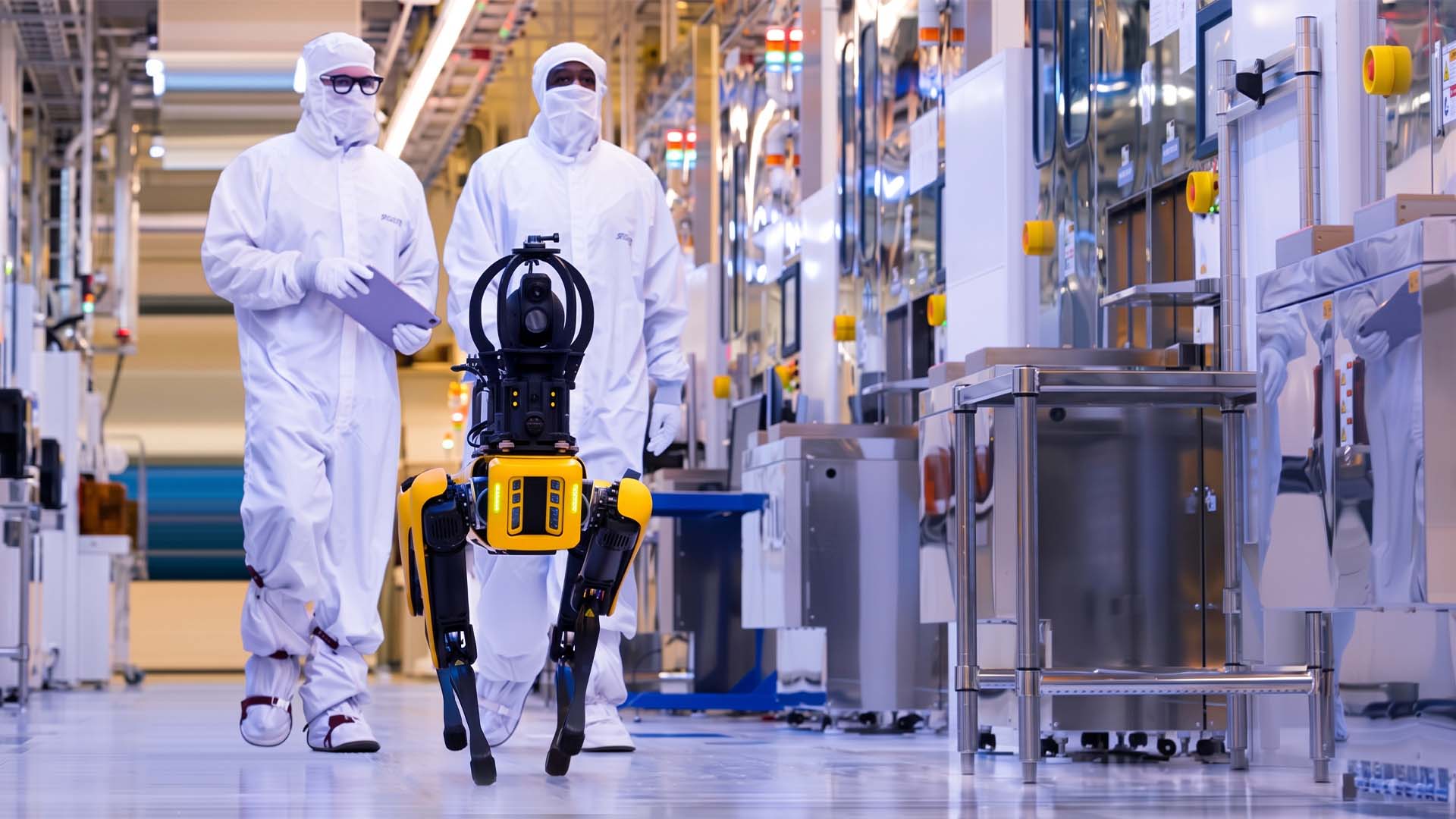
AI-powered robots are poised to transform industrial processes with their ability to perceive and respond to visual and auditory cues, weight, texture, and more. Unlike traditional service robots that follow pre-determined movements, humanoids equipped with EIM will have the capacity to make real-time decisions, enabling them to adapt to dynamic environments effectively.
EIM’s innovative design, which stacks LPDDR memory on top of a logic die, promises to enhance data processing efficiency while minimizing power consumption. This technology, similar to Processing-In-Memory (PIM) but with distinct advantages, could accelerate the adoption of physical AI much sooner than anticipated.
Anticipated Developments in AI Robotics
While the computational structure and performance of EIM are yet to be fully revealed, industry experts predict a significant shift towards AI robots utilizing HBM to support more complex models. As the demand for higher parameter models grows, the need for enhanced memory capacity becomes crucial.
Micron foresees AI robots requiring up to 200GB of RAM and multiple terabytes of NAND storage in the future, a significant leap from the current standards. As machines evolve to support advanced Vision Language Models and process vast amounts of data, the role of LPDDR memory will diminish, paving the way for more efficient memory solutions like EIM.
Looking Ahead: The Future of EIM in Robotics
With the potential for EIM to be adopted in LPDDR6 memory, the landscape of AI robotics is primed for transformation. As we approach 2028, the commercialization of EIM may usher in a new era of intelligent robots capable of making autonomous decisions based on real-time data analysis.
Stay tuned for the latest advancements in AI robotics as EIM continues to redefine the boundaries of artificial intelligence and robotics technology.
News Source: The Elec

About the author: Omar Sohail is a reporter and analyst for Wccftech’s mobile section, specializing in the technology and business of the mobile industry. His expertise lies in the intricate hardware supply chain, covering developments in semiconductor manufacturing, chip lithography, and camera sensor technology.
Follow Wccftech on Google to get more of our news coverage in your feeds.