Table of Contents
Unveiling the Performance of The Witcher 3 Wild Hunt Remastered on Nvidia RTX 5070 Ti
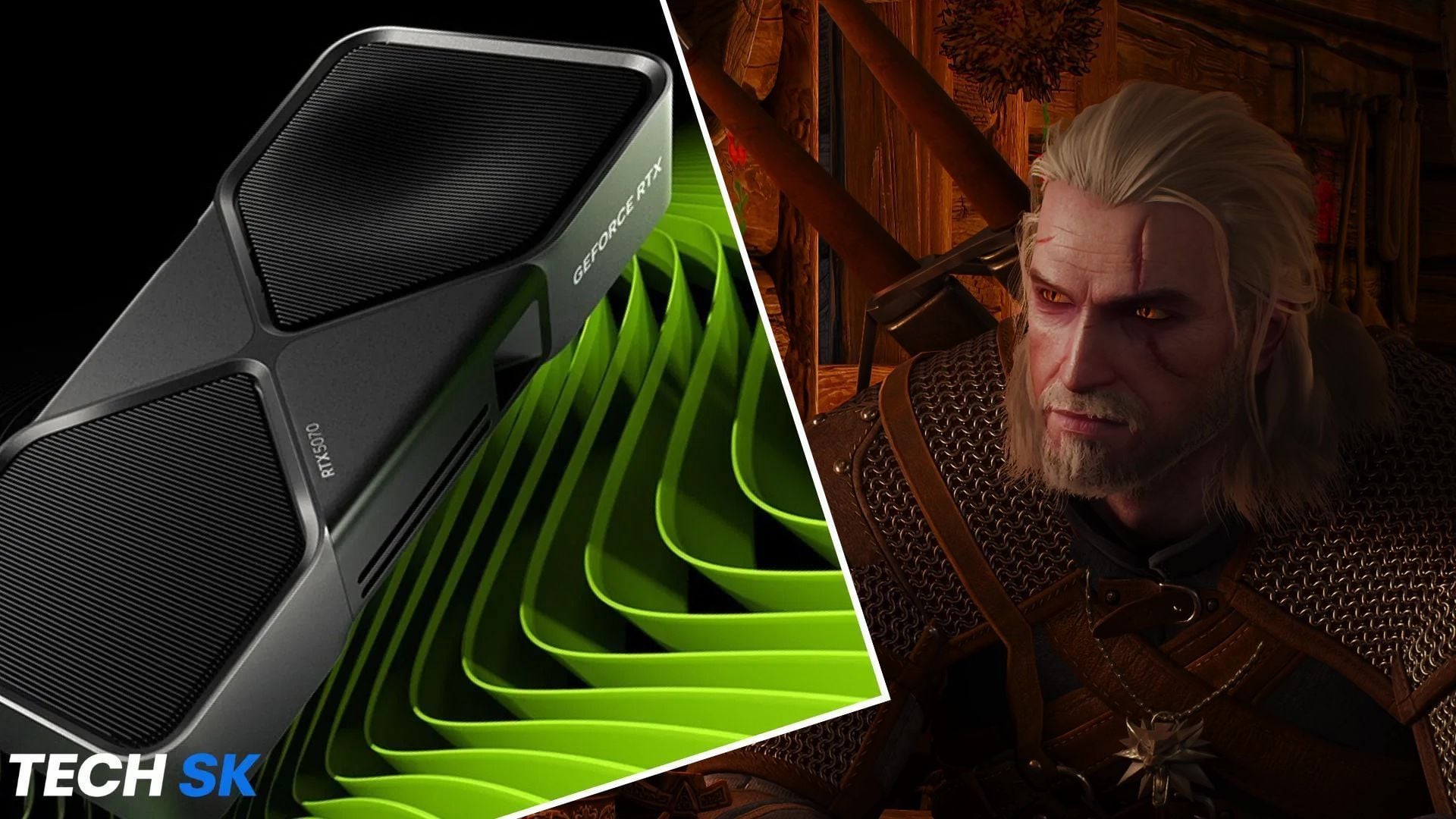
Embark on a mesmerizing journey as we delve into the realm of The Witcher 3 Wild Hunt Remastered, where the Nvidia RTX 5070 Ti reigns supreme, pushing beyond 180 FPS with ray tracing, Path Tracing, and Ray Reconstruction at the highest graphical settings. While the game exudes smooth performance, occasional FPS drops and micro-stutters add a touch of unpredictability to the experience. Despite being a decade-old game, the integration of modern graphical features showcases its resilience and adaptability.
Exploring the Benchmark Results
Our meticulous benchmarking of The Witcher 3 Wild Hunt Remastered on PC with the Nvidia RTX 5070 Ti unfolded in multiple sessions, meticulously toggling ray tracing on and off. Let’s unveil the precise figures recorded with the 5070 Ti at a pristine 1440p resolution.
The Witcher 3 Wild Hunt Remastered demonstrated its prowess by achieving an impressive 189 FPS at the ultra preset, accompanied by DLSS Quality, maximum ray tracing, and the seamless integration of Ray Reconstruction and Path Tracing. The intricate terminology used within the game’s settings menu adds a layer of complexity, notably reflected in the unique frame generation system.
Our testing environment comprised an AMD Ryzen 5 7600X processor, Nvidia GeForce RTX 5070 Ti GPU, 2×16 GB DDR5 @ 6000MHz RAM, WD SN770 2TB SSD, and Nvidia driver version 617.14. Leveraging RivaTuner Statistics Server (RTSS) for FPS recordings and HWiNFO 64 for monitoring processor and GPU sensor data, each benchmark session spanned around 20 minutes, encompassing diverse in-game activities.
Native Benchmarks Unveiled
Transitioning to the native benchmarks of The Witcher 3 Wild Hunt Remastered with ray tracing options disabled and DLAA enabled, the FPS statistics shed light on the game’s performance nuances at different presets.
Noteworthy figures include an average of 163 FPS without frame generation at the Low preset, escalating to 540 FPS with 6x frame generation. The Ultra preset, albeit more demanding, initiated at 87 FPS, culminating in 354 FPS with 6x frame generation. Delving deeper, the low-percentile metrics remained relatively stable across presets, encapsulating the game’s consistent performance.
Ray Tracing: A Visual Spectacle
Transitioning into the realm of ray tracing benchmarks on The Witcher 3 Wild Hunt Remastered with the RTX 5070 Ti, the juxtaposition of DLSS Quality and Performance presets offered a captivating visual experience, with FPS values reflecting the intricate interplay between visual fidelity and performance efficiency.
The ray tracing workload unveiled a new dimension of visual splendor, with DLSS Quality averaging 37 FPS without frame generation, ascending to 189 FPS with 6x frame generation. DLSS Performance, on the other hand, embarked on a higher trajectory, starting at 48 FPS and scaling decisively to 234 FPS with 6x frame generation. The low-percentile metrics accentuated the nuanced performance nuances across different frame generation settings.
Performance Comparison at a Glance
To facilitate a comprehensive comparison of the benchmark data, a detailed table encapsulating the performance metrics of The Witcher 3 Wild Hunt Remastered on the RTX 5070 Ti unfolds, offering insights into the game’s performance dynamics at varying frame generation multipliers.
Thermal and Power Draw Insights
Transitioning to the thermal and power draw tests of The Witcher 3 Wild Hunt Remastered on the Nvidia RTX 5070 Ti, our exploration uncovered intriguing insights into the hardware’s behavior under different loads.
The CPU temperature oscillated within the low-to-mid 70°C range, punctuated by sporadic spikes up to 84°C during gameplay transitions. In contrast, the RTX 5070 Ti exhibited a more stable thermal profile, hovering around 70°C to 73°C with intermittent drops to 58°C-63°C during transitional moments.
Moreover, the CPU power draw oscillated between 45W and 60W, occasionally peaking at 70W during more demanding sequences. In comparison, the Nvidia RTX 5070 Ti maintained a higher and more consistent power draw, operating between 270W and 300W during active gameplay, with brief drops to 120W-250W during transitional phases.
Conclusion
As the curtains fall on our in-depth exploration of The Witcher 3 Wild Hunt Remastered’s performance on the Nvidia RTX 5070 Ti, the game’s enduring appeal and the GPU’s prowess shine through. From visually stunning ray tracing effects to consistent frame rates, the experience is a testament to the game’s timeless allure and the hardware’s capabilities. Whether embarking on epic quests or engaging in intense combat, The Witcher 3 Wild Hunt Remastered stands as a testament to the seamless fusion of artistry and technology.